Skip to content











































With the rapid growth of 5G networks, cloud computing, artificial intelligence (AI) infrastructure, and high-capacity data services, traditional optical transport networks are facing increasing challenges in bandwidth scalability, service flexibility, and network management efficiency. To address these demands, network operators have gradually evolved from traditional Optical Transport Network (OTN) architectures toward more intelligent and integrated solutions known as Packet Optical Transport Network (POTN).
Both OTN and POTN play important roles in modern communication infrastructures. While OTN focuses primarily on reliable optical transport with strong bandwidth management and transmission capabilities, POTN combines optical transport technologies with packet switching functions to support the increasingly dominant Ethernet and IP-based traffic.
Understanding the differences between POTN and OTN helps network engineers and system integrators select the right technologies and optical components for next-generation transport networks.
What Is OTN (Optical Transport Network)?
Optical Transport Network (OTN) is a carrier-grade optical networking technology designed to provide high-capacity, reliable, and efficient transmission of various types of data over optical fiber networks.
OTN was developed as an evolution of traditional SDH/SONET networks. Instead of transporting only fixed-rate TDM services, OTN provides a standardized framework for transporting different client signals, including Ethernet, storage traffic, and video services.
The core function of OTN is to provide:
- High-capacity optical transmission
- Error monitoring and performance management
- Traffic grooming and multiplexing
- Reliable long-distance transport
OTN networks typically operate together with Wavelength Division Multiplexing (WDM) technologies, especially DWDM systems, to transmit multiple optical channels over a single fiber pair.

What Is POTN (Packet Optical Transport Network)?
Packet Optical Transport Network (POTN) is an advanced network architecture that integrates packet switching and optical transport technologies into a unified platform.
Unlike traditional OTN systems that mainly focus on optical transmission, POTN introduces packet processing capabilities, allowing networks to efficiently handle modern Ethernet and IP-based traffic.
The main idea behind POTN is to combine:
- Packet switching functions
- OTN transport capabilities
- WDM optical transmission technologies
into a single intelligent transport platform.
By integrating multiple network layers, POTN reduces network complexity and improves bandwidth utilization. This makes it especially suitable for modern applications such as 5G backhaul, cloud interconnection, and data center networking.

POTN vs OTN: Key Differences
Although POTN is built upon many OTN technologies, the two architectures have different design goals and application scenarios.
| Feature | OTN (Optical Transport Network) | POTN (Packet Optical Transport Network) |
|---|---|---|
| Main Purpose | High-capacity optical transport | Integration of packet switching and optical transport |
| Primary Traffic Type | TDM, Ethernet, Storage, Video | Ethernet, IP, Cloud, Data Services |
| Network Layer | Mainly optical transport layer | Multi-layer packet + optical architecture |
| Traffic Processing | Optical switching and grooming | Packet processing and intelligent service management |
| Flexibility | Medium | High |
| Bandwidth Efficiency | High | Higher for packet-based traffic |
| Typical Applications | Backbone transmission, long-distance transport | Metro networks, 5G transport, cloud networks |
| Network Management | Optical-focused management | Unified packet and optical management |
The biggest difference between OTN and POTN is that OTN mainly focuses on moving large amounts of data efficiently across optical networks, while POTN focuses on optimizing how modern packet-based services are transported and managed across optical infrastructures.
Why Are Networks Moving from OTN to POTN?
The growth of IP-based services has changed the way communication networks operate. Traditional carrier networks were originally designed for predictable TDM traffic such as voice services. However, modern networks are dominated by dynamic data traffic generated by:
- Mobile applications
- Cloud platforms
- Video streaming
- AI workloads
- Enterprise connectivity
This shift creates several challenges for traditional transport architectures.
1. Increasing Ethernet Traffic
Most modern services are based on Ethernet and IP protocols. POTN can directly process packet traffic, reducing unnecessary conversions between packet and optical layers.
2. Higher Bandwidth Requirements
5G networks, AI data centers, and cloud services require massive bandwidth capacity. POTN allows operators to combine packet flexibility with optical transmission scalability.
3. Simplified Network Architecture
Traditional networks often require separate devices for packet switching and optical transport. POTN integrates these functions, helping reduce equipment complexity and operational costs.
The Role of DWDM and Coherent Optics in POTN Networks
Although POTN introduces packet processing capabilities, optical transport remains the foundation of high-capacity communication networks.
DWDM (Dense Wavelength Division Multiplexing) technology plays a critical role by allowing multiple wavelengths to transmit simultaneously over a single fiber.
For example:
Fiber Pair

λ1 → 100G Channel
λ2 → 400G Channel
λ3 → 400G Channel
λ4 → 800G Channel
This significantly increases fiber utilization and enables long-distance transmission.
Coherent optical technologies further enhance POTN networks by supporting high-speed transmission over metropolitan and long-haul distances. Modern coherent optics, including 100G, 400G, and higher-speed solutions, provide the performance required for next-generation transport networks.
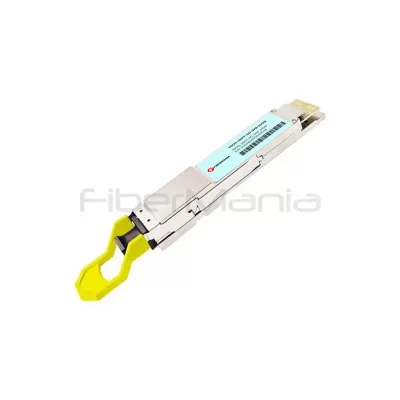
The Importance of 400G and 800G Optical Transceivers in POTN
As network traffic continues to grow, high-speed optical transceivers have become essential components in POTN infrastructures.
Modern POTN deployments increasingly rely on:
- 100G optical transceivers for metro and enterprise applications
- 400G optical modules for backbone and data center interconnect
- 800G optical solutions for AI and hyperscale cloud networks
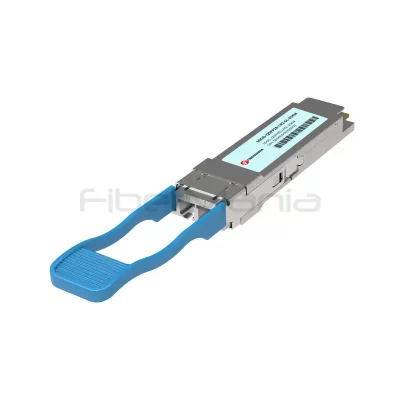
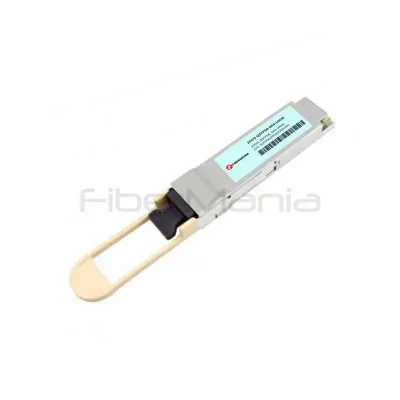
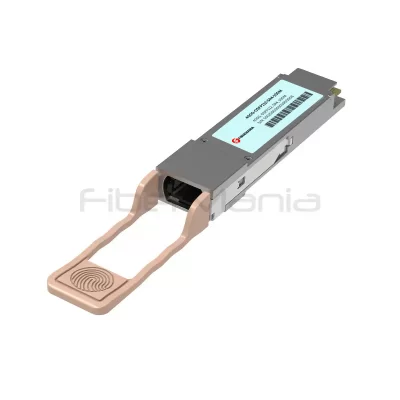
For example, 400G QSFP-DD and 800G OSFP optical transceivers provide the high bandwidth density required by modern transport systems while maintaining compatibility with advanced optical networking equipment.
These optical modules enable connections between:
- Routers and POTN equipment
- Data centers and carrier networks
- Optical transport platforms and DWDM systems
POTN Applications in Modern Networks
5G Transport Networks
5G requires significantly higher bandwidth and lower latency compared with previous mobile generations. POTN provides an efficient transport platform for connecting base stations, aggregation networks, and core networks.
Cloud and Data Center Interconnect (DCI)
Cloud providers and large enterprises need high-speed connections between geographically distributed data centers. POTN combined with 400G/800G optical technologies provides scalable solutions for these demanding applications.
Carrier Backbone Networks
Telecom operators use POTN architectures to improve network efficiency while supporting multiple services over a unified infrastructure.
Choosing Optical Components for POTN Networks
Building a reliable POTN infrastructure requires not only advanced networking equipment but also high-performance optical components.
Key supporting products include:
Optical Transceivers
High-speed 100G, 400G, and 800G modules provide the interfaces required for modern packet optical networks.
DWDM and WDM Solutions
Wavelength management products enable efficient fiber utilization and long-distance optical transmission.
Coherent Optical Modules
Advanced coherent technologies support high-capacity transmission across metropolitan and backbone networks.
Fiber Connectivity Solutions
High-quality fiber patch cords, MPO/MTP solutions, and optical accessories ensure stable physical connections between network devices.
Conclusion
OTN and POTN are both important technologies in modern optical communication networks. OTN provides the foundation for reliable, high-capacity optical transport, while POTN extends these capabilities by integrating packet switching and intelligent service management.
As network traffic continues to grow due to 5G, cloud computing, and AI applications, POTN provides a more flexible and scalable architecture for future communication infrastructures.
Modern POTN networks still rely on OTN technology for high-capacity optical transmission, while advanced solutions such as DWDM, coherent optics, and 400G/800G optical transceivers continue to accelerate the evolution toward next-generation intelligent optical networks.
FAQ
1. What is the main difference between POTN and OTN?
POTN (Packet Optical Transport Network) integrates packet switching and optical transport technologies into a unified architecture, while OTN (Optical Transport Network) mainly focuses on high-capacity optical transmission and transport management. OTN is designed for reliable optical signal transport, whereas POTN adds packet processing capabilities to efficiently handle modern Ethernet and IP-based services.
In simple terms, OTN provides the optical transport foundation, while POTN combines optical transport with intelligent packet networking to improve flexibility, bandwidth efficiency, and service management.
2. Is POTN replacing OTN in modern optical networks?
No. POTN does not completely replace OTN. Instead, POTN builds upon OTN technologies by combining OTN transport capabilities with packet switching functions. OTN remains an essential layer for reliable high-capacity optical transmission, especially in backbone and long-distance networks.
Modern POTN networks typically use OTN together with DWDM systems, coherent optical technologies, and high-speed optical transceivers to support applications such as 5G transport, cloud networking, and data center interconnection.
3. What optical components are required for POTN networks?
POTN networks require a combination of active and passive optical components to support high-speed packet and optical transmission. Key components include high-speed optical transceivers, DWDM and WDM solutions, coherent optical modules, and fiber connectivity products.
For next-generation POTN deployments, 100G, 400G, and 800G optical transceivers provide high-bandwidth interfaces, while DWDM technology enables multiple wavelengths to transmit efficiently over existing fiber infrastructure.