Skip to content






















The rapid development of artificial intelligence is fundamentally changing the architecture of modern data centers. As GPUs, AI accelerators, and high-performance switch ASICs continue to increase in computing capacity, the amount of data that must move between these devices is growing at an unprecedented rate. Optical connectivity is therefore becoming an increasingly important part of the overall computing architecture.
For many years, data-center networks have relied primarily on pluggable optical transceivers. This architecture has been highly successful because it separates the optical interface from the switching system, allowing modules to be independently installed, replaced, upgraded, and optimized for different transmission distances. However, as network bandwidth moves from 400G to 800G and toward 1.6T and beyond, the electrical connection between the switch ASIC and the optical transceiver is becoming increasingly difficult to scale. Electrical loss, signal integrity, power consumption, thermal management, and physical density are all becoming more challenging.
These limitations are driving the development of Near-Packaged Optics (NPO) and Co-Packaged Optics (CPO). Both approaches attempt to move optical conversion closer to the switch ASIC, reducing the distance over which extremely high-speed electrical signals must travel. More importantly, they represent a fundamental change in the way optical connectivity is designed. Instead of treating the optical transceiver and fiber network as relatively independent parts of the system, NPO and CPO increasingly require the ASIC, optical engine, laser source, fiber interface, packaging, and thermal system to be designed together.
This architectural transition is still developing. Conventional pluggable optics remain dominant in many applications, while NPO and CPO are moving from technology development and early deployment toward broader commercialization. Their eventual success will depend not only on optical performance, but also on manufacturing yield, thermal management, serviceability, standardization, cost, and the ability to build highly precise optical connections at data-center scale.
From Pluggable Optics to Near-Chip Optical Connectivity
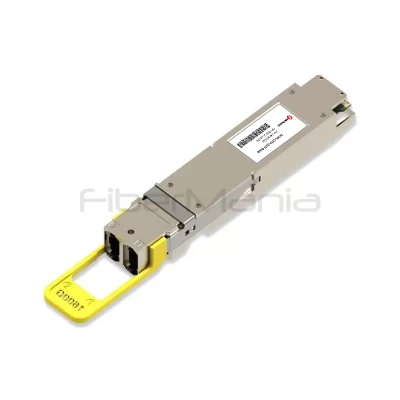
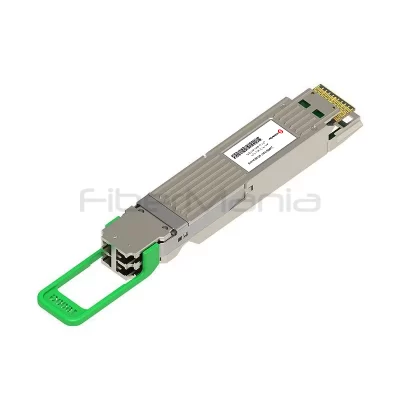
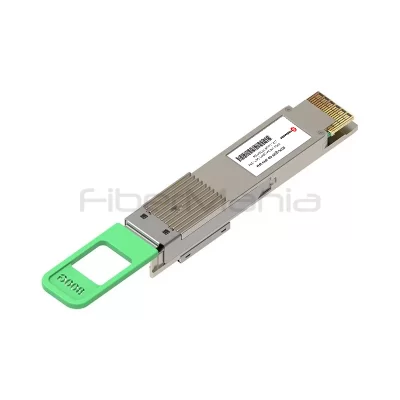
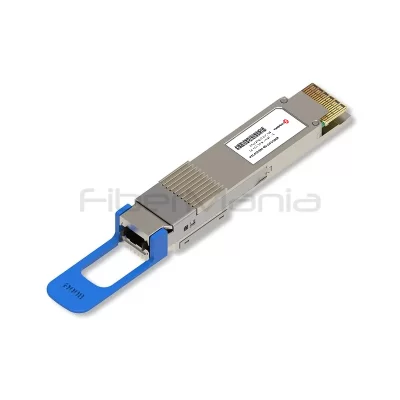
The traditional data-center optical architecture is relatively straightforward. A switch ASIC processes electrical signals and sends them through high-speed electrical channels to an optical transceiver located at the front panel of the switch. The transceiver converts the electrical signals into optical signals, which then travel through a fiber-optic network to another optical endpoint.
The conceptual path is:
Switch ASIC → High-Speed Electrical Interface → Pluggable Optical Transceiver → Fiber
This architecture creates a clear division between electronics and optics. The switch manufacturer can use a standardized electrical interface, while optical modules can be supplied, replaced, and upgraded independently. Fiber connectivity is also relatively independent from the internal design of the switch.
The problem is that the electrical section of this architecture becomes increasingly difficult as signaling rates increase. At lower speeds, the electrical connection between the ASIC and the optical module is relatively manageable. At very high SerDes rates, however, the channel introduces significant loss and signal-integrity challenges. Equalization and other signal-conditioning technologies can compensate for some of these effects, but they consume additional power and increase system complexity.
AI workloads make this issue particularly important because modern AI clusters generate enormous amounts of east-west traffic. GPUs and accelerators constantly exchange data with switches and other computing devices, creating a demand for extremely high aggregate bandwidth. Increasing the speed of individual optical modules helps, but it does not eliminate the electrical bottleneck between the switch ASIC and those modules.
NPO and CPO address this problem by moving the optical conversion point closer to the ASIC. The resulting architecture becomes closer to:
Switch ASIC → Short Electrical Connection → Optical Engine → Fiber
This is more than a change in the location of an optical module. It represents a shift toward integrating photonics into the computing system itself.
Understanding NPO and CPO
NPO and CPO share the same fundamental objective, but they represent different levels of integration.
Near-Packaged Optics places the optical engine very close to the switch ASIC while maintaining a physical separation between the optical engine and the main ASIC package. Depending on the implementation, the optical engine may be positioned on the same board or substrate and connected to the ASIC through a short electrical path. This approach reduces electrical reach while retaining more physical separation and serviceability than a fully co-packaged design.
Co-Packaged Optics takes the concept further by placing the optical engines directly alongside or within the package architecture of the switch ASIC. The electrical connection between the ASIC and optical engine can therefore be reduced to a very short distance.
The difference can be simplified as follows:
| Architecture | Optical Engine Location | Electrical Reach | Integration | Main Advantage |
|---|---|---|---|---|
| Pluggable Optics | Front-panel optical module | Longest | Low | Flexibility and serviceability |
| NPO | Near the ASIC, outside the package | Short | Medium | Balance between integration and practicality |
| CPO | Closely integrated with ASIC package | Very short | High | Bandwidth density and electrical efficiency |
NPO can therefore be viewed as an intermediate architecture, but it should not necessarily be regarded as merely a temporary step toward CPO. Its balance between electrical efficiency, optical integration, and serviceability could make it attractive in its own right.
CPO, meanwhile, represents the highest level of integration among these three approaches. By minimizing the electrical path, it has the potential to provide significant advantages for extremely high-bandwidth switching systems. However, this higher integration also creates some of the most difficult engineering and operational challenges facing the optical industry.
The distinction between these architectures is important because there is unlikely to be a single technology that replaces all existing optical connectivity. Pluggable optics, NPO, and CPO will probably coexist for different applications depending on bandwidth, power, reach, cost, and serviceability requirements.

Why CPO and NPO Are Particularly Important in the AI Era
The strongest driver behind CPO and NPO is the rapid growth of AI infrastructure. The bandwidth requirements of AI clusters are fundamentally different from those of many conventional enterprise and data-center workloads. Large numbers of accelerators need to communicate continuously with each other, while high-performance switch ASICs must aggregate traffic from hundreds of high-speed links.
As individual interfaces move toward 800G and 1.6T, the total switching capacity of a single system can reach extremely high levels. At that point, the power consumed by electrical interconnects becomes an increasingly important part of the system-level energy budget.
This is where optical communication has an inherent advantage. Once information is converted into light, it can travel through optical fiber with very low transmission loss over practical data-center distances. The challenge is therefore not the fiber itself but how efficiently the system can convert electrical information into optical information and deliver that optical signal to the network.
CPO and NPO move this conversion closer to the processor.
The result is a transition from a conventional model in which optics are positioned at the edge of the system toward one in which optics become part of the computing architecture.
This transition also explains why technologies that previously belonged to separate areas of the optical industry are now being discussed together. Silicon photonics, external laser sources, optical engines, fiber arrays, FAUs, PMF, advanced packaging, and thermal management are becoming parts of a single optical-interconnect ecosystem.
The industry is consequently moving from fiber-to-fiber connectivity toward a broader concept of fiber-to-chip connectivity.
The New Technical Challenges Created by CPO and NPO
The advantages of CPO and NPO come with a fundamental trade-off: reducing the electrical distance between the ASIC and optical engine makes the optical system much more tightly integrated with the electronic and mechanical system. This creates engineering problems that are less significant in conventional pluggable architectures.
One of the most important changes is the optical interface itself. In a traditional optical module, the fiber interface is standardized and relatively easy to handle. The module is assembled and tested independently, and the final fiber connection is generally made through a mature connector ecosystem. In CPO and NPO, however, optical fibers may need to connect directly to compact optical engines through highly precise fiber arrays or Fiber Array Units. Fiber position, orientation, mode-field matching, insertion loss, and mechanical stability can all become critical.
Polarization can introduce another layer of complexity. Some optical-engine architectures, particularly those involving external laser sources and polarization-sensitive silicon photonic components, may require polarization to be carefully controlled between the laser and photonic chip. This creates demand for polarization-maintaining fiber and PMF-based optical assemblies that can preserve the polarization state while meeting tight bending, routing, alignment, and packaging requirements.
This is fundamentally different from the traditional concept of a communication fiber cable. A conventional fiber cable is primarily designed to transport optical signals reliably through a network. A PMF assembly used around an optical engine may instead need to become a precision optical component in which the fiber’s polarization axis, mechanical stress, bend condition, and termination geometry all affect system performance.
The manufacturing challenge therefore extends beyond producing a high-quality fiber. The industry must control the entire chain from fiber manufacturing to cabling, fiber-array formation, splicing, connectorization, polarization-axis alignment, and optical coupling.
Thermal management is another major challenge. High-performance switch ASICs already generate substantial heat, and placing optical engines next to them creates a much more complex thermal environment. Lasers are particularly sensitive to temperature, while photonic devices may also have temperature-dependent characteristics. The optical and electrical systems therefore have to be designed together with the cooling system.
Serviceability presents another major difference. A conventional pluggable transceiver can be removed and replaced without replacing the entire switch. With highly integrated CPO, an optical-engine failure may be much more difficult to isolate and repair. This creates questions about field maintenance, component replacement, system lifetime, and the economic consequences of failures.
Manufacturing yield is equally important. CPO involves a large number of optical channels and extremely precise assembly requirements. Even a small alignment error can affect optical coupling, while a small defect in one component can potentially reduce the yield of an expensive integrated package. As a result, high-volume manufacturing requires advanced automated alignment, testing, packaging, and inspection technologies.
These challenges demonstrate why CPO and NPO cannot simply be understood as “faster optical modules.” They are new system architectures that require the optical, electrical, mechanical, thermal, and manufacturing disciplines to work together.
From Optical Modules to Optical Engines
This architectural change also introduces a new terminology that is increasingly important in the optical industry: the optical engine.
A traditional optical transceiver is a relatively self-contained product. It includes the optical and electrical components necessary to convert signals between the electrical and optical domains and exposes a standardized interface to the outside system.
An optical engine is different. It is intended to become part of a larger system rather than operate as an independent front-panel module. It may integrate silicon photonics, modulators, photodetectors, optical coupling structures, drivers, lasers or laser interfaces, and fiber-array connections.
This difference has major implications for optical connectivity.
The fiber interface may no longer be a simple connector mounted on a module housing. Instead, it may involve a compact fiber array positioned directly against an optical engine or photonic integrated circuit.
A simplified optical path can therefore look like:
Laser Source → Specialty Fiber → Fiber Array / FAU → Silicon Photonics → Optical Engine → Fiber Network
This architecture creates opportunities for technologies such as PMF, high-density fiber arrays, low-loss fiber assemblies, and precision FAUs. It also means that fiber manufacturers and connectivity suppliers may increasingly need to understand photonic packaging requirements rather than focusing exclusively on conventional network cabling.
Why PMF Is an Example of the New Connectivity Problem
The renewed interest in polarization-maintaining fiber illustrates particularly well how CPO and NPO are changing the requirements placed on optical connectivity.
PMF has existed for decades and has traditionally been used in applications such as fiber optic gyroscopes, sensing systems, interferometers, and laser systems. Its purpose is to preserve the polarization state of light by using engineered birefringence within the fiber.
The technology itself is therefore not new.
What is new is the possibility of using PMF in large-scale AI optical-interconnect systems. In certain CPO and NPO architectures, an external laser source may need to deliver stable polarized light to a silicon photonic optical engine. In such a system, the PMF is not simply transmitting data between two conventional optical transceivers. It becomes part of a precision optical path between the laser and photonic chip.
This creates new requirements for PMF cable assemblies, including polarization-axis control, low polarization crosstalk, high polarization extinction ratio, low insertion loss, precise fiber-array alignment, and reliable mechanical performance under compact routing conditions.
The emergence of dedicated PMF solutions for CPO/NPO applications at CIOE 2026 is therefore a useful example of the broader transition. It demonstrates how technologies that were previously considered specialty components can become important when optical systems move closer to the chip.
The Current State of CPO and NPO
As of 2026, CPO and NPO should be regarded as emerging technologies rather than universal replacements for conventional pluggable optics.
The pluggable ecosystem remains highly mature. 800G optical transceivers are moving into broader deployment, and 1.6T solutions are progressing through development, qualification, and early commercialization. Pluggable optics continue to offer significant advantages in interoperability, maintenance, supply-chain flexibility, and upgradeability.
At the same time, CPO and NPO are moving beyond purely experimental concepts. Major semiconductor companies, optical suppliers, networking equipment manufacturers, and packaging companies are investing heavily in optical-engine and photonic-integration technologies. The increasing bandwidth requirements of AI networks are providing a strong commercial incentive for these investments.
NPO may have an advantage in the near term because it offers a compromise between traditional modularity and highly integrated CPO. By shortening the electrical path while keeping the optical engine physically separate from the ASIC package, NPO can potentially reduce some of the serviceability and manufacturing challenges associated with full CPO.
CPO is likely to become increasingly attractive as bandwidth density and electrical power constraints become more severe. However, its adoption will depend heavily on whether the industry can solve the associated packaging, thermal, manufacturing, testing, and maintenance challenges at an acceptable cost.
The most realistic near-term scenario is therefore not the immediate disappearance of pluggable optics, but the coexistence of several architectures.
Where Is the Industry Heading?
The long-term direction is toward increasingly integrated optical I/O.
In today’s systems, the architecture can broadly be described as:
Compute → Electrical Interconnect → Optical Transceiver → Fiber
NPO moves toward:
Compute → Short Electrical Interconnect → Optical Engine → Fiber
CPO goes further:
Compute + Optical Engine → Fiber
Future optical-I/O architectures may integrate photonics even more deeply with processors and accelerators, further reducing the distance between electronic computation and optical communication.
This does not mean that electrical interconnects will disappear. Electrical connections will remain extremely important over short distances inside packages and systems. Instead, the boundary between electrical and optical communication is likely to move closer to the computing die as bandwidth requirements continue to increase.
This evolution will create demand for technologies across the entire optical ecosystem. Silicon photonics will need more efficient and scalable packaging. Optical engines will require increasingly dense interfaces. Fiber arrays and FAUs will need higher alignment precision. External laser architectures may require specialized PMF assemblies. Optical fibers themselves may become part of the precision packaging system rather than simply long-distance transmission media.
The result is a gradual transformation of the optical communications industry from a model centered around independent optical transceivers toward a more integrated model combining ASICs, photonics, lasers, optical engines, fiber arrays, specialty fibers, and advanced packaging.
Conclusion
CPO and NPO are important not simply because they offer another generation of optical connectivity, but because they represent a change in the fundamental architecture of high-speed computing networks.
The traditional optical-transceiver model separates the switch, optical module, and fiber network into relatively independent components. CPO and NPO begin to remove those boundaries. Electrical and optical technologies must increasingly be designed together, while fiber connectivity becomes part of the optical-engine and photonic-packaging architecture.
This creates significant opportunities, but also significant challenges. Thermal management, manufacturing yield, optical alignment, serviceability, standardization, and cost all become more complicated as integration increases. The emergence of PMF-based assemblies is one example of these new requirements: a fiber that once served mainly specialized optical applications can now become an important precision component in the laser-to-chip optical path.
The future will probably not be defined by CPO replacing every pluggable optical module. Instead, different architectures will coexist. Pluggable optics will continue to provide flexibility and scalability for many networking applications, NPO may offer a practical balance between integration and serviceability, and CPO may become increasingly important in the most bandwidth-intensive AI systems.
What is changing most fundamentally is the location of optical communication within the computing system. As AI workloads continue to push bandwidth higher and electrical interconnects become more difficult to scale, optical connectivity is moving closer to the processor.
Frequently Asked Questions
1. What is Co-Packaged Optics (CPO)?
Co-Packaged Optics (CPO) is an optical-interconnect architecture that places optical engines very close to, or within the same package architecture as, a high-performance switch ASIC. By significantly shortening the electrical path between the ASIC and optical engine, CPO can help reduce electrical loss, power consumption, and signal-integrity challenges at very high data rates.
2. What is Near-Packaged Optics (NPO)?
Near-Packaged Optics (NPO) places optical engines close to the switch ASIC while maintaining greater physical separation than a fully co-packaged design. It is intended to reduce the electrical reach between the ASIC and optical engine while retaining more flexibility and serviceability than CPO. NPO can therefore provide an intermediate architecture between traditional pluggable optics and highly integrated CPO.
3. What is the main difference between CPO and NPO?
The primary difference is the level and physical location of optical integration. NPO keeps the optical engine physically separate from the ASIC package but positions it nearby, while CPO integrates the optical engine much more closely with the ASIC package. CPO can provide a shorter electrical path and higher integration, whereas NPO may offer advantages in serviceability, manufacturing flexibility, and system design.
4. Why are CPO and NPO becoming important for AI data centers?
AI clusters require enormous bandwidth between GPUs, accelerators, and network switches. As switch bandwidth moves toward 800G, 1.6T, and beyond, the electrical connection between the ASIC and conventional pluggable optical modules becomes increasingly challenging in terms of power consumption, signal integrity, and density. CPO and NPO address this problem by moving optical conversion closer to the ASIC.
5. Will CPO and NPO replace pluggable optical transceivers?
Not immediately, and they may not replace them completely. Pluggable optics remain highly attractive because they are modular, serviceable, upgradeable, and supported by a mature ecosystem. CPO and NPO are more likely to gain adoption in applications where extremely high bandwidth density and energy efficiency justify greater integration, particularly in AI and high-performance networking systems.
6. What are the main technical challenges of CPO and NPO?
The challenges extend beyond optical performance. Thermal management, optical coupling, fiber-array alignment, manufacturing yield, testing, serviceability, standardization, and system cost all become more difficult as the optical engine moves closer to the ASIC. Unlike conventional pluggable optics, CPO and NPO require optical, electrical, mechanical, and thermal components to be considered as parts of a much more integrated system.
7. Why could CPO and NPO create new requirements for optical fiber and fiber assemblies?
In conventional networks, fiber is primarily treated as a transmission medium between optical endpoints. In CPO and NPO systems, fibers can become part of the precision interface between a laser, fiber array, and optical engine. This can create requirements for low-loss fiber assemblies, precise fiber positioning, high-density fiber arrays, and, in certain architectures, polarization-maintaining fiber (PMF) for maintaining a controlled polarization state.
8. What role can polarization-maintaining fiber (PMF) play in CPO and NPO?
PMF can be used in optical paths where the polarization state of light needs to remain stable, such as certain laser-to-optical-engine configurations. By maintaining a defined polarization state, PMF can help support consistent coupling and operation of polarization-sensitive photonic components. This makes PMF a potentially important specialty-fiber technology as optical engines become more closely integrated with high-speed computing systems.
9. Is CPO mainly an optical technology or a packaging technology?
CPO is best understood as a system-level architecture rather than simply an optical technology. Its implementation involves silicon photonics, optical engines, lasers, fiber arrays, electrical interfaces, advanced packaging, thermal management, and testing. The success of CPO therefore depends on coordinating multiple technologies rather than improving the optical transceiver alone.