Skip to content

















































As optical networking moves from 400G to 800G and 1.6T, thermal management is becoming an increasingly important consideration in optical module design. Higher transmission speeds generally come with higher power consumption, while the growing port density of AI clusters, high-performance computing (HPC) systems, and data center switches leaves less space for conventional airflow-based cooling.
The OSFP form factor has evolved to address these challenges through different thermal management approaches. Two designs that are attracting increasing attention are OSFP IHS (Integrated Heat Sink) and OSFP RHS (Riding Heat Sink). Both are designed for high-speed optical modules, but they handle heat in fundamentally different ways. IHS integrates the primary heat sink directly into the optical module, while RHS provides a flat thermal interface that allows the host system to take a larger role in heat dissipation.
Understanding the difference between these two designs is important when selecting 800G and 1.6T optical modules, particularly for high-density switches and next-generation data center networks. The right choice is not simply a matter of choosing the design with better cooling performance; it depends on the thermal architecture, mechanical design, power budget, and deployment environment of the entire system.
What Is OSFP IHS?
OSFP IHS (Integrated Heat Sink) is an OSFP optical module design in which the heat-dissipation structure is integrated directly into the module. Heat generated by the optical engine, DSP, and other internal components is transferred through the module housing to the integrated heat sink, where it is dissipated into the surrounding airflow.
This approach makes the optical module relatively self-contained from a thermal-management perspective. The host switch still needs to provide sufficient airflow, but it does not normally need a dedicated cold plate or other module-specific cooling structure. This makes IHS particularly suitable for conventional air-cooled networking equipment, where the existing chassis cooling system can remove heat from the integrated heat sink.
OSFP IHS designs can generally be divided into Finned Top and Closed Top configurations. A Finned Top module uses exposed heat-sink fins on the top surface to increase the effective surface area available for heat exchange. This design can provide strong cooling performance and is particularly useful for higher-power modules such as 800G and 1.6T transceivers. The trade-off is that the external fin structure increases the module’s overall height and may require more consideration during chassis and airflow design.
A Closed Top design uses a more compact housing in which the heat-dissipation structure is largely enclosed within the module. Compared with Finned Top, this approach provides a flatter external profile and can be useful where mechanical clearance and space utilization are important. However, the available external heat-dissipation area is generally more limited than that of a large exposed fin structure.
One of the biggest advantages of OSFP IHS is its deployment simplicity. Because the heat sink is integrated into the module during manufacturing, users can install and replace the transceiver in much the same way as a conventional pluggable optical module. There is no need to separately install a cold plate or establish a dedicated thermal interface during normal module replacement.
At the same time, IHS remains dependent on the host’s airflow conditions. The actual cooling performance is influenced by fan capacity, airflow direction, ambient temperature, chassis layout, and the spacing between adjacent components. As optical module power and port density continue to increase, the thermal margin available from conventional air cooling can become increasingly limited.

What Is OSFP RHS?
OSFP RHS (Riding Heat Sink) takes a different approach to thermal management. Instead of carrying a large integrated heat sink, the optical module provides a relatively flat top-side thermal interface that works with a Riding Heat Sink, cold plate, or other system-side cooling structure installed within the host equipment.
The fundamental difference is where the main heat-dissipation function is located. With IHS, the optical module carries its own heat sink. With RHS, more of the thermal-management responsibility is transferred to the host system. Heat generated inside the module is conducted toward the top interface, where it can then be transferred into the system-side thermal structure.
This architecture can be particularly attractive for high-power and high-density networking platforms. Instead of relying entirely on airflow around individual modules, the host system can manage thermal energy through a larger and more centralized cooling structure. Depending on the equipment design, that structure may work with conventional air cooling, conduction cooling, cold plates, or liquid-assisted cooling.
It is therefore important not to treat RHS as simply another name for liquid-cooled OSFP. The defining characteristic of RHS is the system-side Riding Heat Sink and thermal interface. Liquid cooling is one possible implementation of the broader system-level cooling architecture, rather than a requirement of every RHS deployment.
The flatter top profile of RHS can also provide mechanical advantages in high-density systems. Without a large integrated fin structure, the module itself can occupy less vertical space above the cage, giving system designers more freedom when arranging high-density ports and chassis-level thermal components.
However, this also means that RHS is more dependent on the host platform. An RHS module cannot simply be assumed to work in every standard OSFP cage. The cage, mechanical structure, thermal interface, and system-side heat sink must all be designed or specified to support the RHS architecture.

OSFP IHS vs. OSFP RHS: What Is the Main Difference?
The easiest way to understand the difference is to look at the thermal path.
With OSFP IHS, heat follows a relatively conventional path: heat is generated by the internal components, transferred to the module housing and integrated heat sink, and then dissipated into the surrounding air. The module therefore contains most of the thermal structure required for its operation.
With OSFP RHS, the heat path continues from the module into a system-side thermal structure. The module acts as part of a larger cooling architecture rather than carrying a complete heat sink itself. This allows the host system to take greater control of thermal management and potentially provide a more efficient path for removing heat from high-power modules.
These differences affect more than just cooling performance. They also influence mechanical design, installation, compatibility, maintenance, and future system upgrades.
| Feature | OSFP IHS | OSFP RHS |
|---|---|---|
| Full Name | Integrated Heat Sink | Riding Heat Sink |
| Heat Sink Location | Integrated into the module | Primarily provided by the host system |
| Module Top | Finned or enclosed heat sink | Relatively flat thermal interface |
| Main Cooling Method | Heat dissipation through airflow | System-side thermal conduction and cooling |
| Air-Cooled Deployment | Highly suitable | Possible depending on system design |
| Liquid-Cooling Integration | Less direct | Better suited to system-level liquid cooling architectures |
| Host Dependency | Relatively low | Relatively high |
| Mechanical Compatibility | Conventional IHS-compatible OSFP system | Requires RHS-compatible cage and thermal structure |
| Module Replacement | Straightforward | Pluggable, but host thermal compatibility is required |
| High-Density Applications | Suitable | Particularly attractive |
| Typical Applications | Air-cooled switches and data centers | AI/HPC, high-density switches, advanced cooling platforms |
Neither architecture should be considered universally superior. Instead, they represent two different ways of solving the same fundamental problem: how to remove increasing amounts of heat from increasingly dense optical networking equipment.
Advantages and Limitations of Each Design
For many existing networks, the biggest advantage of OSFP IHS is deployment flexibility. The module arrives with its heat sink already integrated, allowing it to operate within a conventional air-cooled switch without requiring a dedicated system-side cooling assembly. This can make IHS an attractive option for data centers that are upgrading optical connectivity while retaining their existing cooling architecture.
IHS also simplifies maintenance because the optical and thermal components are packaged together. A failed module can generally be removed and replaced as a single unit. However, the thermal performance of IHS ultimately depends on how effectively the host can move air through the chassis. As power consumption rises, the amount of airflow required to maintain an adequate thermal margin may also increase.
OSFP RHS takes the opposite approach. Its main advantage is the ability to integrate optical module cooling into the broader thermal architecture of the switch. This can be particularly valuable in systems containing a large number of high-power transceivers, where cooling each module independently through airflow becomes increasingly difficult.
RHS can also provide a path toward more advanced cooling architectures. A system designed with a Riding Heat Sink or cold plate can potentially remove heat more efficiently than relying exclusively on airflow around individual modules. This makes RHS especially relevant to AI and HPC networking environments where power density is becoming a major design constraint.
The trade-off is greater system-level complexity. The thermal performance of an RHS deployment depends heavily on the quality of the interface between the module and the host cooling structure. Contact pressure, surface flatness, thermal interface materials, mechanical tolerances, and the design of the cold plate or Riding Heat Sink can all affect the final thermal resistance.
In other words, RHS does not eliminate thermal-design challenges; it moves more of those challenges from the optical module to the networking system.
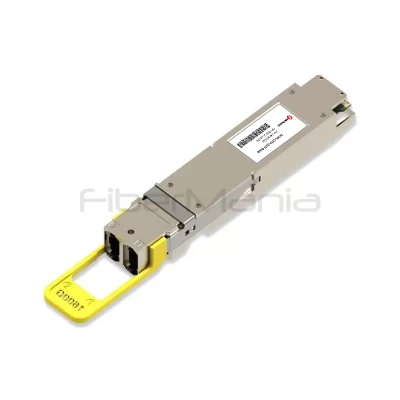
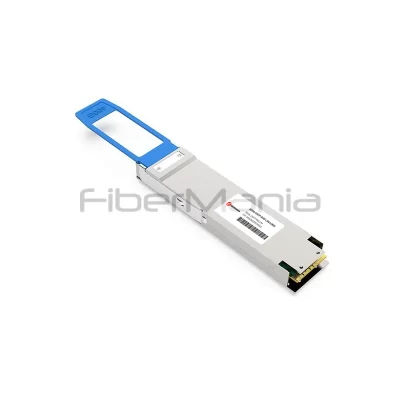
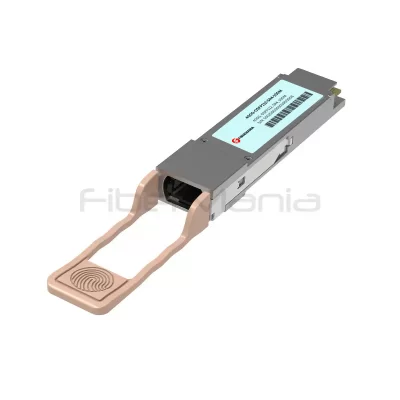
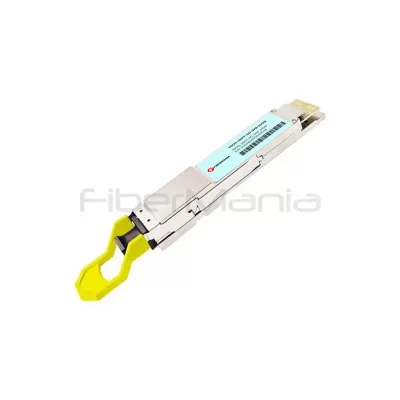
Which OSFP Design Should You Choose?
The best choice should begin with the cooling architecture of the host system rather than the optical module itself.
For a conventional air-cooled switch, OSFP IHS is generally the more straightforward option. It provides an integrated heat sink and can take advantage of the equipment’s existing airflow without requiring a dedicated system-side thermal interface. This makes it suitable for many current data center and enterprise networking environments.
OSFP IHS can also be a practical choice when ease of installation and replacement are important. Since the thermal structure is part of the module, the system integrator does not need to design a separate cooling component for every optical module.
OSFP RHS becomes more attractive when thermal density is a major system-level concern. High-density switches, AI clusters, HPC networks, and next-generation platforms with advanced thermal architectures can benefit from moving the cooling function toward the chassis level. If the host system already includes a compatible Riding Heat Sink, cold plate, or liquid-assisted cooling structure, RHS can provide a more scalable thermal architecture.
Compatibility, however, should always be verified before deployment. An RHS module requires a host platform designed to accommodate its mechanical and thermal characteristics. Therefore, the module, cage, Riding Heat Sink, thermal interface, and chassis cooling system should be considered as one integrated solution.
Why Thermal Design Matters for 800G and 1.6T
The IHS-versus-RHS discussion is becoming more important as optical networking moves toward 800G and 1.6T.
At these speeds, optical modules are no longer isolated components in the system’s power and thermal budget. A switch containing dozens of high-speed optical modules can generate a substantial amount of heat, while AI and HPC workloads can keep these modules operating at high utilization for extended periods.
This creates a system-level challenge. Increasing the size of an individual heat sink can improve cooling, but there are physical limits to how much heat-sink volume can be placed around a high-density optical cage. At the same time, simply increasing airflow can lead to higher fan power, increased acoustic output, and greater overall system energy consumption.
This is why future high-speed networking platforms are increasingly considering thermal management at the system level. OSFP IHS remains an effective solution for air-cooled deployments, while RHS provides another approach for systems where centralized thermal management and advanced cooling technologies are becoming increasingly important.
The development of 800G and 1.6T optical modules is therefore not only a race toward higher bandwidth. It is also a process of balancing optical performance, power consumption, mechanical density, and thermal efficiency.
OSFP IHS or RHS: Which Is Better?
There is no universal answer.
OSFP IHS is generally better suited to conventional air-cooled environments where deployment simplicity, compatibility, and independent module-level heat dissipation are priorities. Its integrated heat sink allows the optical module to work with the host’s existing airflow architecture and makes installation and replacement relatively straightforward.
OSFP RHS is more suitable for systems designed around advanced, system-level thermal management. By transferring more of the cooling responsibility to the host platform, RHS can provide greater flexibility for high-density and high-power networking equipment, particularly where cold plates or liquid-assisted cooling are being considered.
Ultimately, the decision should be based on the complete system rather than the optical module alone. Power consumption, port density, airflow, chassis design, thermal interface requirements, cage compatibility, maintenance strategy, and future cooling upgrades should all be considered before selecting an OSFP thermal architecture.
As 800G and 1.6T networks continue to expand, both IHS and RHS will remain important approaches to optical module thermal management. The key is not to ask which design is universally better, but rather which thermal architecture best matches the requirements of the network being built.
Frequently Asked Questions
Is OSFP RHS the same as liquid-cooled OSFP?
No. RHS describes a module design that uses a system-side Riding Heat Sink or thermal interface. Liquid cooling is one possible cooling method that can be integrated with an RHS architecture, but an RHS module does not automatically mean that the entire system is liquid-cooled.
Can OSFP RHS replace an OSFP IHS module directly?
Not necessarily. RHS and IHS use different thermal and mechanical architectures. An RHS module requires a compatible cage and system-side thermal structure, so compatibility should be confirmed before replacing an IHS module with an RHS module.
Is OSFP IHS suitable for 1.6T optical modules?
Yes. IHS can be used for high-speed optical modules including 1.6T designs, provided that the integrated heat sink and the host system’s airflow are capable of handling the module’s thermal requirements.
Why is OSFP RHS attractive for AI data centers?
AI data centers often use high-density networking equipment with many high-power optical modules operating simultaneously. RHS allows more of the thermal-management function to be handled at the system level, making it attractive for platforms that use advanced cooling architectures and have limited airflow or space for individual module heat sinks.
Which is easier to deploy, OSFP IHS or OSFP RHS?
OSFP IHS is generally simpler to deploy in conventional air-cooled systems because the heat sink is integrated into the module. RHS can still retain the convenience of a pluggable optical module, but the host system must provide the appropriate cage and thermal interface.