Skip to content




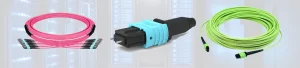
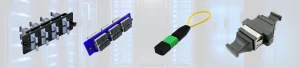
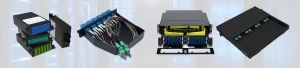
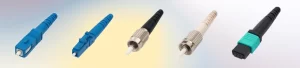



















As fiber optic networks continue to expand across FTTH, 5G, campus, enterprise, and data center applications, deployment speed and installation quality have become just as important as transmission performance. While traditional field installation has long been the standard approach, many network operators are now shifting toward factory pre-terminated fiber solutions to simplify deployment and improve consistency.
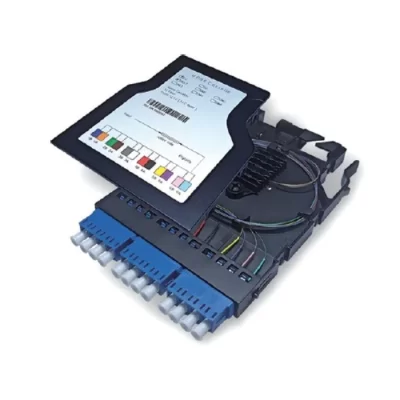
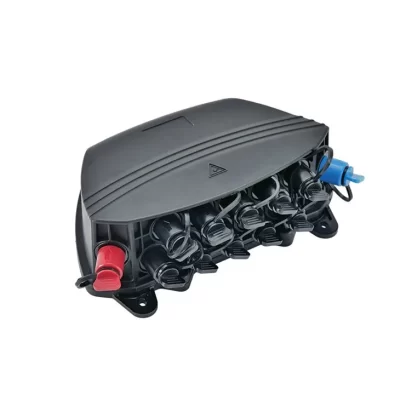
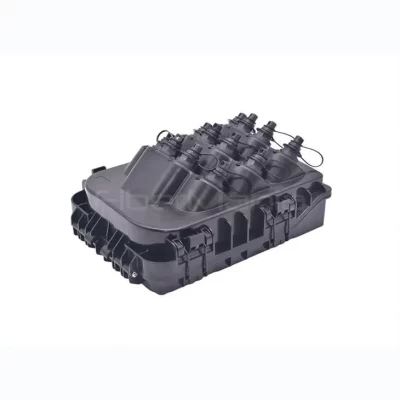
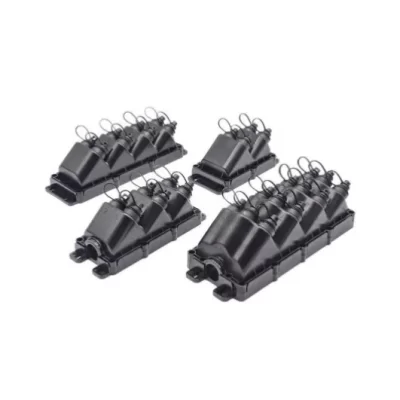
Rather than shipping empty enclosures and loose components to the installation site, manufacturers can deliver complete fiber assemblies that are fully terminated, tested, and ready for immediate installation. Distribution boxes, terminal boxes, MST terminals, patch panels, and even complete cable assemblies can all arrive with connectors, adapters, splitters, and internal fiber routing already completed.
But does factory pre-termination always make sense? And when is traditional field installation still the better choice?
What Is Factory Pre-Termination?
Factory pre-termination refers to the process of assembling, terminating, routing, and testing fiber optic components in a controlled manufacturing environment before they are delivered to the installation site.
Instead of installing individual components on location, technicians receive a complete assembly that is ready to mount and connect.
Depending on the application, a factory pre-terminated solution may include:
- Fiber distribution boxes with pre-installed adapters
- Pre-spliced pigtails
- Integrated PLC splitters
- Hardened Mini SC or SC/APC interfaces
- Factory-routed internal fibers
- MPO/MTP backbone assemblies
- Labeled feeder and drop cable connections
- Factory test reports
Once delivered, installation mainly consists of mounting the enclosure and connecting the feeder and subscriber cables.
What Is Field Installation?
Field installation follows the traditional deployment model. Individual components are transported separately and assembled by technicians on-site.
A typical installation may require:
- Installing adapters
- Mounting splitter modules
- Fusion splicing pigtails
- Routing fibers inside the enclosure
- Cleaning connector end faces
- Testing insertion loss
- Labeling fibers
Although this approach offers maximum flexibility, it also increases installation time and requires experienced technicians and specialized equipment.
Factory Pre-Terminated vs. Field Installation
The biggest difference between the two approaches lies in where the critical optical work is completed.
| Comparison | Factory Pre-Terminated | Field Installation |
|---|---|---|
| Fiber termination | Completed in factory | Completed on site |
| Connector quality | Highly consistent | Depends on technician |
| Optical performance | Factory tested | Verified after installation |
| Installation speed | Very fast | Slower |
| Required skill level | Moderate | High |
| Fusion splicing | Usually unnecessary | Required in most cases |
| Dust contamination risk | Low | Higher |
| Labor cost | Lower | Higher |
| Project scalability | Excellent | Limited by workforce |
| Rework probability | Low | Higher |
For large-scale deployments, these differences can significantly affect overall project cost and completion time.
Why More Network Operators Are Choosing Factory Pre-Terminated Solutions
Faster Network Deployment
Reducing installation time has become one of the biggest advantages of factory pre-terminated infrastructure.
Because the internal assembly is already complete, technicians spend far less time performing fusion splicing, fiber routing, and connector installation.
This is especially valuable for projects involving hundreds or thousands of distribution points, where even small time savings per site can translate into substantial reductions in labor hours.
More Consistent Optical Performance
Fiber connectors assembled in a clean manufacturing environment typically provide better consistency than those terminated under varying field conditions.
Factory production also allows manufacturers to perform standardized testing, including insertion loss and continuity verification, before shipment.
As a result, every assembled enclosure arrives ready for installation with predictable optical performance.
Lower Labor Costs
Field installation requires skilled fiber technicians equipped with fusion splicers, inspection microscopes, cleaning kits, and test instruments.
Factory pre-terminated solutions reduce or eliminate many of these tasks, allowing installation teams to complete projects with fewer specialized personnel.
For contractors facing labor shortages, this can be a significant advantage.
Reduced Risk of Installation Errors
Incorrect fiber routing, poor splice quality, contaminated connectors, and labeling mistakes are among the most common causes of network failures during deployment.
By completing these processes under controlled manufacturing conditions, factory assembly greatly reduces the likelihood of installation-related errors.

When Field Installation Still Makes Sense
Despite the growing popularity of factory pre-terminated solutions, traditional field installation remains the preferred option for certain projects.
Field assembly is often more practical when:
- Cable routes cannot be finalized before construction.
- Fiber lengths vary significantly between installation sites.
- Existing infrastructure requires customized modifications.
- Emergency repairs must be completed immediately.
- Small projects do not justify customized factory production.
For these situations, the flexibility of field installation outweighs the efficiency benefits of pre-terminated assemblies.
Typical Applications for Factory Pre-Terminated Fiber Solutions
Factory pre-terminated products have become increasingly common across a wide range of optical network architectures.
FTTH Access Networks
Pre-terminated distribution boxes and terminal boxes reduce installation time for subscriber connections while maintaining consistent optical quality.
FTTA Base Station Deployments
Outdoor hardened connector systems allow radio units to be connected quickly without field splicing, making them well suited for 4G and 5G network expansion.
Rural Broadband Projects
In remote areas where experienced fiber technicians may be limited, plug-and-play installation significantly simplifies deployment.
Campus and Enterprise Networks
Large educational institutions, hospitals, and corporate campuses benefit from shorter installation windows and standardized infrastructure.
Multi-Dwelling Units (MDUs)
Pre-assembled terminal boxes simplify apartment and residential building installations while reducing disruption during construction.
Data Centers
Factory-terminated MPO trunk cables and pre-configured patch panels accelerate deployment while ensuring high-density connectivity and reliable performance.
Which Solution Is Right for Your Project?
There is no universal answer. The best choice depends on your project’s priorities.
If rapid deployment, consistent quality, and lower labor requirements are your primary objectives, factory pre-terminated solutions generally provide the greatest value.
If your installation environment is highly unpredictable or requires extensive customization on-site, traditional field installation may offer greater flexibility.
Many network operators now combine both approaches, using factory pre-terminated assemblies for standardized sections of the network while reserving field installation for locations that require adaptation during construction.
Conclusion
As fiber networks continue to grow in scale and complexity, installation efficiency has become a critical factor in overall project success.
Factory pre-terminated fiber solutions offer a practical way to reduce installation time, improve quality consistency, and lower labor costs without compromising network performance. By moving critical assembly and testing processes into the factory, operators can deploy fiber infrastructure more quickly and with greater confidence.
Although field installation remains valuable for customized or unpredictable environments, the industry trend is increasingly moving toward plug-and-play fiber infrastructure. For many modern FTTH, FTTA, campus, and enterprise projects, factory pre-terminated solutions are no longer simply an alternative—they are becoming the preferred deployment strategy.
Frequently Asked Questions
1. Why are high fiber count ribbon cables preferred in AI data centers?
High fiber count ribbon cables are designed to support the massive optical connectivity required by AI workloads. Modern AI clusters contain thousands of GPUs connected through high-speed leaf-spine networks, creating enormous east-west traffic. A 432-fiber or 864-fiber ribbon cable allows hundreds of fibers to be deployed within a compact footprint, reducing cable congestion while simplifying installation and future network expansion.
2. What is the advantage of ribbon fiber over loose tube fiber cable?
The biggest advantage of ribbon fiber cable is its ability to support mass fusion splicing. Instead of splicing each fiber individually, an entire ribbon—typically containing 12 fibers—can be spliced simultaneously. This significantly reduces installation time, labor costs, and the risk of inconsistent splice quality. Ribbon fiber also provides higher fiber density, making it ideal for backbone networks and hyperscale data centers.
3. Is a 432-fiber ribbon cable suitable for future network upgrades?
Yes. A 432-fiber ribbon cable is widely considered a future-ready backbone solution. It provides sufficient fiber capacity for current 400G and 800G deployments while leaving additional fibers available for future expansion. As AI infrastructure continues to grow and network speeds move toward 1.6T Ethernet, high fiber count cables help minimize the need for costly infrastructure replacements.
4. Where are high fiber count ribbon cables commonly used?
High fiber count ribbon cables are widely deployed in AI data centers, hyperscale cloud campuses, metropolitan backbone networks, telecommunications central offices, and large enterprise data centers. They are particularly suitable for environments where high fiber density, fast deployment, and scalable network architecture are essential.
5. How does mass fusion splicing improve installation efficiency?
Mass fusion splicing allows multiple fibers within a ribbon to be spliced in a single operation rather than one fiber at a time. For example, a standard 12-fiber ribbon requires only one fusion splice instead of twelve individual splices. This greatly reduces installation time, improves consistency, and lowers labor costs for large-scale fiber optic deployments.
6. Why is fiber density becoming increasingly important in AI networks?
As AI clusters continue to scale, network switches support more ports and higher transmission rates, resulting in a rapid increase in fiber connections. Higher fiber density enables more optical fibers to be installed within limited cable trays and conduits, improving space utilization while making future expansion easier. This is one of the primary reasons why ribbon fiber technology is becoming the preferred solution for modern AI data centers.
7. What fiber counts are available for ribbon fiber cables?
Ribbon fiber cables are available in a wide range of configurations to meet different network requirements. Common fiber counts include 144, 288, 432, 576, 864, and 1728 fibers. The appropriate choice depends on the network scale, expected growth, available cable pathways, and long-term capacity planning.