Skip to content
































In the era of hyper-connectivity, fiber optic technology has transitioned from a luxury to a fundamental necessity. As global demand for high-speed internet, 4K streaming, and IoT integration surges, telecommunications companies and system integrators face a critical decision: which FTTx (Fiber to the X) architecture is the most cost-effective and future-proof?
Understanding the nuances between FTTH (Fiber to the Home), FTTB (Fiber to the Building), and FTTC (Fiber to the Curb) is essential for optimizing network performance and managing capital expenditure (CAPEX). As a specialized OEM/ODM manufacturer of fiber optic components, we see firsthand how the choice of architecture dictates the requirements for patch cords, splitters, and distribution hardware.
Defining the FTTx Landscape: What are FTTB and FTTC?
Before comparing the three, let’s clarify the definitions of the two “hybrid” models that often cause confusion.
What is FTTC (Fiber to the Curb)?
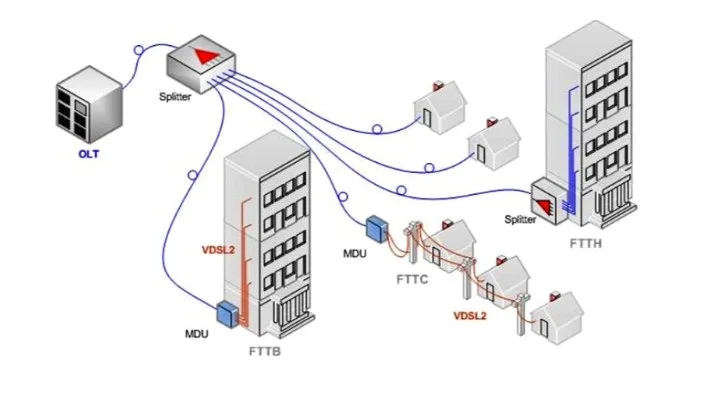
FTTC is often the first step in upgrading a legacy copper network. In this configuration, the fiber optic cable runs from the central office to a distribution point—typically a street cabinet or a pole-mounted enclosure located within approximately 300 meters of the customer’s premises.
From the cabinet to the end-user, the connection is completed using existing copper twisted-pair (telephone lines) or coaxial cables. Technologies like VDSL2 or G.fast are used to squeeze higher speeds out of these copper lines. It is a “fiber-rich” but not “all-fiber” solution.
What is FTTB (Fiber to the Building)?
FTTB brings fiber deeper into the infrastructure than FTTC but stops short of the individual living space. The fiber terminates at a dedicated telecommunications room or basement of a multi-dwelling unit (MDU) or a commercial office building.
The final distribution from the basement to the individual apartments or offices is handled via Ethernet (CAT6/6A) cables or existing copper infrastructure. This model is highly popular in high-density urban areas where running new fiber through old internal conduits is physically challenging or prohibitively expensive.
Technical Comparison: FTTH vs. FTTB vs. FTTC
To help you visualize the trade-offs, we have summarized the key technical and economic differences in the table below:
| Feature | FTTH (Fiber to the Home) | FTTB (Fiber to the Building) | FTTC (Fiber to the Curb) |
| Fiber Termination Point | Inside the user’s premises (ONT/ONU) | Building’s basement or utility room | Street cabinet (approx. 300m away) |
| “Last Mile” Medium | 100% Fiber Optic Cable | Ethernet (Copper) or VDSL2 | VDSL2 or G.fast (Copper) |
| Max Bandwidth Potential | Infinite (10G/50G/100G ready) | High (Up to 1Gbps) | Moderate (Up to 100-300Mbps) |
| Signal Latency | Lowest | Moderate | Higher |
| Deployment Cost | Highest (Labor intensive) | Medium | Lowest |
| Maintenance Needs | Low (Fiber is immune to EMI) | Moderate (Active gear in basement) | High (Vulnerable copper lines) |
| Future Scalability | Best (No need to re-trench) | Good (May need cable upgrades) | Poor (Limited by copper physics) |
Strategic Analysis: Which Should You Choose?
1. The Case for FTTH: The Gold Standard
FTTH is the only architecture that is truly “future-proof.” Because the entire link consists of optical fiber, it is immune to electromagnetic interference (EMI) and signal degradation over distance.
Best for: New residential developments, smart cities, and high-end enterprise zones.
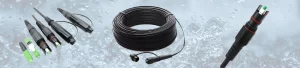
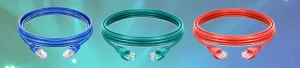
OEM Perspective: FTTH requires high volumes of Drop Cables and Indoor Patch Cords. As an OEM partner, we focus on G.657.A2 Bend-Insensitive Fiber for FTTH projects. This allows installers to route cables around tight corners in homes without losing signal—a critical factor for customer satisfaction.
2. The Case for FTTB: The Urban Workhorse
FTTB strikes a balance between speed and cost. It is particularly effective for high-rise apartments where the cost of running fiber to every single floor is not yet justified by the current subscription rates.
Best for: High-density urban renovations and multi-tenant commercial buildings.
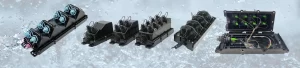
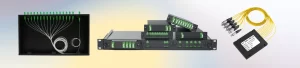
OEM Perspective: FTTB deployments rely heavily on High-Density MPO/MTP Solutions and PLC Splitters located in the building’s optical distribution frame (ODF). We provide customized rack-mount enclosures that allow for rapid scaling as more tenants sign up for service.
3. The Case for FTTC: The Rapid Deployment Specialist
When a provider needs to cover a wide geographic area quickly with a limited budget, FTTC is the go-to solution. It allows operators to offer “High-Speed Internet” marketing without the massive civil engineering costs of digging up every driveway.
Best for: Rural broadband initiatives and suburban areas with existing high-quality copper infrastructure.
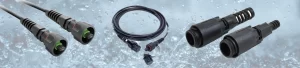
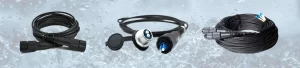
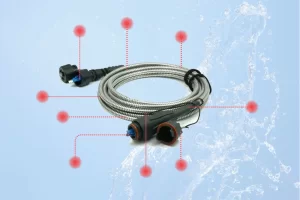
OEM Perspective: The vulnerability of FTTC lies in the outdoor environment. We supply IP67-rated Waterproof Connectors and Ruggedized Outdoor Patch Cords to ensure that the fiber link to the street cabinet remains operational despite moisture and temperature fluctuations.
Quality Components: The Silent Heroes of FTTx
Regardless of the architecture you choose, the network is only as strong as its weakest connection. A common mistake in FTTx deployment is prioritizing active hardware (routers and switches) while compromising on passive components.
As a dedicated manufacturer, we emphasize three pillars of quality:
Low Insertion Loss (IL): Every 0.1dB matters in a long-haul FTTx link. Our factory-terminated jumpers ensure minimal loss, maximizing the reach of your OLT.
High Return Loss (RL): For high-speed protocols like XGS-PON, back-reflections can cripple performance. We use premium ceramic ferrules and precision polishing to maintain RL > 60dB for APC connectors.
Durability: FTTx components must last 20+ years. We use UV-resistant jackets and corrosion-resistant housings to withstand the rigors of field deployment.
Conclusion: Tailoring the Solution to the Budget
There is no “one-size-fits-all” answer in fiber deployment. FTTH is the ultimate goal, but FTTB and FTTC serve as vital stepping stones that allow for incremental upgrades.
For network operators, the key is to partner with a manufacturer that understands the specific demands of each architecture. Whether you need 50,000 customized LC/APC pigtails for an FTTH rollout or ruggedized trunk cables for an FTTB project, choosing a reliable OEM partner ensures that your infrastructure remains stable for decades to come.
Work with a Proven FTTx Manufacturing Expert
Ready to scale your network? We provide end-to-end OEM/ODM services for fiber optic patch cords, splitters, and distribution accessories. Our products are tested to international standards to ensure your deployment is seamless and reliable.
[Contact Our Team Today for a Custom Quote or Free Sample Kit]