Skip to content
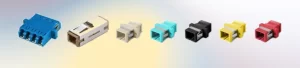
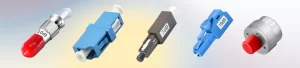
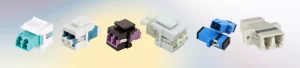
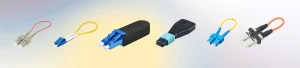








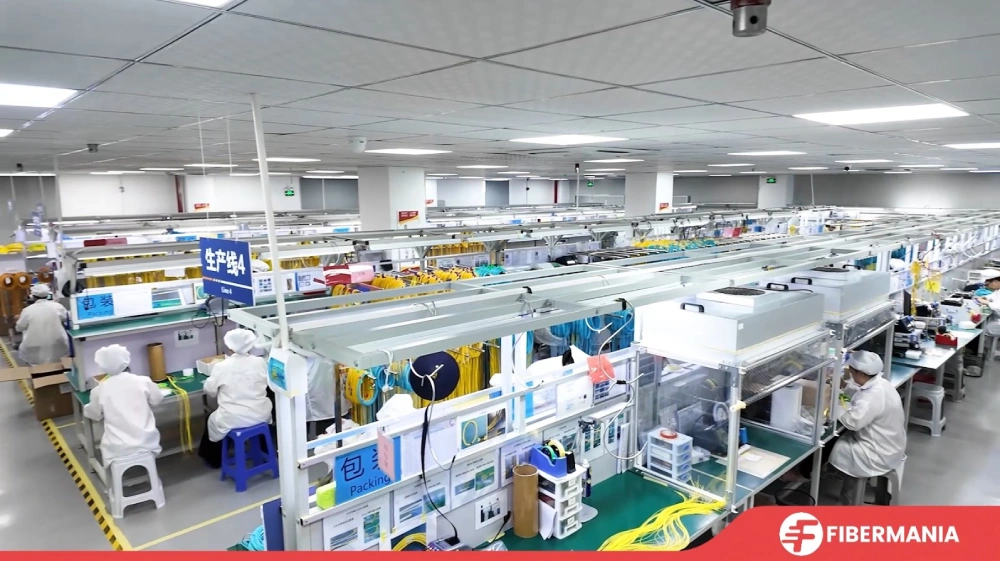




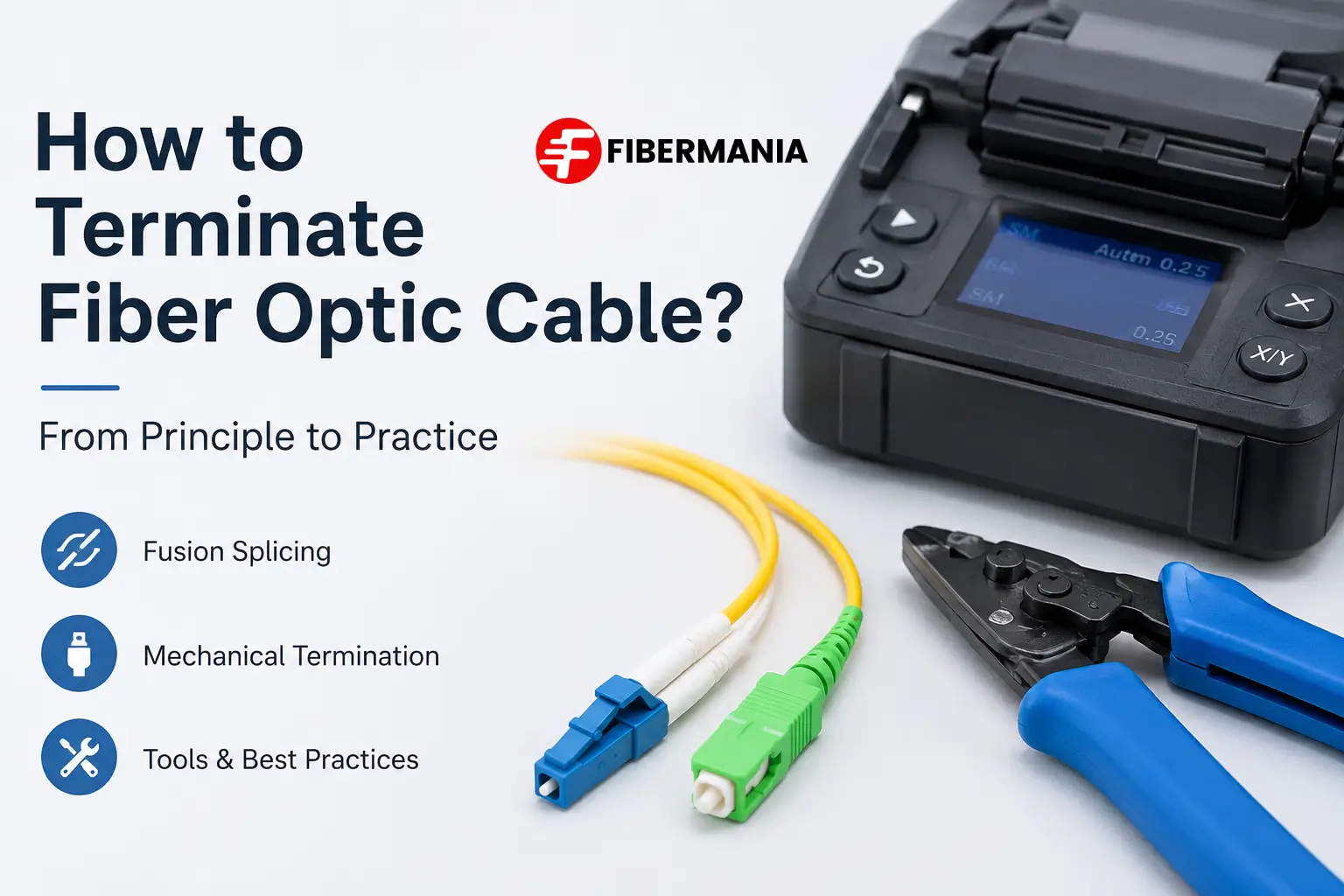
Fiber optic cables are the backbone of modern communication networks, enabling ultra-high bandwidth, low latency, and immunity to electromagnetic interference. However, unlike copper Ethernet cables that can simply be crimped with an RJ45 connector, fiber optic termination requires precision, cleanliness, and the right tools.
Whether you are building FTTH networks, repairing damaged links, or assembling patch cords, understanding proper fiber termination methods is essential for achieving stable and low-loss optical performance.
This guide explains the two primary fiber termination methods—fusion splicing and mechanical termination—and walks through the complete process step by step.
What Does “Fiber Optic Termination” Mean?
Fiber termination is the process of preparing and connecting the end of an optical fiber so it can be properly joined to another fiber, connector, or active equipment.
The goal is to create:
- A perfectly smooth and flat fiber end-face
- A secure mechanical or fused connection
- Minimal optical loss and back reflection
Common fiber connectors include:
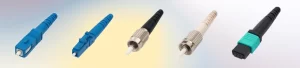
- LC, SC, ST
- FC, E2000
- MPO/MTP
Because fiber cores are extremely small (typically 9µm for single-mode and 50/62.5µm for multimode), even microscopic dust or scratches can significantly degrade signal performance.
Key Challenges in Fiber Optic Termination
Successful fiber termination requires attention to several critical factors:
1. Micron-Level Precision
The optical core is smaller than a human hair. Any contamination or misalignment leads to insertion loss or signal failure.
2. End-Face Quality
Connector end-faces must be properly polished or cleaved to meet standards such as:
- PC (Physical Contact)
- UPC (Ultra Physical Contact)
- APC (Angled Physical Contact)
3. Cleanliness
Over 70% of fiber network issues are caused by contamination rather than hardware defects.
Method 1: Fusion Splicing (Permanent Fiber Termination)
Fusion splicing is the most reliable and widely used method for permanently joining two optical fibers. It uses an electric arc to melt and fuse fiber ends together, resulting in extremely low loss and high stability.
Typical insertion loss: 0.01–0.1 dB
It is widely used in:
- FTTH networks
- Backbone infrastructure
- Data centers
- Long-distance transmission links
Tools Required for Fusion Splicing
- Fusion Splicer – Core alignment and splicing machine
- Fiber Cleaver – Ensures precise, flat fiber cutting
- Fiber Stripper – Removes jacket and buffer coating
- Kevlar Scissors – Cuts aramid yarn strength members
- Lint-free wipes & Isopropyl alcohol – Cleaning bare fiber
- Heat-shrink sleeves – Mechanical protection for splice points
Fusion Splicing Process Steps
Step 1: Cable Preparation
Remove the outer jacket and expose the fiber core carefully. Strip buffer coatings without damaging the glass fiber.
Step 2: Cleaning
Use lint-free wipes with high-purity alcohol to remove dust and residue from the bare fiber.
Step 3: Cleaving
This is the most critical step. A high-quality cleave ensures a perfect, mirror-like fiber end-face.
Step 4: Alignment & Fusion
Place fibers into the splicer. The machine automatically:
- Aligns fiber cores
- Pre-cleans with arc discharge
- Fuses fibers using electric arc
Step 5: Protection
Install heat-shrink sleeve and heat it to secure the splice.
Step 6: Cable Management
Route fibers into splice trays while maintaining proper bend radius to avoid signal loss.
Method 2: Mechanical Fiber Termination
Mechanical termination does not require fusion splicing equipment. Instead, fibers are aligned and secured using mechanical structures, adhesives, or index-matching gel.
It is commonly used for:
- Field repairs
- Temporary installations
- Rapid FTTH deployments
Typical loss: 0.3–0.5 dB
A. Epoxy and Polish Connector Termination
This traditional method uses adhesive and manual polishing.
Tools Required
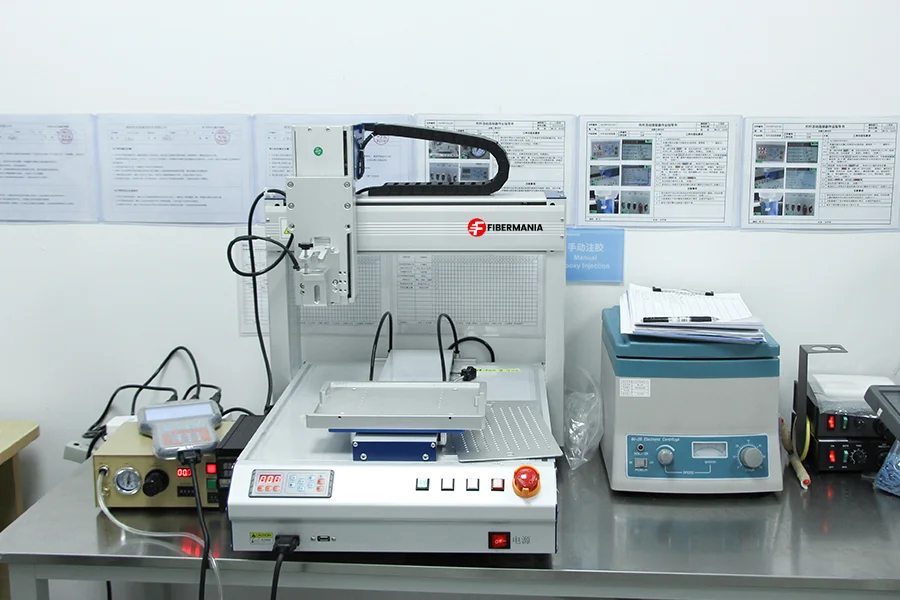
- Epoxy injection kit
- Curing oven
- Fiber polishing films
- Connector crimp tools
- Polishing puck
Process Overview
- Strip and clean fiber
- Inject epoxy into connector
- Insert fiber into ferrule
- Cure in heating oven
- Cleave excess fiber
- Polish ferrule end-face using graded polishing films
This method delivers good performance but requires skilled technicians.
B. Mechanical (No-Epoxy / Fast Connector) Termination
This is the fastest field termination method.
Typical use: FTTH drop cable installation
Tools Required
- Mechanical fast connector
- Simple cleaver
- Fiber stripper
Process Overview
- Strip and clean fiber
- Precisely cleave fiber
- Insert fiber into connector
- Lock mechanism engages internal alignment system
Advantages:
- Very fast installation (<1 minute)
- No epoxy or curing required
- Low tool cost
Limitations:
- Slightly higher optical loss
- Lower long-term durability compared to fusion splicing

Fiber Termination Method Comparison
| Feature | Fusion Splicing | Epoxy & Polish | Mechanical Connector |
|---|---|---|---|
| Insertion Loss | Very Low (0.01–0.1 dB) | Low (0.2–0.5 dB) | Medium (0.3–0.5 dB) |
| Reliability | Excellent | High | Medium |
| Speed | Medium | Slow | Very Fast |
| Skill Requirement | High | High | Low |
| Cost | High equipment cost | Moderate | Low tooling cost |
| Best Use | Backbone / Data Center | Patch cords | Field installation |
Best Practices for Fiber Termination
1. Always Clean Before You Connect
Even microscopic dust can cause major signal degradation.
2. Use High-Quality Cleavers
Cleave quality directly determines splice performance.
3. Test Every Connection
Use:
- OTDR (Optical Time Domain Reflectometer)
- Power meter & light source
4. Respect Bend Radius
Avoid sharp bends that can cause macro-bending loss.
5. Handle Fiber Waste Safely
Always dispose of fiber scraps in a dedicated sharps container.
Conclusion
Fiber optic termination is a highly precise process that directly impacts network performance and reliability. Fusion splicing offers the highest performance for permanent installations, while mechanical termination provides speed and flexibility for field applications.
By selecting the right termination method and following proper cleaning and handling procedures, technicians can ensure stable, low-loss optical networks in FTTH, data center, and enterprise environments.
FAQ
1. What tools are needed for fiber optic termination?
Common tools include fiber cleavers, fusion splicers, stripping tools, polishing kits, and inspection microscopes.
2. How long does fiber termination take?
Depending on experience and method, termination can take from 1 minute (fast connectors) to 5–10 minutes (polished connectors) per fiber.
3. Is fiber optic termination difficult?
Yes. It requires training, precision tools, and strict cleanliness control, especially for fusion splicing.
4. Which method is best?
- Fusion splicing: best performance
- Mechanical connectors: fastest installation
- Epoxy & polish: balanced traditional method