Skip to content


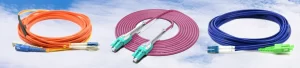
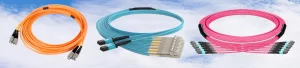



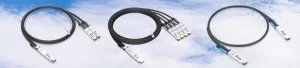






































When planning a fiber optic cabling project, choosing the right cable type and connector configuration is only part of the decision. Another important question is how the connections should be made: should fiber optic assemblies be manufactured and tested at the factory before delivery, or should connectors be installed and terminated on-site during installation?
For B2B buyers, network designers, system integrators, and contractors, this decision affects much more than the price of individual cables. It influences installation schedules, labor requirements, testing procedures, project flexibility, failure risks, and long-term maintainability. Pre-terminated and field-terminated cabling are both established approaches, and neither is universally superior. Pre-terminated solutions are often attractive for standardized installations where speed and consistency are priorities, while field termination remains valuable when cable routing is unpredictable, site conditions are complex, or future modifications require greater flexibility. The most effective approach depends on the application, project scale, installation environment, and capabilities of the installation team.
1. Understanding Pre-Terminated and Field-Terminated Fiber Optic Cabling
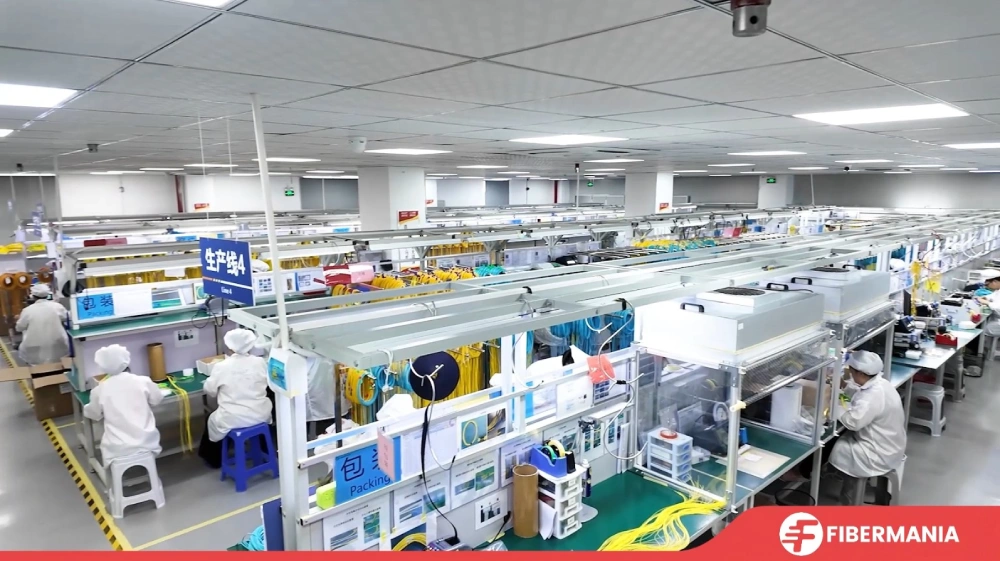
Pre-terminated fiber optic cabling refers to cable assemblies that are manufactured with connectors installed at the factory. Depending on the application, these assemblies may include simplex or duplex patch cords, multi-fiber trunk cables, breakout harnesses, and MPO/MTP trunk assemblies. During manufacturing, the cable is cut to a specified length, connectors are installed, and the assembly undergoes appropriate inspection and testing before shipment. The finished product is then delivered to the project site, where installers route the cable and connect it to the corresponding ports, adapters, cassettes, or equipment.
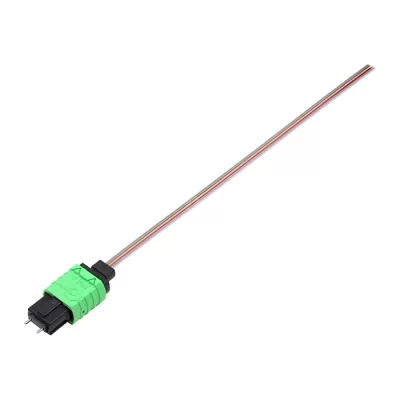
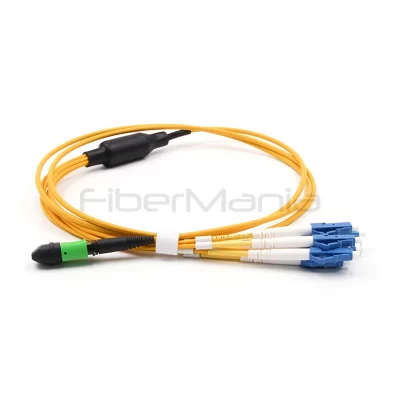
For example, a data center project may use MPO trunk cables to connect high-density patch panels between distribution areas. Instead of terminating each fiber individually in the data center, the installation team can deploy factory-assembled trunks and connect them to compatible modules or cassettes. This approach shifts much of the precision work from the construction site to a controlled manufacturing environment, but it also makes advance planning more important because cable lengths, connector types, polarity, fiber counts, and interface configurations must be defined before production.
Field termination, by contrast, involves completing cable connections at the installation site rather than receiving fully terminated assemblies from the factory. In fiber optic networks, this can involve installing field-installable connectors, fusion splicing fibers to pigtails, or preparing and terminating cable ends using application-specific techniques. The appropriate method depends on the cable construction, connector system, performance requirements, and installation environment. For instance, a contractor upgrading an existing commercial building may need to route cables through crowded conduits, multiple risers, and irregular pathways. Because final cable lengths may not be known accurately until routing is complete, field termination allows the installer to cut the cable to the required length and finish the connections on-site.
It is also important to distinguish field termination from field splicing. A fusion splice joins two prepared fibers, often to connect a distribution cable to a pigtail, whereas connector termination creates a connectorized interface. These methods serve different purposes, and a project may use both. Field termination is therefore not a single technique but a broader approach in which connection work is completed at the site using methods appropriate to the application.
2. Key Differences Between Pre-Terminated and Field Termination
The most important differences emerge when the two approaches are evaluated across the complete installation process rather than by comparing cable prices alone.
| Evaluation Factor | Pre-Terminated Cabling | Field Termination |
|---|---|---|
| Installation speed | Generally faster when routes and configurations are confirmed | Usually requires more on-site labor and processing |
| Quality control | Factory inspection and testing provide consistent production control | Final quality depends on field procedures and workmanship |
| Cable length flexibility | Requires accurate planning and predefined lengths | Can accommodate actual routing conditions |
| Material cost | Often higher for custom assemblies | Bulk cable and separate termination materials may cost less |
| Labor requirements | Reduces on-site termination work | Requires trained technicians and appropriate tools |
| Installation environment | Ideal for standardized and repeatable deployments | Useful for complex or unpredictable routes |
| Design changes | Late changes may require replacement assemblies | Often easier to accommodate local modifications |
| Testing | Factory test reports may be available, but installed links still require verification | Testing is performed after field termination and installation |
| Maintenance | Replacement assemblies may require specific configurations and procurement | Local retermination or splicing may be possible |
| Project planning | Requires greater coordination before installation | Some decisions can be deferred until actual routing is known |
These differences are not absolute. A well-organized field termination team can deliver consistent results, while a poorly specified pre-terminated system can introduce costly installation problems. The key is to match the termination method to the conditions under which the network will actually be built and operated.
3. Why Pre-Terminated Cabling Is Often Preferred for Data Centers
Data centers are one of the clearest examples of where pre-terminated cabling can provide substantial practical advantages. High port density, repetitive rack layouts, strict deployment schedules, and limited space for installation activities all favor solutions that minimize on-site termination work. A large data center project may involve hundreds or thousands of fiber connections across server racks, switches, patch panels, and distribution frames. If every connection requires individual preparation and termination, the accumulated labor can become significant.
Factory-terminated trunk cables and MPO/MTP assemblies allow installation teams to complete many connections through a smaller number of pre-engineered cable assemblies. Installers can focus on routing, securing, labeling, connecting, and verifying the installed links rather than performing every termination on-site. This is particularly valuable during new data center construction, phased capacity expansion, or equipment deployment projects in which network availability must align with a tightly controlled construction schedule. However, faster physical installation does not automatically mean a faster overall project. Engineering, production, shipping, receiving inspection, and configuration verification must all be incorporated into the schedule. Pre-termination delivers its greatest advantage when these activities are coordinated early enough to prevent delays elsewhere.
Quality consistency is another important consideration in high-density data center environments. As connection density increases, the consequences of poor workmanship, contaminated end faces, incorrect polarity, or mismatched connector configurations become more significant. Factory production provides a controlled environment for connector installation, end-face inspection, assembly verification, and applicable optical performance testing. Standardized processes can reduce variability between assemblies and make quality documentation easier to maintain.
Nevertheless, factory termination does not eliminate every source of failure. Connector end faces can become contaminated during transportation or installation, cables can be damaged during pulling, and incompatible polarity or pin configurations can prevent a link from operating correctly. Pre-terminated assemblies should therefore be treated as quality-controlled components of a larger cabling system, not as a substitute for installed-link verification.
Pre-terminated cabling can also simplify the deployment of high-speed network architectures. MPO/MTP trunk cables, breakout harnesses, and pre-terminated cassette systems support structured fiber infrastructure while helping reduce cable congestion. For projects involving 400G, 800G, or future higher-speed architectures, however, the correct connector arrangement depends on the selected optical transceivers, fiber type, lane configuration, polarity, and link design. A pre-terminated assembly must be engineered for the intended application rather than selected solely because it offers a high fiber count. Early coordination between the network designer, system integrator, equipment supplier, and cabling manufacturer is therefore essential.
4. When Field Termination Is the Better Choice
Despite the advantages of factory-terminated assemblies, field termination remains essential in many practical installations. The deciding factor is often not the scale of the network but the degree of uncertainty surrounding the cable route and the work that must be completed on-site.
Existing buildings rarely provide the same predictable conditions as new construction. Conduits may be congested, pathways may be inaccessible, and cable routes may need to change around structural elements, electrical systems, or existing equipment. In these circumstances, ordering every cable to an exact factory length can be difficult. A cable that is slightly too short may be unusable, while an excessively long assembly can create congestion, complicate cable management, and interfere with maintenance access. Field termination allows cable lengths to be determined after routing, making it a practical option for renovation projects, network upgrades, and installations where drawings do not accurately reflect actual site conditions. A hybrid strategy may be even more effective, using standardized pre-terminated trunks between distribution points while relying on field splicing or termination for final connections to existing infrastructure.
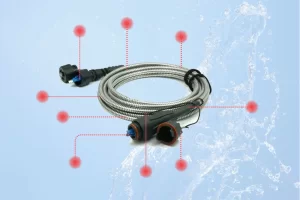
Outdoor fiber deployments, particularly fiber-to-the-antenna (FTTA) projects, introduce additional challenges. Cable routes may extend across towers, rooftops, poles, or distributed radio equipment, requiring careful consideration of weather exposure, mechanical loading, water ingress protection, connector interfaces, and cable-pulling limitations. Pre-terminated outdoor assemblies can simplify deployment when equipment locations, cable routes, and connector interfaces are established in advance. Factory-assembled waterproof connectors and specified cable lengths reduce the amount of work that must be completed at elevated or exposed locations.
However, actual tower layouts, installation clearances, cable entry points, and distances between equipment locations may differ from the original design. Field splicing or other approved field connection methods may therefore be useful for distribution cables, repair work, and situations where the final route cannot be established accurately before installation. The correct choice depends on the outdoor cable system. Not every connector is suitable for direct environmental exposure, and not every indoor field-termination method is appropriate for FTTA applications. Weatherproofing, strain relief, bend radius, sealing, and mechanical protection must all match the intended installation conditions.
Field termination can also be practical for smaller projects and localized repairs. When only a limited number of connections are required, the logistical overhead of ordering custom factory assemblies may outweigh the labor savings, particularly if cable lengths are uncertain and qualified technicians are readily available. If an existing cable has a damaged connector or requires a localized modification, a technician may be able to repair or reterminate the affected section without waiting for a new custom assembly. However, repair feasibility depends on the cable construction, damage location, available slack, connector system, and required optical performance. The objective is to restore the link reliably, not necessarily to preserve the original termination method.
5. The Real Cost Comparison: Look Beyond the Cable Price
One of the most common purchasing mistakes is to compare the price of a pre-terminated assembly directly with the price of bulk fiber cable and loose connectors. This comparison captures only part of the total project cost. A more useful approach is to evaluate the total installed cost, including materials, labor, tools, testing, logistics, schedule risks, and future maintenance.
Pre-terminated assemblies may have a higher unit purchase price because they include connector installation, manufacturing labor, inspection, testing, and customization. Field termination can reduce the purchase price of the cable itself, but it introduces additional costs for technician time, termination materials, tools, and testing. The balance changes with project scale: when many similar connections are required, the labor saved by pre-termination can become substantial, while in a small project with few terminations, the cost of preparing and ordering custom assemblies may be harder to justify. Labor rates and availability also matter. Projects in regions where experienced fiber technicians are expensive or difficult to schedule may benefit more from shifting termination work to the factory.
The cost of an installation is also affected by work that does not proceed according to plan. Incorrect lengths, poor terminations, failed tests, damaged connectors, and delayed access to the installation site can all create additional expenses. Pre-terminated cabling can reduce certain risks by moving termination and initial quality checks into a controlled production process. Field termination can reduce the risk of length mismatch when routes are uncertain, but it may increase exposure to on-site workmanship variation and rework. In a commercial building or data center, delayed cabling completion can also affect equipment commissioning, customer handover, or the start of revenue-generating operations. The lowest-cost cable option is therefore not necessarily the lowest-cost installation option.
When evaluating quotations, buyers should consider cable and connector materials, factory engineering and testing, on-site installation labor, tools and consumables, technician training, shipping, lead times, storage, rework, documentation, commissioning, and future replacement requirements. For a fair comparison, the same scope of work must be included in both quotations. One quotation may include factory testing but exclude installed-link testing, while another may include field termination and complete test documentation. Comparing only their headline prices would be misleading. Requesting quotations for both approaches using the same cable specifications, quantities, testing requirements, labeling scheme, and installation assumptions provides a much more reliable basis for decision-making.
6. Quality Control: Factory Consistency vs. Field Workmanship
Quality is often presented as the strongest argument for pre-terminated cabling, but the more accurate distinction is where quality is controlled and how consistently the process is executed. A qualified manufacturer can standardize connector assembly, fiber preparation, polishing where applicable, inspection, cleaning, testing, and final packaging. Production records and unique assembly identification can also improve traceability. For customized fiber assemblies, a structured manufacturing process makes it easier to control connector types, fiber counts, cable lengths, polarity, and other specifications across repeated orders. This is particularly useful in large B2B projects where hundreds of similar assemblies must meet the same requirements.
Field termination can also deliver reliable results when supported by trained technicians, suitable tools, controlled procedures, and appropriate test equipment. However, the outcome depends more directly on installation conditions and execution. Fiber connectors are sensitive to contamination and end-face defects. Poor preparation, improper connector installation, excessive cable stress, or inadequate inspection can introduce excessive insertion loss or unstable performance. Copper cabling presents different challenges: incorrect pair handling, excessive untwisting, poor crimping, or improper termination can compromise transmission performance and cause a link to fail its required category or channel specification. These risks do not mean that field termination is inherently unreliable. They mean that field work requires a clear quality-assurance process, competent personnel, and verification against the applicable performance requirements.
An additional consideration is the difference between factory assembly testing and installed-link acceptance testing. An assembly that passes factory testing can still fail after installation because cable pulling, bending, connector contamination, incorrect mating, and routing mistakes can affect the final link. Fiber optic projects should therefore define the appropriate verification scope, which may include connector end-face inspection, optical loss testing, polarity checks, and other measurements required by the project specification. Optical time-domain reflectometry (OTDR) testing may also be appropriate for certain links, particularly where link length, splice locations, or fault identification make it useful. For structured copper cabling, the applicable certification process may verify wire mapping, insertion loss, return loss, crosstalk, and other required parameters. Factory reports provide useful evidence about delivered assemblies, but they do not replace verification of the complete installed channel or link where such verification is required.
7. The Hidden Risks of Pre-Terminated Cabling: Planning and Configuration Errors
Pre-termination shifts a significant portion of the work from the installation site to the design and manufacturing stages. This can improve consistency, but it also means that certain mistakes must be caught earlier. The most obvious risk is a cable that does not fit the actual route. Factory-terminated assemblies are manufactured to specified lengths, and a cable that is too short may need to be replaced. A cable that is too long may require careful management to avoid excessive slack, congestion, airflow restrictions, or bend-radius violations. Accurate measurements should account for the actual routing path rather than the straight-line distance between endpoints. Vertical transitions, rack entry points, service loops, patch-panel locations, and maintenance allowances may all affect the required length.
Project teams should also agree on how cable length is defined and measured. Different assumptions about connector-to-connector length, breakout length, or service-loop allowance can lead to avoidable ordering errors. Connector compatibility and polarity require similar attention. A physically compatible connector does not automatically guarantee a functioning link; fiber count, connector gender, key orientation, polarity, fiber type, and optical interface requirements must all match the intended design. This is particularly important for MPO/MTP systems, where trunk cables, cassettes, harnesses, and transceiver interfaces must work together as a complete configuration. An incorrect polarity scheme can prevent the intended transmit and receive paths from connecting properly.
A practical way to reduce these risks is to establish a formal pre-production approval process. Cable schedules, connector drawings, labeling conventions, polarity requirements, and length calculations should be reviewed by the responsible parties before the order is released. For larger projects, a pilot installation or sample assembly can help validate the design before full production, especially when the project involves complex MPO/MTP configurations, large quantities, or unusual installation conditions. Late design changes can be particularly expensive once custom assemblies are already in production or have been shipped, so clear approval procedures and change-control responsibilities should be established from the beginning.
8. Can Pre-Terminated and Field Termination Be Combined?
In many projects, the strongest solution is not to choose one method exclusively but to assign each method to the work it handles most effectively. A hybrid approach combines the repeatability of factory assemblies with the adaptability of field work, minimizing unnecessary on-site termination without forcing every connection into a fixed configuration before the site is ready.
Consider a new data center with standardized rack layouts and clearly defined distribution zones. Factory-assembled MPO/MTP trunks can connect distribution panels, while pre-terminated harnesses or patch cords provide the appropriate interfaces to equipment. The installation team still handles cable routing, physical connections, labeling, inspection, and installed-link verification. If the design includes legacy equipment or nonstandard connection points, selected field splices or other approved field connections may also be required. This arrangement keeps repetitive precision work under factory control while allowing the installation team to complete the physical deployment efficiently.
An enterprise network upgrade may require a different balance. In an office building where new fiber links must pass through existing risers and cable pathways, the main backbone routes may be well understood while individual floor layouts and equipment-room connections remain uncertain. Pre-terminated assemblies can be used for predictable backbone segments or connections between standardized distribution points, while field termination or splicing accommodates uncertain routes and final connection points. A route-by-route assessment is often more useful than applying a single termination method throughout the building.
For an outdoor FTTA project, factory-terminated waterproof cable assemblies may be suitable for standardized connections between radio equipment and distribution points. Field splicing may be more appropriate for feeder cables or distribution sections where the route, repair requirements, or network architecture calls for it. Environmental ratings, connector sealing, mechanical protection, cable-pulling conditions, and the accessibility of termination locations must all be considered. For remote or difficult-to-access sites, the cost of rework can be particularly high, making accurate pre-installation planning valuable even when some field work remains unavoidable.


9. A Practical Decision Framework for B2B Buyers
When evaluating a cabling project, buyers should first assess how clearly the cable routes, connection points, and required lengths have been defined. Pre-terminated cabling is generally a strong candidate when designs are stable, connections are repetitive, installation speed is critical, skilled field technicians are difficult to schedule, or manufacturing traceability is important. It is particularly suitable for high-density trunk architectures and custom multi-fiber assemblies where consistent configurations can be established before production.
Field termination deserves greater consideration when routes or final lengths cannot be established reliably in advance, existing infrastructure creates substantial uncertainty, local modifications are expected, or the project involves relatively few connections and qualified field resources are readily available. It can also be advantageous when cable-pulling conditions favor unterminated cable ends or when the installation requires connection methods that are more practical to complete on-site.
A hybrid approach is often worth considering when standardized and uncertain routes coexist, when new infrastructure must connect to legacy systems, or when high-density trunk connections benefit from factory assembly but local distribution requires field adaptation. The same strategy may be appropriate when installation deadlines are tight but complete pre-installation measurement is not possible. These criteria are starting points rather than rigid rules; the final decision should also account for project specifications, local labor conditions, manufacturer lead times, testing requirements, and the consequences of installation errors.
10. Questions to Ask Before Placing an Order
For B2B customers, selecting the right termination method is easier when the procurement team asks suppliers and installers the same practical questions. Begin by confirming the complete technical specification, including cable construction, fiber type, fiber count, connector interfaces, length definitions, polarity, environmental requirements, and applicable performance criteria. Next, clarify the testing scope: whether the supplier provides assembly-level test results, identification labels, traceability records, and the documentation required for project acceptance, and which tests the installation contractor will perform after the cables are installed.
The production and delivery schedule should also be reviewed. Custom pre-terminated assemblies require sufficient time for engineering confirmation, manufacturing, inspection, and shipping, and the project plan should include time for receiving inspection and replacement of any nonconforming products. Responsibility for errors and changes must be clearly established, including who approves cable lengths, connector configurations, labeling, and polarity, and who bears the cost if an approved design changes after manufacturing begins. Finally, evaluate the supplier’s customization and technical support capabilities. A supplier that can review the connection architecture, validate the bill of materials, manufacture assemblies to project specifications, and provide clear documentation can help reduce project risk beyond the value of the physical products alone.
Conclusion
Pre-terminated and field-terminated fiber optic cabling serve different needs. Pre-terminated assemblies are particularly effective when project designs are stable, connections are repetitive, and installation speed and manufacturing consistency are priorities. Field termination is often more practical when routes are unpredictable, existing infrastructure imposes constraints, or local adaptation is essential. The most important lesson for B2B buyers is to evaluate the complete installation rather than focusing on cable price or termination method in isolation. Labor, lead times, quality assurance, configuration accuracy, rework, and future maintenance all contribute to the true cost and reliability of a cabling system.
For many projects, a carefully planned hybrid approach provides the best balance. Standardized and high-density connections can be prepared and tested at the factory, while selected field connections preserve the flexibility needed to deal with real-world site conditions.
At FiberMania, we support fiber optic connectivity projects with customized patch cords, MPO/MTP trunk assemblies, and outdoor FTTA cabling solutions. By considering the application, installation environment, and project requirements together, customers can identify the appropriate assembly configuration and termination strategy for a more efficient and reliable deployment.
Planning a fiber optic cabling project? Share your cable specifications, connection requirements, and installation conditions with our team to discuss a suitable solution for your application.
Frequently Asked Questions
1. What is the main difference between pre-terminated and field-terminated fiber optic cabling?
The main difference is where the cable connections are completed. Pre-terminated fiber optic assemblies are manufactured, connectorized, and tested in a factory before delivery, allowing installers to connect them on-site with minimal termination work. Field-terminated cabling is prepared and connected at the installation site, offering greater flexibility when cable routes, lengths, or connection points are uncertain. Pre-termination is often preferred for standardized, high-density installations, while field termination is useful for complex routing, network upgrades, and projects requiring on-site adjustments.
2. Is pre-terminated fiber optic cabling more cost-effective than field termination?
Pre-terminated cabling can reduce total installed costs by minimizing on-site labor, shortening installation time, and reducing termination-related rework. However, its initial material cost is often higher, and custom assemblies require accurate measurements and advance planning. Field termination may be more economical for small projects or installations with uncertain cable lengths, particularly when qualified technicians and suitable equipment are already available. The most reliable comparison considers total project costs, including materials, labor, testing, shipping, potential rework, and future maintenance.
3. When should you use pre-terminated MPO/MTP trunk cables in a data center?
Pre-terminated MPO/MTP trunk cables are particularly suitable for data centers with standardized rack layouts, high connection density, and tight deployment schedules. They simplify connections between distribution panels, cassettes, and other compatible interfaces while reducing on-site termination work. Before ordering, project teams should verify cable lengths, fiber counts, connector configurations, polarity, and compatibility with the intended optical architecture. Factory testing helps establish assembly quality, but connector inspection and appropriate installed-link verification remain important after deployment.
4. Can pre-terminated and field-terminated fiber optic cabling be used in the same project?
Yes. A hybrid approach often provides the best balance of installation efficiency, flexibility, and quality control. For example, a data center can use pre-terminated MPO/MTP trunks for standardized backbone connections while using field splicing or termination for selected distribution points and connections to existing infrastructure. Similarly, an FTTA project may use factory-terminated waterproof assemblies for equipment connections while relying on field splicing where cable routing or network design requires it. The optimal combination depends on route certainty, environmental conditions, installation resources, and project requirements.