Skip to content



































The rapid expansion of cloud computing, artificial intelligence (AI), high-performance computing (HPC), and large-scale virtualization has transformed the way modern data centers are designed. As server and switch platforms continue moving from 10GbE and 25GbE toward 100GbE, 200GbE, and 400GbE, network engineers are facing increasing pressure to deploy interconnect solutions that deliver high bandwidth while maintaining efficiency, reliability, and cost control.
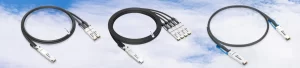
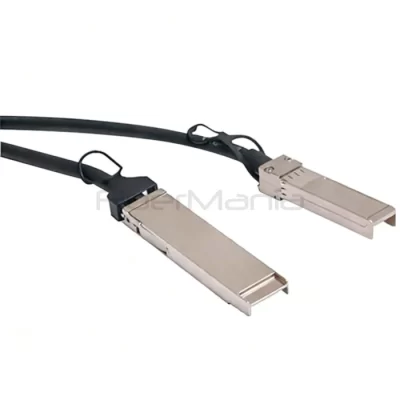
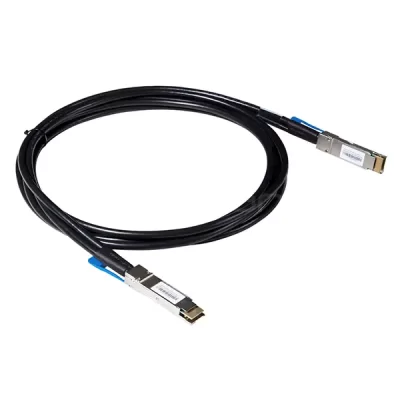
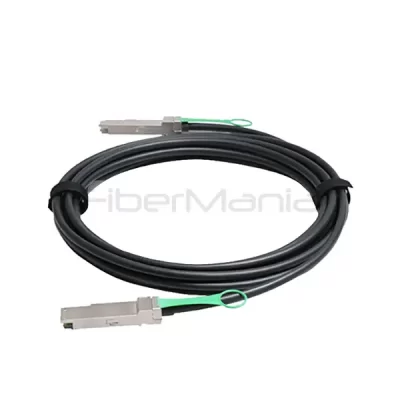
For short-distance high-speed connections inside data centers, Twinax DAC (Direct Attach Copper) cables have become one of the most widely deployed solutions. Unlike traditional structured copper cabling or optical-based connections, DAC cables combine the cable assembly and transceiver interface into a single factory-terminated product, providing a simple and efficient connection method between network devices.
DAC cables are commonly used in server-to-switch connections, Top-of-Rack (ToR) deployments, storage networks, and AI computing clusters where hundreds or thousands of short-reach links may exist within a limited physical space.
However, selecting the right DAC cable requires more than simply matching the data rate. Engineers must consider cable structure, transmission distance, passive versus active design, cable gauge, connector form factor, and equipment compatibility. Understanding these factors helps ensure reliable network performance and avoids costly redesigns during deployment.
What Is a Twinax Cable?
The term Twinax comes from twinaxial cable, which describes a balanced copper cable structure containing two internal conductors. Unlike coaxial cables that use a single central conductor surrounded by shielding, Twinax cables use two symmetrical copper conductors to transmit differential electrical signals.
In a typical Twinax cable, the two copper conductors carry opposite electrical signals. The receiving device detects the difference between these signals rather than measuring them against ground. This differential signaling method allows the system to effectively reject external electrical noise and maintain signal integrity at high speeds.
A typical Twinax cable structure consists of:
| Component | Function |
|---|---|
| Two Copper Conductors | Carry high-speed differential signals |
| Insulation Layer | Maintains conductor separation and impedance control |
| Shielding Layer | Reduces electromagnetic interference (EMI) |
| Outer Jacket | Provides mechanical protection |
The advantage of Twinax technology comes from its ability to provide stable electrical transmission in environments where signal quality is critical. Modern data centers contain many sources of electrical noise, including servers, power systems, cooling equipment, and high-density switching hardware. The shielding and differential design of Twinax cables help maintain reliable communication in these conditions.
It is important to understand that Twinax is the cable technology, not the complete networking product. A commercial DAC cable combines Twinax copper cable with integrated connectors, transceiver-style housings, and EEPROM identification chips to create a ready-to-use high-speed interconnect solution.
Why Twinax Is Used for High-Speed Ethernet
As Ethernet speeds increase, maintaining signal integrity becomes more challenging. At 10GbE and above, especially in 25GbE, 100GbE, and 400GbE environments, issues such as insertion loss, attenuation, crosstalk, and electromagnetic interference become increasingly important.
Twinax-based DAC cables are widely adopted because they provide a practical balance between electrical performance, power efficiency, and cost.
One of the key advantages of Twinax is its ability to support high-speed differential transmission with relatively low signal loss over short distances. The controlled impedance and shielding design help reduce signal degradation, allowing reliable communication between switches, servers, and storage systems.
Another important factor is latency. DAC cables transmit electrical signals directly between devices without requiring optical conversion. Unlike fiber-based solutions, there is no need for electrical-to-optical or optical-to-electrical conversion, which keeps latency extremely low. This characteristic is particularly valuable in environments such as AI clusters and HPC systems where large numbers of low-latency connections are required.
Power consumption is another major consideration in large-scale deployments. Passive DAC cables contain no active electronics, meaning they consume virtually no power. When thousands of interconnects are deployed in a data center, reducing power consumption at the cable level can contribute to overall infrastructure efficiency.
Cost is also a major reason for DAC adoption. For short-distance connections, a DAC cable is typically less expensive than an optical transceiver paired with fiber patch cables. This makes DAC an attractive option for dense rack environments where many connections are required.
Twinax DAC vs Ethernet Cable vs Fiber Optic
Although copper and fiber technologies can all support Ethernet connectivity, they are designed for different networking environments. In practical data center design, DAC is usually compared with structured Ethernet copper cabling and fiber optic solutions.
| Feature | Twinax DAC | Ethernet Cable (Cat6A/Cat8) | Fiber Optic |
|---|---|---|---|
| Transmission Medium | Twinax Copper | Twisted Pair Copper | Optical Fiber |
| Typical Distance | 1–7 meters | Up to 100 meters | Several meters to kilometers |
| Common Speeds | 10G–400G | Mainly 1G/10G | 10G–800G+ |
| Latency | Very Low | Low | Very Low |
| Power Consumption | Lowest | Medium | Higher due to optics |
| EMI Resistance | Excellent | Moderate | Immune |
| Installation | Plug-and-play | Requires structured cabling | Requires optical modules |
| Cost | Lowest for short links | Medium | Higher |
DAC is generally selected when the connection distance is short and both devices are located within the same rack or adjacent racks. A typical example is a server connected directly to a Top-of-Rack switch using a 1m, 2m, or 3m DAC cable.
Traditional Ethernet copper cabling remains common in enterprise structured cabling systems because it supports longer horizontal distances and standardized installation methods. However, inside high-density data centers, large bundles of twisted-pair cables can increase rack congestion and reduce airflow efficiency.
Fiber optic cabling becomes the preferred choice when longer distances, higher scalability, or future bandwidth expansion are required. Backbone links, inter-building connections, and long-distance data center interconnects are typically based on fiber because copper-based solutions become increasingly limited as distance increases.
What Is a DAC Cable?
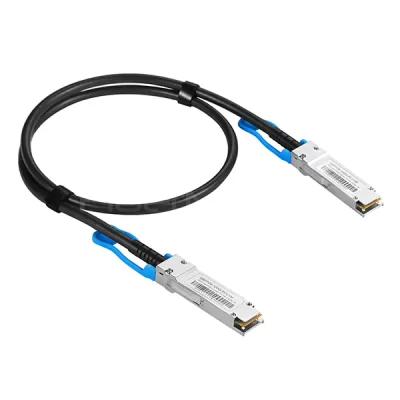
A Direct Attach Copper (DAC) cable is a factory-terminated copper cable assembly designed to connect two networking devices directly without separate optical transceiver modules and patch cables.
A traditional fiber connection usually requires multiple components:
| Form Factor | Typical Speed | Common Application |
|---|---|---|
| SFP+ | 10GbE | Servers and enterprise networks |
| SFP28 | 25GbE | Modern server connections |
| QSFP+ | 40GbE | Switch uplinks |
| QSFP28 | 100GbE | Data center leaf-spine networks |
| QSFP56 | 200GbE | HPC and AI infrastructure |
| QSFP-DD / OSFP | 400GbE+ | Next-generation data centers |
The connector type alone does not determine the cable capability. Engineers must verify both the physical interface and the supported Ethernet speed before deployment.
Passive DAC vs Active DAC
The most important selection decision for DAC deployment is choosing between passive and active designs.
A Passive DAC contains only the copper cable assembly and connectors. It does not include signal processing components, allowing the electrical signal to travel directly through the copper conductors.
This design provides the lowest cost, lowest power consumption, and lowest latency. Because there are fewer components, passive DAC cables are also highly reliable.
However, copper transmission performance decreases as cable length and data rate increase. For this reason, passive DAC is mainly used for short-distance connections, typically inside the same rack or between nearby devices.
An Active DAC includes additional electronic components such as equalizers or signal conditioning circuits to compensate for signal loss. These components improve signal quality and allow longer cable lengths compared with passive designs.
The general selection guideline is:
| Cable Length | Recommended Solution |
|---|---|
| 0.5–3m | Passive DAC |
| 3–5m | Passive DAC preferred |
| 5–7m | Passive or Active DAC |
| 7–15m | Active DAC |
| Above 15m | Consider AOC or Fiber |
Active DAC provides additional reach but comes with higher cost and power consumption. For short rack connections, passive DAC remains the preferred option because the additional electronics usually provide limited benefit.
AWG and Cable Length Considerations
Cable gauge is another factor that affects DAC performance. AWG (American Wire Gauge) indicates the diameter of the copper conductor. A lower AWG number represents a thicker conductor.
| AWG | Characteristics |
|---|---|
| 24AWG | Larger diameter, stronger signal performance |
| 26AWG | Balanced performance and flexibility |
| 28AWG | More flexible for dense racks |
| 30AWG | Ultra-flexible for short connections |
Thicker DAC cables generally provide better electrical performance and support longer distances, but they are heavier and less flexible. Thinner cables are easier to manage in high-density racks and improve airflow but are usually limited to shorter distances.
For large AI clusters and hyperscale data centers, cable diameter has become increasingly important because thousands of cables may be installed within the same rack environment.
Compatibility and EEPROM Coding
Compatibility is a critical consideration when selecting DAC cables.
Modern network equipment identifies connected cables through EEPROM information stored inside the cable assembly. This information allows switches and network adapters to verify cable type, speed, vendor information, and other parameters.
DAC cables may need to be programmed for specific platforms, including:
- Cisco
- Arista
- Juniper
- NVIDIA Mellanox
- Dell
- HPE
A third-party DAC cable can provide reliable performance when it matches the required electrical specifications, connector type, speed rating, and EEPROM coding.
Before deployment, engineers should confirm:
| Parameter | Requirement |
|---|---|
| Connector Type | SFP+, QSFP28, QSFP-DD, OSFP, etc. |
| Data Rate | 10G, 25G, 100G, 400G |
| Cable Length | Within supported range |
| Vendor Compatibility | Correct EEPROM coding |
DAC vs AOC vs Fiber: How to Choose?
DAC is not intended to replace fiber completely. Instead, modern data centers typically use DAC, AOC, and fiber together depending on distance and performance requirements.
| Application Scenario | Recommended Solution |
|---|---|
| Same rack connection | Passive DAC |
| Adjacent rack connection | Active DAC |
| 10–30m high-speed link | AOC |
| Long-distance backbone | Fiber Optic |
| Campus or building connection | Fiber Optic |
DAC provides the best value for short, high-density connections. AOC extends the practical distance while maintaining a simple cable assembly design. Fiber remains the preferred choice for long-distance links and future network expansion.
Conclusion
Twinax DAC cables have become an essential interconnect technology for modern data centers because they provide an effective combination of performance, simplicity, and cost efficiency.
For short-distance high-speed connections, DAC delivers extremely low latency, low power consumption, and easy deployment. Passive DAC is typically the best choice for short rack-level links, while Active DAC extends copper connectivity when additional distance is required.
However, DAC should be viewed as part of a broader networking strategy rather than a replacement for fiber. The most efficient data center architectures use DAC for short-reach connections and fiber-based solutions for long-distance and scalable infrastructure.
By understanding Twinax technology, DAC design options, cable length limitations, and compatibility requirements, network engineers can make better decisions when building reliable high-speed Ethernet networks.
FAQ
1. What is a Twinax DAC cable and how does it work?
A Twinax DAC (Direct Attach Copper) cable is a high-speed copper interconnect that uses a twinaxial cable structure with two copper conductors to transmit differential electrical signals. Unlike traditional Ethernet copper cabling, DAC cables come with factory-installed connectors and integrated transceiver-style housings, allowing direct connection between network devices such as switches, servers, and storage systems. This design provides a simple, low-latency, and cost-effective solution for short-distance data center connections.
2. What is the difference between Passive DAC and Active DAC?
The main difference between Passive DAC and Active DAC is the use of signal conditioning components. Passive DAC cables transmit electrical signals directly through copper conductors without additional electronics, making them the lowest-cost and lowest-power option for short connections. Active DAC cables include built-in electronic components such as equalizers or signal conditioning circuits to compensate for signal loss, allowing longer transmission distances. Passive DAC is typically preferred for short rack connections, while Active DAC is used when additional reach is required.
3. How far can a DAC cable support high-speed Ethernet connections?
The maximum distance of a DAC cable depends on the data rate, cable design, conductor size, and whether it is passive or active. Passive DAC cables are commonly used for distances of 1–5 meters, while Active DAC cables can typically extend reach to around 7–15 meters. For longer connections beyond the practical range of copper DAC, AOC or fiber optic solutions are usually recommended.
4. Why are 100G and 400G DAC cables usually shorter than lower-speed DAC cables?
As Ethernet speeds increase, signal transmission becomes more sensitive to attenuation, insertion loss, and electrical interference. Higher-speed signals require stricter control of signal integrity, which limits the practical transmission distance of copper cables. Therefore, 100G, 200G, and 400G DAC cables usually have shorter supported lengths compared with lower-speed 10G or 25G DAC cables.
5. When should I choose DAC instead of AOC or fiber optic cables?
DAC is the preferred choice for short-distance, high-density connections where cost, power consumption, and low latency are important. It is commonly used for server-to-switch connections, in-rack networking, and AI cluster interconnects. AOC is a better option for medium-distance links where additional flexibility and reach are required, while fiber optic cabling is recommended for long-distance connections, backbone networks, and future scalability.
6. Are third-party DAC cables compatible with Cisco, Arista, Juniper, and NVIDIA networking equipment?
Yes, third-party DAC cables can be compatible with major networking platforms when they are manufactured with the correct electrical specifications and EEPROM coding. Network equipment uses EEPROM information to identify connected cables and verify parameters such as vendor information, cable type, and supported speed. Before deployment, always confirm the DAC cable coding, connector type, and data rate compatibility with the target device.
7. What does AWG mean in DAC cables, and why is it important?
AWG (American Wire Gauge) indicates the thickness of the copper conductors inside the DAC cable. A lower AWG number represents a thicker conductor, which generally provides better signal performance and supports longer distances. However, thicker cables are less flexible and take up more space. Higher AWG cables are thinner and easier to manage in high-density racks but are typically used for shorter connections.
8. Can DAC cables replace fiber optic cables in data centers?
DAC cables cannot completely replace fiber optic cabling because they are designed for different applications. DAC provides excellent performance for short-distance connections with low latency and low power consumption, while fiber offers much longer transmission distances, higher scalability, and better flexibility for future network expansion. Modern data centers typically use DAC for short-reach connections and fiber for backbone and long-distance links.