Skip to content
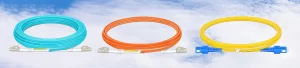
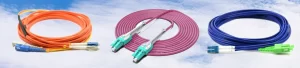
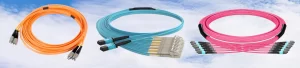








In the complex ecosystem of modern optical communication networks, optical circulators stand out as essential passive components. They enable bidirectional signal transmission over a single fiber while maintaining data integrity in critical systems such as wavelength division multiplexing (WDM) networks, erbium-doped fiber amplifiers (EDFA), Raman amplifiers, and high-precision fiber optic sensors.
Based on the magneto-optic Faraday effect, optical circulators exhibit non-reciprocal behavior, ensuring that light propagates in a fixed circular path—Port 1 to Port 2, Port 2 to Port 3, and so on. This unique functionality minimizes signal interference and enhances network efficiency. However, despite their robust design, these precision devices may still encounter performance issues over time.
This guide explores the most common problems, their root causes, and systematic troubleshooting methods to restore optimal performance and ensure uninterrupted network operation.
Excessive Insertion Loss: Identifying and Resolving Signal Attenuation
Insertion loss refers to the reduction in optical power as light passes through the circulator. Industry standards typically define insertion loss thresholds below 1.0 dB for P-grade devices and below 1.3 dB for A-grade devices, with high-performance models achieving polarization-dependent loss (PDL) as low as 0.05 dB.
When insertion loss exceeds these limits, it can degrade signal quality, shorten transmission distance, and reduce data throughput.
Common Causes
One of the most frequent causes is connector contamination or damage. Optical circulators support various connector types such as FC, SC, and LC with PC, UPC, or APC polishing. Even microscopic dust or oil residues can scatter light and significantly increase attenuation.
Fiber misalignment is another critical factor, especially in polarization-maintaining (PM) systems. Misalignment of slow or fast axes disrupts polarization continuity, increasing loss—particularly in coherent communication and quantum optics applications.
Environmental stress also plays a role. Operating outside the recommended temperature range (-10°C to +70°C) can degrade internal components, while humidity or corrosive conditions may damage optical elements.
Additionally, excessive input power beyond the rated threshold (typically up to 300 mW or higher for custom designs) can permanently damage internal fibers and components.
Troubleshooting Approach
Start by disconnecting the device and inspecting connectors using a fiber microscope. Clean them with lint-free wipes and appropriate cleaning solutions. Replace any connectors showing scratches or cracks.
For PM systems, verify alignment using a polarization analyzer and adjust accordingly. Ensure proper alignment across the entire optical chain.
If environmental conditions are a concern, relocate the device to a temperature-controlled enclosure and implement moisture protection measures.
Measure input power with a power meter to confirm it is within the rated range. If necessary, install a variable optical attenuator (VOA) to reduce power levels.
Finally, retest insertion loss using a power meter or optical spectrum analyzer (OSA) and compare the results with the manufacturer’s specifications.
Poor Isolation: Mitigating Signal Crosstalk
Isolation measures a circulator’s ability to prevent signal leakage between non-adjacent ports. Typical specifications require at least 35 dB isolation, with 40 dB or higher under standard conditions.
Low isolation leads to signal crosstalk, causing data errors and reduced network reliability.
Common Causes
Degradation of magneto-optic components is a primary cause. The Faraday effect depends on magnetic materials such as yttrium iron garnet (YIG), which may deteriorate over time.
Incorrect port configuration can also disrupt signal routing. Misconnecting ports in a 3-port or 4-port device bypasses the intended signal path.
Wavelength mismatch is another issue. Circulators are optimized for specific ranges (e.g., 1310 nm or 1550 nm). Using signals outside these ranges reduces isolation performance.
Physical damage due to vibration, shock, or mishandling can misalign internal optics, leading to leakage.
Troubleshooting Approach
Use an OSA to measure isolation between non-adjacent ports and identify leakage points.
If degradation is suspected, consult the manufacturer for inspection or replacement of magneto-optic components.
Verify correct port connections based on the datasheet and ensure proper labeling to avoid future errors.
Confirm the operating wavelength using a wavelength meter and ensure compatibility with the device specifications.
Check mechanical stability and use vibration-damping mounts if necessary.
Polarization-Dependent Loss (PDL) Fluctuations
PDL refers to variations in insertion loss caused by changes in the polarization state of the input signal. High PDL can destabilize system performance, especially in WDM networks and sensing applications.
Common Causes
Polarization instability due to fiber bending, temperature changes, or external disturbances can increase PDL.
Damage to PM fibers, such as bending or twisting, disrupts polarization maintenance.
Axis misalignment between the circulator and connected fibers can lead to PDL spikes.
Aging components, such as waveplates or polarization controllers, may lose effectiveness over time.
Troubleshooting Approach
Install polarization controllers to stabilize the input signal and monitor PDL in real time.
Inspect PM fibers for physical damage and replace compromised sections. Ensure proper splicing and alignment.
Use a polarization analyzer to verify axis alignment and adjust connectors if necessary.
If performance degradation persists, compare current measurements with baseline data and consider replacing aging components.
Environmental Stability Issues: Ensuring Reliable Operation
Optical circulators are designed for harsh environments, with storage temperatures ranging from -40°C to +85°C. However, prolonged exposure to extreme conditions can degrade performance.
Common Causes
Moisture ingress can corrode internal components and degrade optical performance, particularly in outdoor or high-humidity environments.
Temperature fluctuations cause expansion and contraction of materials, leading to misalignment and adhesive failure.
Mechanical vibration and shock can loosen connectors or damage internal optics.
Dust, chemicals, and corrosive gases can contaminate optical paths and accelerate aging.
Troubleshooting Approach
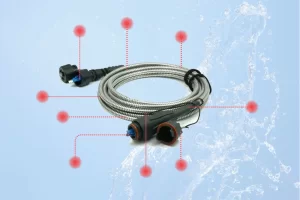
Use sealed enclosures or waterproof packaging in humid environments. Opt for ruggedized cable packaging instead of bare fiber.
Maintain stable operating temperatures using controlled enclosures or thermal management systems.
Install vibration-damping mounts and avoid placing devices near high-vibration equipment.
Perform regular cleaning and maintenance to remove contaminants. Increase inspection frequency in harsh environments.
Conduct periodic performance testing (insertion loss, isolation, PDL) and compare results with baseline measurements to detect gradual degradation.
Conclusion: Maintaining Long-Term Reliability
Optical circulators are indispensable in modern fiber networks, enabling efficient bidirectional transmission and enhancing signal integrity. By systematically addressing common issues such as excessive insertion loss, poor isolation, PDL fluctuations, and environmental instability, network operators can ensure consistent and reliable performance.
The key to success lies in proactive maintenance, adherence to manufacturer specifications, and the use of diagnostic tools such as optical power meters, OSAs, and polarization analyzers. When persistent issues arise, collaborating with manufacturers for technical support or leveraging warranty services can provide cost-effective solutions.
With proper care and troubleshooting, optical circulators will continue to serve as reliable workhorses in high-performance optical networks for years to come.