Skip to content















































Transportation networks are rapidly becoming data-driven systems. From roadside surveillance cameras and traffic sensors to tunnel monitoring equipment and railway communication nodes, almost every part of modern transport infrastructure now depends on continuous, real-time data transmission. As these systems evolve, the demand for higher bandwidth and more reliable connectivity continues to grow.
However, a large portion of existing transportation infrastructure was not originally designed for today’s high-speed requirements. Many deployments still rely on copper ethernet at the edge, or multimode fiber links installed years ago for lower-capacity applications. This creates a gap between modern network expectations and legacy physical infrastructure.
Replacing that infrastructure is rarely a practical option. Transportation corridors are distributed across long distances and often pass through roads, bridges, tunnels, and protected public areas. Full reconstruction would require excavation, traffic disruption, regulatory approvals, and significant capital investment. As a result, operators are increasingly looking for ways to enhance performance without rebuilding what already works.
The Infrastructure Challenge in Transportation Environments
Unlike controlled enterprise networks, transportation systems are inherently fragmented. Devices are deployed across geographically dispersed environments where conditions vary significantly from site to site. A traffic camera on a highway may be hundreds of meters from the nearest cabinet, while tunnel systems or railway signaling networks may require connectivity across several kilometers.
Even when fiber is already in place, it is often a mixture of different generations and types. Some sections may be multimode fiber, while others are single-mode. In many cases, the original design did not anticipate modern applications such as ultra-high-definition video surveillance, AI-based traffic analysis, or edge computing systems that generate continuous data streams.
As network requirements increase, these mixed infrastructures begin to show limitations in both distance and bandwidth. At the same time, replacing all cabling is not only expensive but also operationally disruptive, especially in environments where continuous traffic flow and public safety must be maintained.
Media Converters as a Practical Bridge Between Legacy and Modern Networks
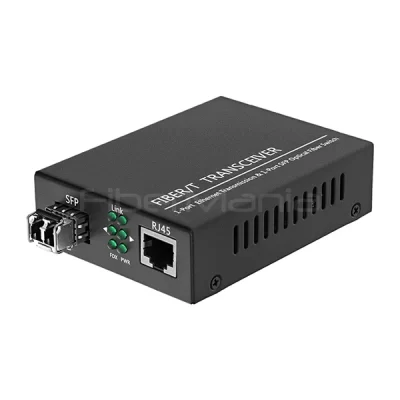
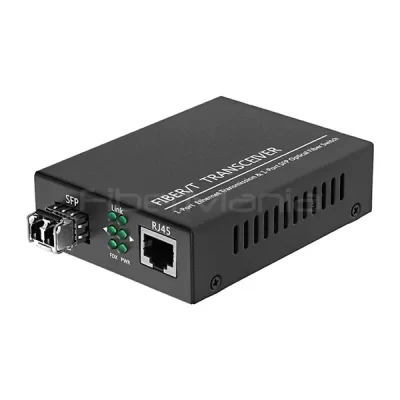
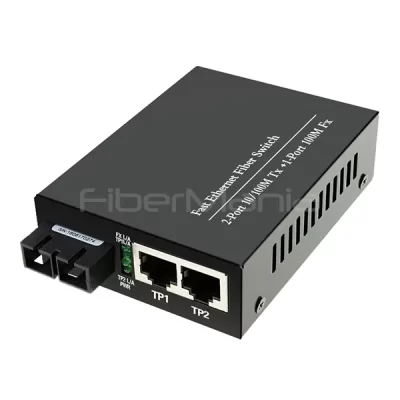
Media converters play a crucial role in addressing this challenge by acting as a translation layer between different transmission media. They enable Ethernet signals to move between copper and fiber, or between different types of fiber, without requiring changes to the existing network devices.
In transportation networks, this capability becomes especially valuable. Edge devices such as IP cameras, traffic controllers, and sensor modules often continue to use copper Ethernet interfaces, while the backbone infrastructure is gradually transitioning toward fiber-based high-speed networks. Media converters allow both environments to coexist and communicate seamlessly.
This bridging function makes it possible to extend the life of existing infrastructure while still supporting new network services. Instead of replacing multimode fiber or re-cabling entire corridors, operators can use media conversion to extend transmission distances and adapt signal formats to meet new performance requirements.
More importantly, this approach enables phased modernization. Transportation operators can upgrade specific sections of the network gradually, rather than committing to a complete rebuild. This reduces downtime, spreads investment over time, and ensures that critical systems remain operational throughout the transition process.
Why Media Converters Continue to Be Widely Used in Transportation Systems
Despite the availability of more advanced networking architectures, media converters remain widely deployed in intelligent transportation systems because they solve a very real operational problem: integration across generations of infrastructure.
Transportation environments rarely allow for uniform upgrades. New systems are often added on top of existing ones, creating a hybrid environment where old and new technologies must coexist. Media converters make this coexistence practical by ensuring compatibility across different transmission media.
They are also particularly useful in scenarios where fiber infrastructure already exists but does not fully meet current requirements. Rather than replacing existing cabling, operators can extend reach or improve connectivity through conversion and signal adaptation. This helps preserve the value of previously installed infrastructure while still supporting modern applications.
In practice, media converters are often deployed as part of broader intelligent transportation modernization projects, where they function quietly in the background, ensuring that legacy systems and modern digital platforms remain interconnected.
How to Choose the Right Media Converter for Transportation Networks
Selecting a media converter for transportation environments is not simply a matter of matching interfaces. Because these networks are distributed, long-distance, and often exposed to harsh outdoor conditions, the decision needs to balance compatibility, environmental resilience, power architecture, and long-term scalability. A structured evaluation helps ensure the chosen solution remains reliable not only for current deployment needs but also for future network expansion.
A practical way to approach selection is to evaluate requirements from both the network layer and the physical deployment layer, rather than treating the device as a standalone component.

1. Start with the Network Role: What Problem Is It Solving?
Before selecting any device, it is important to clearly define the conversion purpose within the transportation network. Different use cases lead to different device requirements.
| Use Case | Typical Requirement | Recommended Focus |
|---|---|---|
| Copper Ethernet to Fiber | Edge camera or sensor uplink | Simple media converter or PoE model |
| Multimode to Single-mode extension | Existing legacy fiber upgrade | High-quality fiber conversion support |
| Long-distance backbone integration | Highway/rail corridor links | Industrial-grade, stable optical performance |
| Mixed vendor or legacy system integration | Multi-generation infrastructure | Flexible protocol and media compatibility |
In transportation systems, the media converter is often not just a bridge, but a transitional component between legacy infrastructure and modern high-speed networks.
2. Evaluate the Physical Environment First, Not Last
Transportation infrastructure is exposed to conditions that are far more demanding than typical enterprise environments. Devices installed in roadside cabinets, tunnels, or bridge enclosures must operate continuously despite temperature shifts, vibration, humidity, and electrical interference.
For this reason, industrial-grade design is usually preferred. Devices with metal housings, surge protection, and wide operating temperature ranges are far better suited for long-term deployment than commercial-grade units. In addition, DIN-rail mounting is often important because it allows secure installation inside compact or preconfigured outdoor enclosures.
Ignoring environmental suitability often leads to premature device failure, which is far more costly in remote transportation locations than in centralized data centers.
3. Match Power Architecture with Field Conditions
Power availability is often uneven in transportation deployments. Some locations have stable cabinet power, while others rely on distributed or limited energy sources.
In these scenarios, power design becomes a key selection factor:
- Standard media converters are suitable when power is already available at the installation point.
- PoE-enabled media converters are preferred when edge devices such as IP cameras or wireless nodes need both power and data from a single connection.
- Dual power input designs are often used in critical infrastructure where redundancy is required to avoid downtime.
The more distributed the network becomes, the more important it is to simplify both power delivery and cabling complexity.
4. Consider Distance, Fiber Type, and Optical Compatibility
Transportation networks often combine different fiber types across different construction phases. This makes optical compatibility a central consideration.
In general, selection depends on how the existing infrastructure is structured:
- If the network is copper-based at the edge, copper-to-fiber conversion is required.
- If multimode fiber already exists but distance is limited, conversion to single-mode can extend transmission range.
- If the backbone is already single-mode, the converter must ensure stable long-distance optical performance without introducing loss or instability.
It is also important to ensure that optical parameters such as wavelength support, transmission budget, and link stability align with the expected deployment distance. In transportation environments, even small mismatches can lead to intermittent signal issues that are difficult to diagnose.
5. Plan for Scale: Standalone vs. Chassis-Based Deployment
Transportation networks rarely remain static. New intersections, stations, cameras, and monitoring points are continuously added over time. Because of this, scalability should be considered from the beginning.
A simple way to differentiate deployment models is:
| Deployment Scale | Recommended Architecture | Key Advantage |
|---|---|---|
| Small sites or isolated devices | Standalone media converters | Simple installation, low cost |
| Corridor-level deployments | Mixed standalone + small clusters | Flexible expansion |
| Large transportation or smart city systems | Chassis-based media converter systems | Centralized management and power efficiency |
Chassis-based systems are particularly useful in control rooms or aggregation cabinets, where multiple links need to be managed in a compact and maintainable structure. They also allow hot-swappable modules, which reduce downtime during maintenance or replacement.
Conclusion
Media converters continue to play an essential role in the evolution of transportation networks. Rather than replacing existing infrastructure, they enable it to be extended, integrated, and gradually upgraded to meet modern connectivity demands. By bridging copper and fiber, supporting mixed-generation environments, and enabling phased modernization strategies, they provide a practical and cost-effective path toward smarter, more connected transportation systems.
As transportation infrastructure continues to evolve toward higher bandwidth and real-time intelligence, media converters remain a key enabling technology that helps operators modernize networks without disrupting the systems that keep roads, railways, and cities running.
FAQ
1. Why are media converters still widely used in modern transportation networks?
Media converters remain essential because transportation systems often rely on mixed infrastructure, including legacy copper Ethernet and different generations of fiber. Instead of replacing entire networks, they provide a cost-effective way to integrate old and new systems, enabling gradual upgrades without disrupting ongoing operations.
2. Can media converters really extend the life of existing fiber infrastructure?
Yes. Many transportation corridors still use multimode fiber or older installations that were not designed for today’s high-bandwidth applications. Media converters help bridge compatibility gaps, allowing these existing fiber assets to support modern Ethernet services and longer transmission distances without immediate replacement.
3. What is the difference between industrial and commercial media converters in transportation use cases?
Industrial media converters are designed for harsh environments commonly found in transportation systems, such as tunnels, roadside cabinets, and bridges. They typically support wider temperature ranges, stronger surge protection, and DIN-rail mounting. Commercial models are more suitable for controlled indoor environments but are less reliable in outdoor deployments.
4. When should transportation operators choose a PoE media converter?
PoE media converters are ideal when edge devices like IP cameras, traffic sensors, or wireless access points need both data connectivity and power in remote locations. They simplify deployment by reducing the need for separate power cabling, which is especially useful in roadside or hard-to-access installations.
5. How do media converter chassis systems improve large-scale transportation networks?
In large deployments such as smart city corridors or railway systems, chassis-based media converter solutions centralize power, management, and maintenance. They allow multiple modules to be installed in a single rack, support hot-swapping for minimal downtime, and make network expansion more efficient and organized.