Skip to content



































As artificial intelligence workloads continue to expand, data center networks are undergoing a fundamental transformation. The rapid adoption of 400G and 800G architectures reflects the growing demand for higher bandwidth, lower latency, and increased port density. While these advancements enable unprecedented compute performance, they also introduce new challenges—particularly in maintaining network reliability at scale.
In AI environments, even minor instabilities at the physical layer can have outsized consequences. Port inconsistencies, signal degradation, or module-level anomalies can disrupt large-scale training tasks, delay deployment schedules, and increase operational complexity. Against this backdrop, ensuring that network infrastructure is thoroughly validated before going live—and quickly diagnosable when issues arise—has become a critical requirement.
Rising Complexity in High-Speed AI Networks
One of the defining characteristics of modern AI data centers is the sheer scale of high-speed interconnections. As networks evolve from 100G to 400G and beyond, the tolerance for signal imperfections becomes significantly narrower. Factors such as insertion loss, return loss, and interface alignment now play a much more critical role in determining link stability.
At the same time, troubleshooting has become more complex. A single link involves multiple components, including transceivers, patch cords, switch ports, and configuration layers. When performance issues occur, isolating the root cause can be time-consuming, particularly if testing depends on complete end-to-end connectivity. In large AI clusters, delays in fault identification directly translate into wasted compute resources and reduced operational efficiency.
Furthermore, the shift toward large-scale, phased deployments has amplified the need for pre-deployment validation. Organizations can no longer rely solely on post-deployment monitoring to identify issues. Instead, there is a growing emphasis on verifying port and link readiness before systems are placed into production.
Understanding Loopback Optical Modules
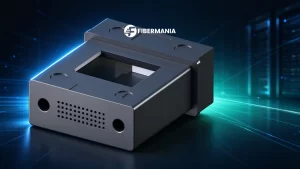
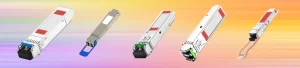
Loopback optical modules are designed specifically to address these challenges. Unlike standard transceivers that communicate with remote devices, loopback modules internally redirect transmitted signals back to the receiving channel, creating a closed-loop testing environment within a single port.
This simple yet effective mechanism allows engineers to evaluate the transmit and receive functionality of a port without requiring a far-end connection. By isolating the test to the local device, loopback modules provide a more focused method for verifying physical layer performance and identifying potential issues.
Compared to traditional end-to-end testing, which depends on multiple devices and coordinated configurations, loopback testing offers a more streamlined and independent approach. It reduces testing dependencies, simplifies workflows, and enables earlier validation in the deployment process.

A Practical Tool for High-Speed Validation
In high-speed environments such as 400G QSFP-DD and 800G OSFP networks, loopback optical modules serve as a foundational validation tool. They are commonly used to confirm that ports on switches or network interface cards can establish stable transmit and receive paths under controlled conditions.
This type of validation is particularly valuable in identifying issues related to signal integrity, electrical interface quality, or transceiver performance. While loopback testing does not replace full system-level verification, it provides an essential first step in ensuring that individual components meet baseline performance requirements.
In addition, loopback modules can complement other testing methodologies, such as bit error rate (BER) analysis or thermal performance evaluation. By incorporating loopback testing into the validation workflow, engineers can detect anomalies earlier and reduce the likelihood of failures during full-scale integration.
Accelerating Fault Isolation
One of the most significant advantages of loopback optical modules is their ability to simplify fault localization. In complex network environments, determining whether a problem originates from the local device or elsewhere in the link can be challenging.
By using a loopback module, engineers can quickly verify whether a port is functioning correctly in isolation. If the loopback test passes, it suggests that the issue likely resides outside the local device—perhaps in the cable, remote module, or peer equipment. Conversely, a failed test points to a potential problem with the port or hardware itself.
This targeted approach reduces the need for extensive end-to-end testing and minimizes reliance on remote devices. As a result, troubleshooting becomes faster, more efficient, and less disruptive to ongoing operations.
Enabling Efficient Pre-Deployment Validation
In large-scale AI infrastructure projects, deployment timelines are often constrained by validation processes. Traditional testing methods can be slow and resource-intensive, particularly when they require coordination across multiple systems.
Loopback optical modules enable a more efficient alternative. Because they allow ports to be tested independently, validation can begin earlier in the deployment cycle, even before the entire network is fully assembled. This capability supports parallel testing across multiple devices, significantly accelerating batch acceptance workflows.
By reducing dependency on far-end readiness and simplifying test procedures, loopback modules help organizations achieve more predictable and scalable deployment processes. This is especially valuable in environments where rapid expansion and phased rollouts are common.
Building a More Reliable Network Foundation
Although loopback optical modules are relatively simple in design, their impact on network reliability is substantial. They provide a practical and efficient means of verifying port functionality, improving fault isolation, and streamlining validation workflows.
In the context of AI data centers—where performance, scalability, and uptime are critical—these capabilities contribute directly to more stable and controllable network operations. By incorporating loopback testing into both deployment and maintenance strategies, organizations can reduce risk, shorten troubleshooting cycles, and ensure that high-speed infrastructure performs as expected.
As AI workloads continue to push the limits of network performance, tools that enhance visibility and simplify validation will play an increasingly important role. Loopback optical modules, while often overlooked, are quickly becoming an essential component in the foundation of reliable, high-speed data center networks.