Skip to content
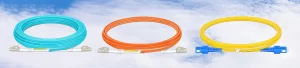


























For more than two decades, the LC connector has dominated fiber optic connectivity as the industry standard for enterprise networks, telecom rooms, and data centers. Its compact size, reliable performance, and widespread compatibility made it the default choice for generations of structured cabling systems.
However, the transition to 400G and 800G networks is exposing a growing limitation: density. As switches adopt QSFP-DD and OSFP transceivers with dramatically higher port counts, rack space and thermal management are becoming critical constraints. Traditional LC duplex connectors, once considered compact, are now too large for next-generation front-panel density requirements.
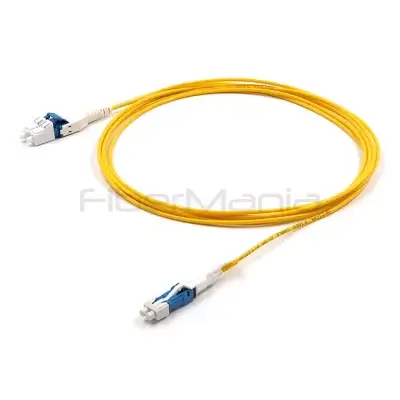
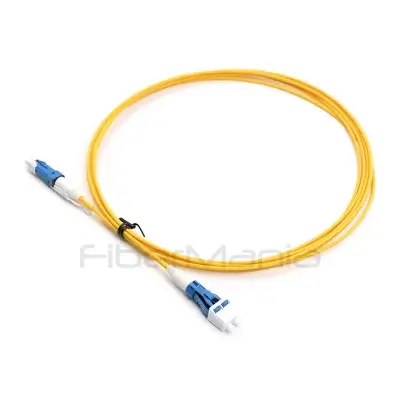
This is where VSFF connectors enter the picture. VSFF (Very Small Form Factor) connectors are designed specifically for high-density optical interconnect environments. Among them, SN and CS connectors are emerging as leading candidates that could redefine how modern data centers are cabled. The key question is whether these new formats will eventually replace LC as the dominant interface.
What are VSFF Connectors?
VSFF connectors are built around a simple engineering principle: retain the proven 1.25 mm ceramic ferrule used in LC connectors but drastically shrink the outer housing. By reducing the plastic body size while maintaining optical alignment precision, manufacturers can dramatically increase port density without sacrificing performance.
Several major VSFF connector formats are gaining industry traction:
CS Connector
Designed for 2×100G and 200G transceiver interfaces, the CS connector is approximately 40% smaller than a standard LC duplex. Its compact footprint allows significantly more ports per panel, making it attractive for high-capacity switching environments.
SN Connector
Developed by Senko, the SN connector targets 400G breakout applications. It supports high-fiber-count architectures and is optimized for modern transceiver cages where space is extremely limited.
MDC Connector
Introduced by US Conec, MDC is another ultra-compact duplex connector designed for very high density patching. It is especially suited for environments where maximizing fiber counts per rack unit is essential.

The Showdown: VSFF vs. LC
The biggest advantage of VSFF connectors is density. In the same 1U patch panel, VSFF solutions can achieve up to three times the fiber capacity of LC connectors. A panel that traditionally supports 144 fibers with LC can potentially support 432 fibers using VSFF designs. This increase directly translates into better space utilization and scalability.
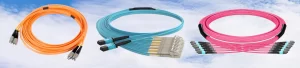
Another major advantage is breakout capability. VSFF connectors allow direct breakout configurations—such as splitting a single transceiver port into multiple channels—directly at the front panel. This eliminates the need for bulky fan-out cables and simplifies cable management, reducing both cost and complexity.
Ease of operation is also improved. Many VSFF connectors use push-pull tab mechanisms, which make insertion and removal possible even in extremely dense panels where fingers cannot reach traditional latch clips. This is a significant ergonomic improvement for technicians working in hyperscale environments.
Will They Replace LC?
In the short term, replacement is unlikely. LC connectors still hold a massive installed base and remain cost-effective for 1G, 10G, and 25G enterprise networks. For many organizations, existing infrastructure investments mean LC will remain relevant for years.
In the long term, however, the industry direction is clear. Hyperscale data centers, AI clusters, and cloud infrastructure providers are prioritizing density, modularity, and scalability. In these environments, VSFF connectors align perfectly with evolving architecture requirements, making them strong candidates to gradually displace LC in high-performance deployments.
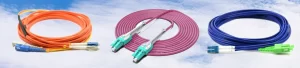
Compatibility is not an obstacle. Hybrid patch cords such as LC-to-SN or LC-to-CS allow seamless interconnection between legacy systems and new hardware. These transitional solutions enable phased upgrades rather than disruptive infrastructure overhauls.
Preparing for the VSFF Era
Organizations planning network upgrades should begin evaluating whether their infrastructure roadmap includes 400G or higher within the next two years. If so, connector choice becomes a strategic decision rather than a simple component selection.
During transition periods, customized cabling solutions become especially important. Hybrid patch cords act as bridges between existing LC-based systems and next-generation VSFF hardware. Selecting the right cable assemblies ensures compatibility today while maintaining scalability for future expansion.
Forward-looking data center planners are already incorporating VSFF readiness into new deployments, ensuring their infrastructure can support upcoming bandwidth demands without requiring major redesigns.
Conclusion
VSFF connectors are not merely smaller alternatives to LC—they represent a shift toward more efficient bandwidth scaling, modular architecture, and higher-density optical interconnects. As network speeds increase and equipment footprints shrink, connector design must evolve accordingly.
LC will not disappear overnight, but in high-performance environments such as hyperscale and AI data centers, the transition toward VSFF formats like SN and CS is already underway.
Planning a data center upgrade? Consult technical specialists to design the most cost-effective high-density cabling solution tailored to your future bandwidth needs.