Skip to content












































Cloud computing has evolved from a flexible IT delivery model into the foundation of today’s digital economy. From enterprise SaaS platforms and e‑commerce to artificial intelligence and big data analytics, cloud services depend on massive, distributed data centers operating at unprecedented scale. While computing and storage often take center stage, network infrastructure—especially high‑speed optical interconnects—has become a decisive factor in overall cloud performance.
As cloud data centers continue to scale horizontally, the ability to move data quickly, reliably, and efficiently between thousands of servers is just as important as raw processing power. This shift places optical connectivity at the core of modern cloud infrastructure.
What Is Cloud Computing? From IT Services to Hyperscale Infrastructure
At its core, cloud computing refers to the centralized deployment of computing, storage, and networking resources that are delivered to users on demand through the network. Instead of owning and maintaining physical servers, organizations consume resources as services, scaling capacity up or down as business needs change.
Cloud environments typically fall into three categories:
Public cloud, operated by hyperscale providers
Private cloud, deployed within an enterprise or dedicated facility
Hybrid cloud, combining public and private resources
Regardless of the model, all cloud platforms share several defining characteristics: large-scale virtualization, dynamic workloads, and a strong reliance on high-bandwidth, low-latency network communication. Unlike traditional client–server models, modern cloud workloads generate massive volumes of east–west traffic—data exchanged between servers inside the data center rather than entering or leaving it.
The Evolution of Cloud Data Center Network Architectures
To accommodate the growth of east–west traffic, cloud data centers have undergone a fundamental shift in network design. Legacy three-tier architectures have given way to the leaf–spine architecture, which offers predictable latency, higher bandwidth, and near-linear scalability.
In a typical leaf–spine design:
Leaf switches connect directly to servers or storage nodes
Spine switches interconnect all leaf switches, forming a high-speed fabric
This architecture dramatically increases the number of high-speed links within the data center. As a result, port speeds have rapidly evolved from 10G and 25G to 100G, 400G, and now 800G. Every speed increase amplifies the demand for advanced optical interconnect solutions capable of maintaining signal integrity at scale.
New Challenges Introduced by Cloud Computing
The expansion of cloud infrastructure introduces several critical challenges for network connectivity:
High Port Density
Modern switches support dozens of high-speed ports within compact form factors. Cabling systems must minimize physical congestion while maintaining performance and serviceability.
Bandwidth and Signal Integrity
As data rates increase, maintaining low bit error rates and stable signal transmission becomes increasingly complex, especially across short-reach and high-density connections.
Power Consumption and Cost Control
Hyperscale data centers operate under constant pressure to reduce total cost of ownership. Network components must balance performance with energy efficiency and deployment cost.
Multi-Vendor Compatibility
Cloud operators often deploy equipment from multiple vendors. Interconnect solutions must comply with industry standards and demonstrate broad compatibility across platforms.
These requirements place optical interconnects at the center of cloud network design decisions.
Optical Interconnect Solutions for Cloud Data Centers
Optical Transceivers
Optical transceivers form the interface between switching hardware and the physical fiber infrastructure. In cloud environments, form factors such as SFP, QSFP+, QSFP28, QSFP56, QSFP‑DD, and OSFP are widely deployed to support data rates from 1G to 800G.
High-quality transceivers enable cloud operators to increase bandwidth without redesigning network architecture. Key considerations include thermal performance, power efficiency, interoperability, and long-term reliability.
Direct Attach Copper Cables (DAC)
DAC assemblies provide a cost-effective and low-latency solution for short-distance connections, such as switch-to-server or in-rack switch-to-switch links. In cloud data centers, DACs are commonly used in top-of-rack environments where reach requirements are limited.
Active Optical Cables (AOC)
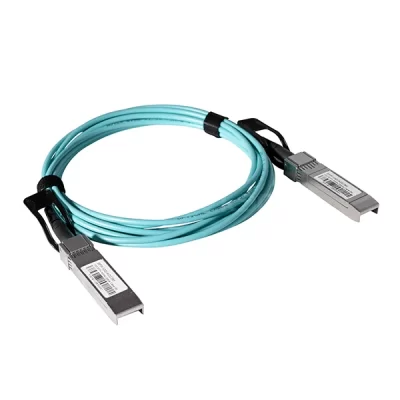
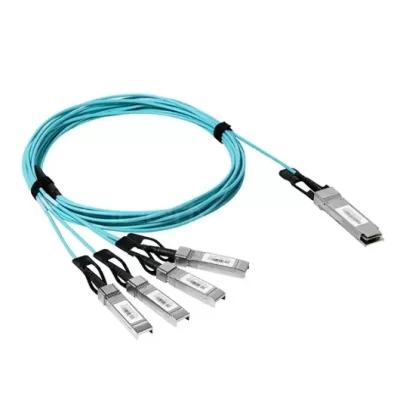
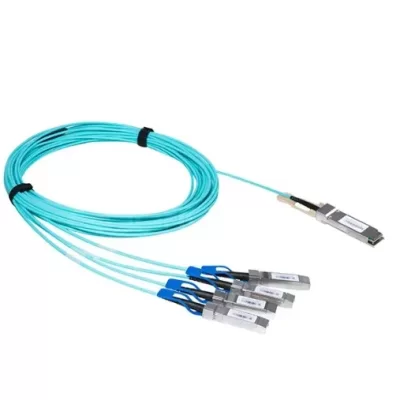
AOCs combine integrated transceivers with optical fiber to extend reach while maintaining plug-and-play simplicity. Compared to DAC, AOCs offer reduced weight, improved airflow, and immunity to electromagnetic interference, making them ideal for high-density cloud deployments.
Multi-Fiber Optic Cables and MPO/MTP Systems
As port density increases, multi-fiber connectivity becomes essential. MPO/MTP trunk cables and breakout assemblies support parallel optics architectures, enabling efficient deployment of 40G, 100G, 400G, and higher-speed links. Proper polarity management and precision manufacturing are critical to ensuring reliable performance in large-scale cloud environments.
Future Trends: Cloud Growth and Optical Interconnect Evolution
The continued expansion of cloud computing—driven by artificial intelligence, edge computing, and data-intensive applications—will further accelerate the need for high-speed optical connectivity. Emerging technologies such as 800G and future 1.6T interconnects will push performance boundaries even further, reinforcing the role of optical infrastructure as a strategic asset rather than a supporting component.
Conclusion: The Hidden Foundation of Cloud Computing
While cloud computing is often defined by software and services, its reliability ultimately depends on the physical infrastructure beneath it. High-performance optical interconnects enable the speed, scalability, and efficiency that modern cloud platforms require.
By delivering reliable, standards-compliant optical connectivity solutions, FiberMania helps cloud operators build networks that are not only fast and scalable today, but also ready for the demands of tomorrow.
How FiberMania Supports Cloud Computing Infrastructure
FiberMania provides a comprehensive portfolio of optical interconnect solutions tailored for cloud data center applications. Our product range spans optical transceivers, DAC and AOC assemblies, and multi-fiber MPO/MTP cabling systems, supporting data rates from legacy networks to next-generation 800G platforms.
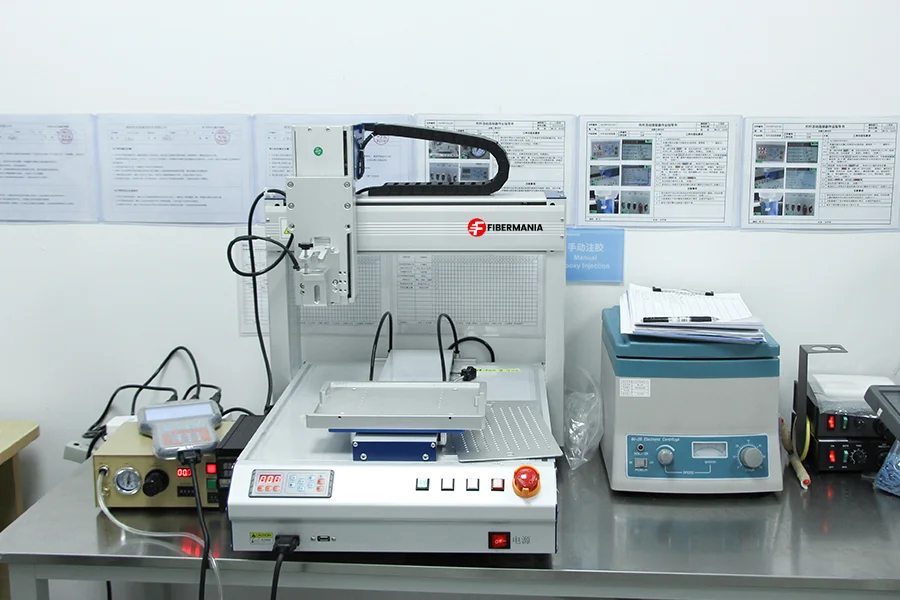
As an experienced OEM and ODM manufacturer, FiberMania offers flexible customization options, private labeling, and scalable production capabilities to meet the demands of hyperscale and enterprise cloud deployments. Every product is manufactured under strict quality control processes, with attention to signal performance, polarity accuracy, and multi-vendor compatibility.