Skip to content














Fiber optic cables are the backbone of modern telecommunications, enabling high-speed data transmission across data centers, enterprise networks, and global internet infrastructure.
While most people focus on fiber types such as single-mode or multimode, the cable construction is equally important. The design of a fiber cable determines its mechanical strength, flexibility, environmental resistance, and suitability for specific deployment environments.
This guide explains the structure of fiber optic cables, the most common cable constructions used in the industry, and how to choose the right cable type for indoor networks, outdoor deployments, data centers, and FTTH systems.
Understanding Fiber Optic Cable Construction
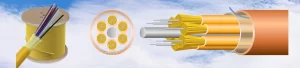
A fiber optic cable is composed of several protective layers that safeguard the fragile glass fiber and ensure reliable signal transmission.
Typical fiber cable layers include:
| Layer | Function |
|---|---|
| Core | Transmits the optical signal |
| Cladding | Reflects light back into the core |
| Primary Coating | Protects the glass fiber from moisture and microbending |
| Buffer Layer | Provides mechanical protection |
| Strength Member (Kevlar/Aramid) | Adds tensile strength |
| Outer Jacket | Protects the cable from environmental damage |
The way these layers are arranged determines the cable construction type.
Two Fundamental Buffer Structures
Almost all fiber optic cables originate from two basic buffering designs.
Tight Buffer
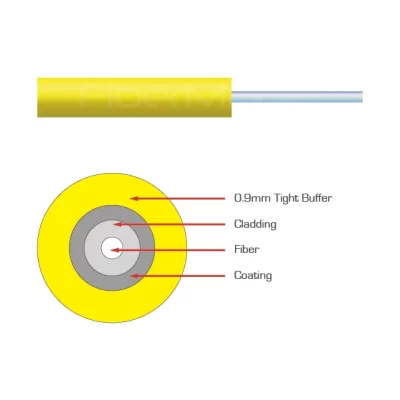
In tight buffer cables, the fiber is directly surrounded by a 900 μm protective buffer. This design provides strong mechanical protection and simplifies connector termination.
Common uses
- Patch cords
- Indoor distribution cables
- Data center cabling
Loose Tube
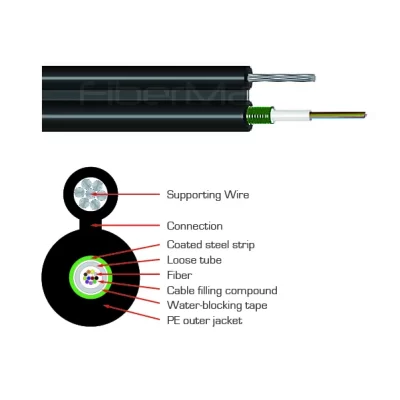
In loose tube cables, fibers are placed inside a plastic tube that allows slight movement. The tube may contain gel or water-blocking materials to protect the fiber from environmental conditions.
Common uses
- Outdoor installations
- Long-distance transmission
- Backbone networks
8 Common Types of Fiber Optic Cable
Several cable designs have evolved from the basic buffer structures to support different deployment environments.
1. Tight Buffer Cable
Designed primarily for indoor environments.
Features
- 900 μm buffer layer
- Easy termination
- Flexible and easy to install
Applications
- Patch cords
- Indoor backbone cabling
2. Loose Tube Cable
The most common outdoor fiber cable.
Features
- Fibers inside protective tubes
- Excellent environmental protection
- Supports large fiber counts
Applications
- Outdoor networks
- Long-distance communication
3. Central Loose Tube Cable
A simplified loose tube design where all fibers are placed in a single central tube.
Applications
- Access networks
- FTTH feeder cables
4. Stranded Loose Tube Cable
Multiple loose tubes are stranded around a central strength member.
Features
- Very high fiber count
- Excellent tensile strength
Applications
- Long-haul networks
- Metropolitan backbone infrastructure
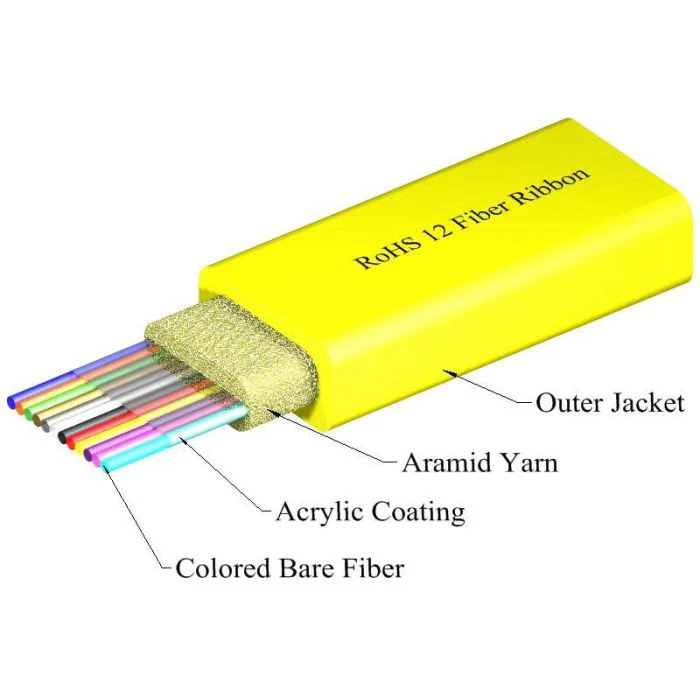
5. Ribbon Fiber Cable
Fibers are arranged in flat ribbons that allow mass fusion splicing.
Advantages
- High fiber density
- Faster splicing
Applications
- Data centers
- High-capacity networks
6. Breakout Cable
Each fiber has its own jacket and strength member.
Advantages
- Extremely durable
- No fan-out kit required
Applications
- Industrial environments
- Data centers
7. Armored Fiber Cable
Includes an additional metal armor layer.
Advantages
- Rodent resistance
- Mechanical protection
Applications
- Underground installations
- Harsh environments
8. Micro Cable / Air-Blown Fiber
Ultra-small cables designed for installation via air-blowing.
Advantages
- Very small diameter
- Flexible network expansion
Applications
- Urban fiber networks
- FTTx deployments
Comparison of Common Fiber Cable Constructions
| Cable Type | Buffer Structure | Environment | Fiber Capacity | Typical Use |
|---|---|---|---|---|
| Tight Buffer | Tight Buffer | Indoor | Low-medium | Patch cords, LAN |
| Loose Tube | Loose Tube | Outdoor | Medium-high | Backbone networks |
| Central Loose Tube | Loose Tube | Outdoor | Medium | Access networks |
| Stranded Loose Tube | Loose Tube | Outdoor | Very high | Long-haul fiber |
| Ribbon Cable | Loose Tube / Ribbon | Indoor / DC | Very high | Data centers |
| Breakout Cable | Tight Buffer | Indoor | Medium | Industrial networks |
| Armored Cable | Both | Indoor / Outdoor | Medium | Underground networks |
| Micro Cable | Loose Tube | Outdoor | Medium | FTTH deployment |
Indoor vs Outdoor Fiber Cable Selection
Selecting the correct cable construction depends largely on the installation environment.
| Feature | Indoor Fiber Cable | Outdoor Fiber Cable |
|---|---|---|
| Typical Structure | Tight Buffer | Loose Tube |
| Environmental Resistance | Moderate | High |
| Moisture Protection | Limited | Excellent |
| Installation Complexity | Easy | Moderate |
| Common Applications | Data centers, LAN | Backbone, FTTH |
Indoor cables focus on flexibility and easy termination, while outdoor cables prioritize durability and environmental protection.
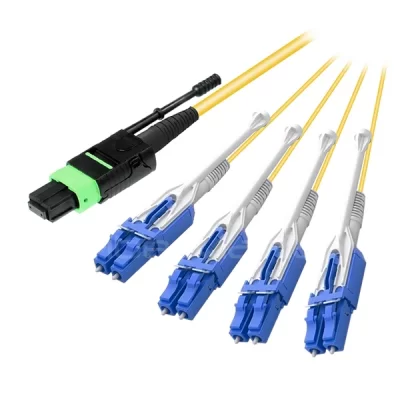
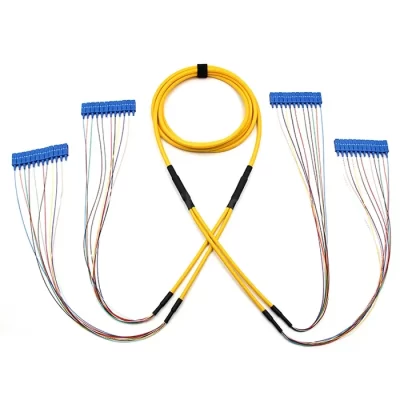
Recommended Fiber Cable Structures for Different Networks
Data Center Networks
Data centers require:
- High density
- Flexible routing
- Easy connector termination
Recommended cable types:
- Tight buffer distribution cable
- Ribbon fiber cable
- Breakout cable
FTTH (Fiber to the Home)
FTTH networks require cables that can withstand outdoor conditions and long-distance deployment.
Recommended cable types:
- Central loose tube cable
- Stranded loose tube cable
- Micro cable / air-blown fiber
Conclusion
Fiber optic cable construction plays a critical role in network performance and reliability. While most designs originate from two basic buffering structures—tight buffer and loose tube—numerous cable types have been developed to support different deployment environments.
Understanding these constructions helps network designers choose the most suitable cable for applications such as data centers, enterprise networks, backbone infrastructure, and FTTH deployments.
As modern networks continue to demand higher bandwidth and greater scalability, selecting the correct fiber cable structure becomes increasingly important for ensuring long-term performance and reliability.