Skip to content











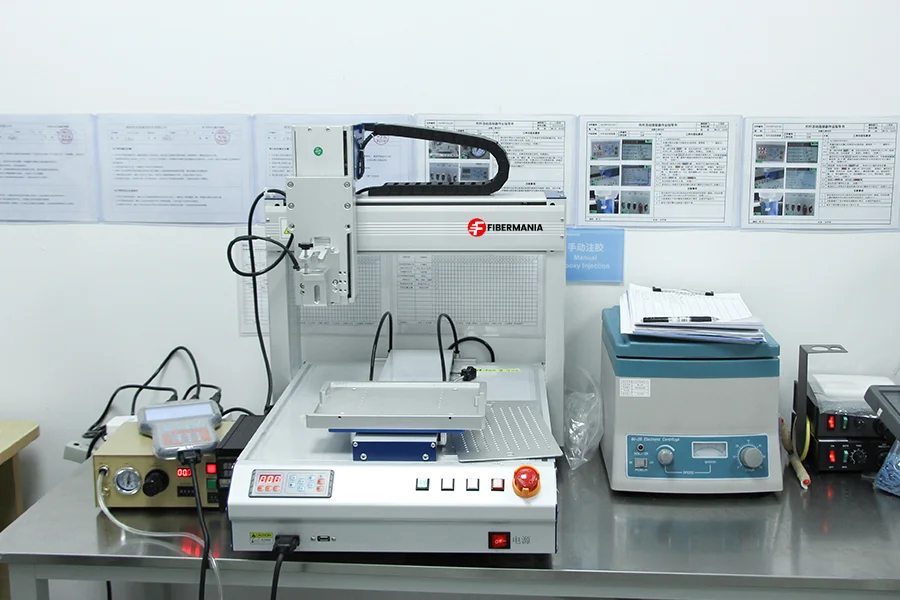



When it comes to fiber optic testing and troubleshooting, two tools are often at the center of discussion: the Visual Fault Locator (VFL) and the Optical Time Domain Reflectometer (OTDR). Both are essential in their own right, yet they serve very different purposes. Choosing the right one depends on your specific application, budget, and level of expertise.
In this guide, we’ll break down what each tool does, explore their similarities and differences, and help you decide which one best fits your needs.
What Is a VFL (Visual Fault Locator)?
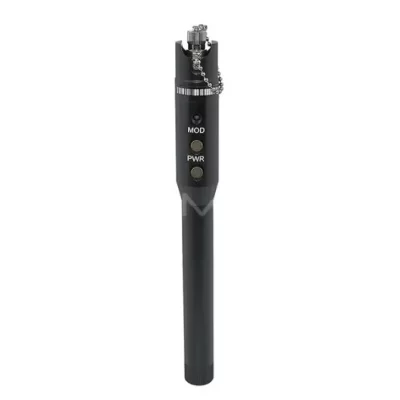
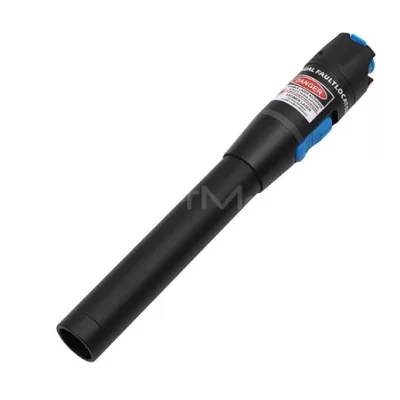
A Visual Fault Locator (VFL) is a simple, handheld device that emits a visible red laser light into a fiber optic cable. This light travels through the fiber and escapes at points where there are breaks, bends, or defects.
Key Features of VFL:
- Uses visible red light (typically 650 nm wavelength)
- Easy to operate, even for beginners
- Designed for short-distance testing (usually up to 3–5 km)
- Provides real-time visual feedback
Common Use Cases:
- Locating fiber breaks or cracks
- Identifying faulty connectors
- Checking continuity
- Detecting macro-bends in fiber cables
Because of its simplicity and affordability, the VFL is often the first tool technicians use in the field for quick diagnostics.
What Is an OTDR (Optical Time Domain Reflectometer)?
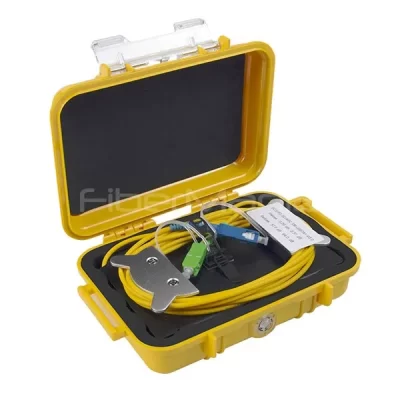
An Optical Time Domain Reflectometer (OTDR) is a more advanced testing instrument that analyzes the integrity of fiber optic cables by sending pulses of light and measuring the reflected signals.
Key Features of OTDR:
- Measures distance, attenuation, and reflectance
- Provides a graphical trace of the fiber link
- Suitable for long-distance testing (tens to hundreds of kilometers)
- Highly accurate and detailed analysis
Common Use Cases:
- Fiber link certification and documentation
- Identifying splice loss and connector loss
- Measuring fiber length
- Troubleshooting complex network issues
OTDRs are widely used in telecom, data centers, and large-scale fiber network deployments where precision is critical.
VFL vs OTDR: Key Differences
Below is a side-by-side comparison to help you quickly understand how these two tools differ:
| Feature | VFL (Visual Fault Locator) | OTDR (Optical Time Domain Reflectometer) |
|---|---|---|
| Primary Function | Visual fault detection | Detailed fiber analysis |
| Testing Distance | Short (up to ~5 km) | Long (up to 100+ km) |
| Accuracy | Low (visual only) | High (quantitative measurements) |
| Ease of Use | Very easy | Requires training |
| Output | Visible red light | Graphical trace and data |
| Cost | Low | High |
| Portability | Highly portable | Portable but bulkier |
| Typical Users | Field technicians, installers | Engineers, network specialists |
| Best For | Quick troubleshooting | In-depth diagnostics and certification |
When Should You Use a VFL?
A VFL is the ideal choice when you need a quick and straightforward solution. It is especially useful in the following scenarios:
- Short-distance troubleshooting: If you’re working on patch cords, drop cables, or short fiber runs, a VFL is more than sufficient.
- Quick fault detection: When time is critical, the VFL allows you to visually identify breaks or bends instantly.
- Basic installation and maintenance: For FTTH (Fiber to the Home) installations or routine checks, a VFL is often the go-to tool.
- Budget constraints: If you’re looking for a cost-effective solution, the VFL offers excellent value.
In many cases, technicians start with a VFL to quickly locate obvious issues before moving on to more advanced tools if needed.
When Should You Use an OTDR?
An OTDR is the better option when accuracy and detailed analysis are required. Consider using an OTDR in these situations:
- Long-distance fiber testing: For backbone networks or long-haul fiber links, a VFL simply isn’t sufficient.
- Network certification: OTDRs provide the data needed for documentation and compliance.
- Complex troubleshooting: When issues are not visible or involve multiple splices and connectors, OTDR analysis is essential.
- Performance measurement: If you need to measure loss, reflectance, or fiber length precisely, an OTDR is indispensable.
While OTDRs require more expertise and investment, they provide insights that no other tool can match.

VFL or OTDR: How to Choose?
Choosing between a VFL and an OTDR ultimately comes down to your specific needs. Here are some practical guidelines:
1. Consider the Distance
- If you’re working with short fiber links, choose a VFL.
- For long-distance networks, an OTDR is necessary.
2. Define Your Purpose
- For quick fault finding, go with a VFL.
- For detailed diagnostics and reporting, choose an OTDR.
3. Evaluate Your Budget
- VFLs are inexpensive and accessible.
- OTDRs are a significant investment but offer advanced capabilities.
4. Assess Skill Level
- VFLs require minimal training.
- OTDRs require technical knowledge to interpret results correctly.
5. Combine Both for Best Results
In reality, many professionals use both tools together:
- Start with a VFL for quick checks
- Use an OTDR for deeper analysis if needed
This combination provides both speed and precision, making it the most effective approach for fiber optic testing.
Final Thoughts
Both VFL and OTDR are essential tools in the fiber optic toolkit, but they are not interchangeable. A VFL excels in simplicity, speed, and affordability, making it perfect for everyday troubleshooting. On the other hand, an OTDR delivers precision, depth, and comprehensive analysis for complex networks.
If you’re just starting out or handling basic installations, a VFL may be all you need. However, for advanced diagnostics and professional-grade testing, investing in an OTDR is the right choice.
In many real-world scenarios, the smartest decision isn’t choosing one over the other—but knowing when to use each.