Skip to content












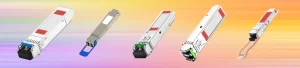

















Optical transceivers, commonly referred to simply as transceivers, are essential active components in modern fiber optic communication systems. Their primary function is to enable high-speed data transmission over optical fiber by converting electrical signals into optical signals and vice versa. As global demand for bandwidth continues to grow—driven by cloud computing, data centers, 5G networks, and enterprise infrastructure—optical transceivers have become a critical building block of today’s digital world.
Unlike passive fiber optic products such as patch cables or adapters, optical transceivers integrate multiple active components, sophisticated circuitry, and precision optical assemblies. This combination allows them to support long-distance transmission, high data rates, and reliable signal integrity under demanding network conditions.
The Core Function of Optical Transceivers
At their most fundamental level, optical transceivers perform bidirectional signal conversion:
Electrical-to-Optical (E/O) conversion for transmission
Optical-to-Electrical (O/E) conversion for reception
How It Works:
A network device (switch, router, server, or NIC) generates an electrical data signal.
The transceiver converts this electrical signal into a modulated optical signal using a laser or light-emitting source.
The optical signal travels through a fiber optic cable.
At the receiving end, another transceiver converts the optical signal back into an electrical signal that the device can process.
Without optical transceivers, fiber optic cables alone would be unable to transmit data. In this sense, the transceiver acts as the engine of the optical network, while fiber cables function as the transmission medium.
Internal Structure and Key Components
Optical transceivers are complex assemblies that integrate multiple high-precision components within a compact form factor. The key internal elements typically include:
1. Optical Components
Laser Diode (LD) or VCSEL for signal transmission
Photodiode (PD) for signal reception
Optical sub-assembly (OSA) for precise light coupling
2. Electronic Components
Laser driver IC
Transimpedance amplifier (TIA)
Clock and data recovery (CDR)
Digital signal processor (DSP) for high-speed modules
3. Control and Monitoring
EEPROM / Microcontroller
Digital Diagnostic Monitoring (DDM / DOM) for:
Temperature
Voltage
Optical output power
Receiver sensitivity
This integration of optical and electronic components is what classifies transceivers as active devices, significantly increasing their technical complexity and production cost compared to passive fiber products.
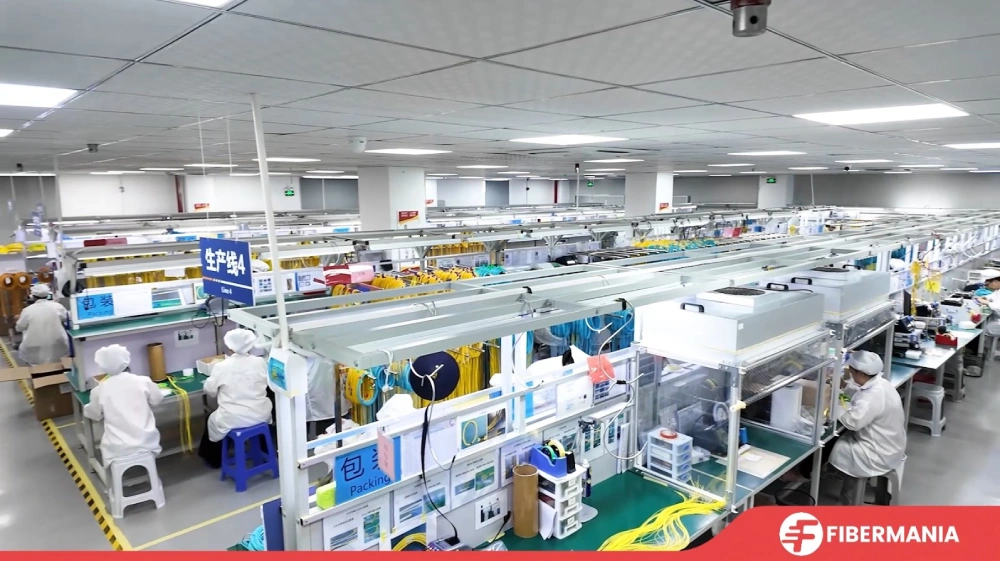
High-Precision Manufacturing Processes
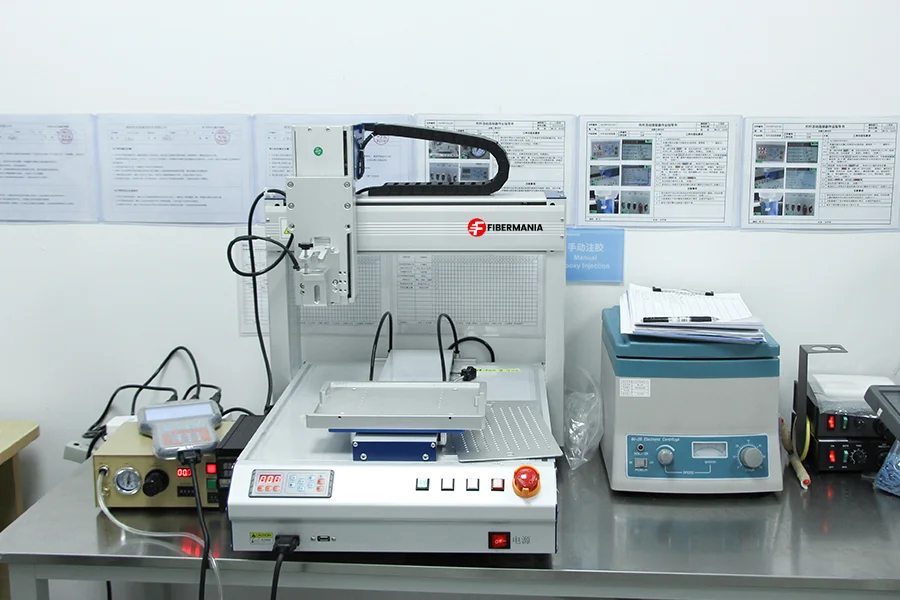
Due to their internal complexity, optical transceivers require highly precise manufacturing and assembly processes, including:
Sub-micron optical alignment
Automated active alignment of lasers and photodiodes
Hermetic or semi-hermetic sealing
High-temperature and low-temperature aging tests
Eye diagram and Bit Error Rate (BER) verification
These processes ensure long-term stability, low signal loss, and consistent performance across a wide range of operating environments.
Classification of Optical Transceivers
Optical transceivers can be classified in several ways, depending on form factor, transmission distance, fiber type, and data rate.
Classification by Form Factor
Common industry-standard form factors include:
SFP (Small Form-factor Pluggable) – 1G
SFP28 – 25G
QSFP28 – 100G
QSFP56 – 200G
QSFP-DD / OSFP – 400G and beyond
Hot-pluggable design allows installation or replacement without powering down network equipment.
Classification by Transmission Distance
SR (Short Reach) – typically up to 300m over multimode fiber
LR (Long Reach) – up to 10km over single-mode fiber
ER (Extended Reach) – up to 40km
ZR / ZR+ – 80km or longer
Classification by Fiber Type
Multimode Transceivers (OM3 / OM4 / OM5)
Single-Mode Transceivers (OS2)
Classification by Data Rate (Speed)
Data rate is one of the most critical factors influencing transceiver cost and complexity:
| Speed | Typical Applications |
|---|---|
| 1G | Enterprise networks |
| 10G | Data centers, aggregation |
| 25G | Server access, cloud |
| 40G | Core switching |
| 100G | Hyperscale data centers |
| 200G / 400G | Next-generation networks |
As data rates increase, the need for advanced DSPs, tighter tolerances, and stricter testing grows significantly.

Applications of Optical Transceivers
Optical transceivers are widely deployed across multiple industries and environments, including:
Data centers and hyperscale cloud infrastructure
Enterprise LAN and SAN networks
Telecommunications and carrier networks
5G fronthaul, midhaul, and backhaul
High-performance computing (HPC)
Financial trading networks
Their versatility makes them indispensable in modern digital communication systems.
International Testing Standards and Compliance
To ensure performance, reliability, and compatibility, optical transceivers are typically tested against international standards, including:
IEEE 802.3
MSA (Multi-Source Agreement)
TIA / EIA
IEC standards
RoHS & REACH compliance
Common Testing Procedures:
Optical power and sensitivity testing
BER testing
Eye diagram analysis
High/low temperature operation
EMC and ESD testing
Compatibility testing with major switch and router brands
These tests ensure that transceivers meet global deployment requirements.

Compatible (Third-Party) Optical Transceivers: Customization and Advantages
In addition to original brand modules, third-party compatible optical transceivers have become a widely accepted and cost-effective alternative.
1. What Are Compatible Transceivers?
Compatible transceivers are designed and programmed to function identically to original brand modules, while maintaining full compliance with industry standards and MSA specifications.
2. Customization Capabilities
Our compatible transceivers support extensive customization, including:
Vendor-specific coding and EEPROM programming
Labeling and branding customization
Packaging customization
Firmware adaptation for specific network environments
These capabilities allow seamless integration into virtually all mainstream network platforms on the market.
3. Key Advantages of Our Compatible Modules
100% compatibility with major brands such as Cisco, Juniper, Arista, HPE, Huawei, and more
Significant cost savings compared to original branded optics
Rigorous pre-shipment compatibility testing
Consistent performance equal to OEM specifications
Flexible OEM and ODM services
By combining advanced manufacturing processes with strict quality control, our compatible transceivers deliver reliable performance without compromising network stability.
Conclusion
Optical transceivers play a vital role in enabling high-speed, long-distance optical communication. Their function, internal complexity, and manufacturing precision distinguish them clearly from passive fiber products. As network speeds continue to increase, the importance of high-quality, standards-compliant transceivers becomes even more critical.
Third-party compatible optical transceivers provide a powerful alternative to original brand modules, offering equivalent performance, extensive customization options, and substantial cost advantages. With strict testing procedures, international compliance, and full compatibility across modern network platforms, compatible transceivers are an ideal choice for scalable, cost-effective optical networking solutions.