Skip to content












































Wireless communication has undergone remarkable transformation over the past few decades. From the early days of basic voice transmission to today’s high-speed, data-intensive mobile networks, each new generation of wireless technology has reshaped how people connect, work, and communicate. While much of the attention is focused on antennas, base stations, and radio technologies, the success of modern wireless networks increasingly depends on what lies beneath the surface: the fiber infrastructure that connects these systems together.
As wireless technologies evolve from 4G to 5G, and now toward 5G-Advanced and future 6G architectures, network designs are becoming more complex, denser, and performance-sensitive. This evolution has significantly increased the demand for reliable, high-capacity, and environmentally robust fiber connections between base stations and antennas. In this context, Fiber to the Antenna (FTTA) solutions have emerged as a critical foundation for modern wireless networks.
This article explores the evolution of wireless communication technologies, examines how network architectures are changing, and explains why FTTA solutions play an increasingly vital role in enabling next-generation wireless infrastructure.

The Evolution of Wireless Communication Networks
From Early Mobile Systems to 4G
Early wireless communication systems were primarily designed for voice services, with limited data capabilities and relatively simple network architectures. As mobile usage expanded, the introduction of 3G and later 4G/LTE marked a major shift toward data-centric communication. Mobile internet access, video streaming, and cloud-based services drove demand for higher data rates, lower latency, and improved network reliability.
During the 4G era, base stations were typically deployed as centralized units with antennas connected through relatively short feeder cables. While fiber was already present in backbone and backhaul networks, its role at the antenna level was still limited in many deployments.
The Transition to 5G
The introduction of 5G fundamentally changed the requirements for wireless infrastructure. Compared with previous generations, 5G networks are characterized by:
Much higher data throughput
Lower end-to-end latency
Support for massive device connectivity
Greater spectrum diversity, including sub-6 GHz and millimeter-wave frequencies
To meet these requirements, 5G networks rely heavily on technologies such as Massive MIMO, beamforming, and advanced radio units. These technologies significantly increase the number of antennas and radio elements deployed at each site, placing new demands on network connectivity and synchronization.
As a result, fiber has moved closer to the antenna than ever before.
Changing Network Architectures and Their Impact
Centralized and Cloud-Based RAN
Modern wireless networks are shifting toward centralized and cloud-based architectures, such as C-RAN (Centralized Radio Access Network) and Cloud-RAN. In these models, baseband processing units are centralized or virtualized, while radio units and antennas are distributed across wide geographic areas.
This architectural shift places strict requirements on fronthaul connections between baseband units and remote radio heads. These links must support high bandwidth, low latency, and precise timing, making fiber-optic connectivity essential.
Higher Antenna Density and Smaller Cells
Another key trend in wireless evolution is the move toward higher site density. Instead of relying solely on large macro base stations, operators increasingly deploy:
Small cells
Microcells and picocells
Indoor and outdoor distributed antenna systems
These deployments are common in urban environments, transportation hubs, industrial parks, and large venues where capacity and coverage must be enhanced. Smaller cells mean more antennas, more connection points, and more challenging installation environments.
In such scenarios, traditional copper-based or bulky feeder solutions are no longer practical. Fiber-based FTTA solutions provide a scalable and efficient way to connect antennas while minimizing signal loss and simplifying deployment.

What Is FTTA and Why It Matters
Understanding FTTA
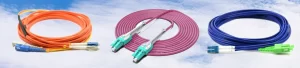
Fiber to the Antenna (FTTA) refers to the practice of extending fiber-optic connections directly to the antenna or radio unit, rather than stopping at the base of the tower or cabinet. In an FTTA architecture, fiber cables, outdoor connectors, and sealed assemblies replace traditional coaxial feeder cables.
FTTA solutions typically include:
Outdoor-rated fiber optic cables
Pre-terminated fiber assemblies
Ruggedized connectors designed for harsh environments
Plug-and-play installation concepts
Key Advantages of FTTA Solutions
The growing adoption of FTTA is driven by several critical advantages:
Improved Signal Performance
Fiber offers extremely low attenuation and immunity to electromagnetic interference, which is especially important for high-frequency wireless signals and long cable runs.
Support for High-Capacity Networks
As fronthaul data rates increase to 25G, 50G, and beyond, fiber becomes the only practical medium capable of supporting these speeds reliably.
Reduced Weight and Space Requirements
Compared with traditional coaxial cables, fiber cables are lighter and thinner, reducing tower load and simplifying cable management.
Enhanced Reliability in Outdoor Environments
FTTA assemblies are designed to withstand extreme temperatures, moisture, dust, and UV exposure, ensuring stable performance over long service lifetimes.
FTTA in Modern Wireless Deployments
Supporting 5G and 5G-Advanced
5G-Advanced builds upon the initial 5G framework by enhancing performance, energy efficiency, and network intelligence. These enhancements often involve more complex antenna configurations and higher data rates, further increasing the importance of fiber-based fronthaul connections.
FTTA solutions enable network operators to scale their infrastructure efficiently while maintaining consistent performance across diverse deployment scenarios.
Enabling Rapid and Flexible Deployment
One of the challenges in modern wireless rollouts is the need for fast and flexible installation. Pre-terminated FTTA cable assemblies allow installers to deploy fiber connections quickly without on-site splicing or specialized tools. This reduces installation time, minimizes human error, and lowers overall deployment costs.
Such advantages are particularly valuable in large-scale rollouts, network upgrades, and time-sensitive projects.
Addressing Harsh Outdoor Conditions
Wireless infrastructure is often deployed in demanding environments, including towers, rooftops, roadside installations, and remote locations. FTTA components are engineered with robust sealing, mechanical strength, and environmental resistance to ensure long-term reliability.
Different connector systems and cable designs are used to meet specific standards and regional requirements, highlighting the importance of tailored FTTA solutions.
The Importance of Customization in FTTA Solutions
While FTTA has become a standard approach in wireless networks, no two deployments are exactly the same. Variations in site layout, equipment vendors, environmental conditions, and regulatory requirements mean that standardized products may not always be sufficient.
Customization plays a crucial role in ensuring optimal performance and compatibility. Key aspects that often require customization include:
Cable length and routing
Fiber type and fiber count
Connector interfaces and standards
Labeling and identification
Mechanical and environmental specifications
OEM and ODM manufacturing capabilities allow FTTA solutions to be precisely adapted to project-specific needs, supporting both large-scale deployments and specialized applications.
Looking Ahead: FTTA and the Future of Wireless Communication
Toward 6G and Beyond
Although 6G remains in the research and development phase, industry consensus suggests that future wireless networks will continue to push the boundaries of speed, latency, and connectivity. Higher frequencies, advanced antenna technologies, and tighter integration between wired and wireless networks are expected.
In this future landscape, fiber will play an even more central role. FTTA is not a transitional solution but a long-term architectural foundation that aligns with the direction of wireless evolution.
A Converging Wired and Wireless Ecosystem
The distinction between wired and wireless networks is becoming increasingly blurred. Wireless performance now depends heavily on the quality of the underlying fiber infrastructure. FTTA solutions sit at this critical intersection, bridging high-speed optical networks with advanced radio technologies.
As networks grow more complex and performance expectations rise, the demand for reliable, scalable, and customizable FTTA solutions will continue to increase.
Conclusion
The evolution of wireless communication is driving profound changes in network architecture and infrastructure requirements. From the rollout of 5G and 5G-Advanced to the long-term vision of 6G, wireless networks are becoming denser, faster, and more reliant on high-performance fiber connectivity.
FTTA solutions have emerged as a key enabler of this transformation, delivering the reliability, capacity, and flexibility needed to support modern wireless systems. By extending fiber directly to the antenna, FTTA bridges the gap between optical and wireless technologies, forming the backbone of next-generation communication networks.
As wireless technology continues to advance, FTTA will remain a critical component in building resilient, future-ready wireless infrastructure.