Skip to content
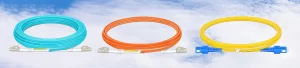
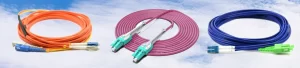
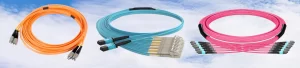








When selecting fiber optic patch cords and cables for demanding environments, the protective materials used in cable construction play a critical role in ensuring long-term performance and reliability. Understanding the properties of different jacket materials, connector housings, and protective components helps network installers choose the right solution for specific environmental challenges.
Understanding Fiber Cable Protection Layers
Fiber optic cables incorporate multiple protective layers, each serving distinct functions:
- Outer Jacket: The primary barrier against environmental hazards including moisture, chemicals, abrasion, and mechanical stress
- Connector Housing/Boot: Protects the fiber-to-connector interface from bending damage and environmental exposure
- Dust Caps: Shields unmated connector end-faces from contamination and physical damage
- Armoring (when required): Provides additional crush resistance and rodent protection
The material selection for each component directly impacts the cable’s suitability for specific installation environments.
Common Fiber Cable Jacket Materials
PVC (Polyvinyl Chloride)
PVC remains the most widely used jacket material for indoor fiber optic cables due to its balanced performance and cost-effectiveness. Standard PVC jackets offer adequate protection for controlled indoor environments like data centers and office buildings.
Key characteristics:
- Good flexibility and ease of handling
- Adequate abrasion resistance for general use
- Cost-effective for high-volume applications
- Temperature range: -10°C to +60°C
- Flame rating: Typically meets OFNR (Riser) standards
Limitations:
- Limited UV resistance for outdoor use
- Can become brittle in cold temperatures
- Not suitable for plenum spaces without special formulation (OFNP)
- Poor chemical resistance to certain solvents
OFNR (Optical Fiber Nonconductive Riser)
OFNR-rated cables use specially formulated flame-retardant PVC or other materials designed specifically to meet UL 1666 riser flame test requirements. This is one of the most common cable types for vertical installations between floors in commercial buildings.
Key characteristics:
- Meets UL 1666 vertical flame propagation standards
- Prevents fire spread through vertical shafts and risers
- All-dielectric construction (no metallic components)
- Suitable for general indoor vertical applications
- Temperature range: -20°C to +60°C
- Cost-effective compliance for multi-floor installations
Best applications:
- Vertical cable runs between floors
- Telecommunication closets and vertical pathways
- Commercial buildings without plenum air handling spaces
- Cost-sensitive projects requiring code compliance
Limitations:
- Not approved for plenum spaces
- Lower fire safety performance compared to OFNP
- Indoor use only; no UV resistance

LSZH (Low Smoke Zero Halogen)
LSZH materials have become increasingly popular, especially in Europe and enclosed spaces where fire safety is paramount. These compounds emit minimal smoke and no halogenic acids when exposed to fire.
Key characteristics:
- Excellent fire safety performance
- Minimal toxic fume emission during combustion
- Suitable for public buildings, transportation, and data centers
- Temperature range: -20°C to +70°C
- Meets IEC 60332 and other international fire safety standards
- Can be manufactured to meet OFNP ratings
Limitations:
- Higher cost compared to standard PVC and OFNR
- Slightly stiffer, requiring more careful handling
- More susceptible to moisture absorption than PVC
TPU (Thermoplastic Polyurethane)
TPU offers superior mechanical properties and is frequently used in tactical, military, and industrial fiber applications where flexibility and durability are essential.
Key characteristics:
- Exceptional flexibility, even at low temperatures
- Outstanding abrasion and tear resistance
- Excellent resistance to oils, greases, and many chemicals
- Temperature range: -40°C to +90°C
- High tensile strength and elastic memory
Best applications:
- Tactical and military field deployments
- Robotic and automation systems requiring repeated flexing
- Harsh industrial environments
- Outdoor temporary installations
PE (Polyethylene)
Polyethylene, particularly in HDPE and MDPE variants, excels in outdoor and direct-burial applications due to its superior moisture resistance.
Key characteristics:
- Excellent water resistance and moisture barrier
- Good UV resistance for outdoor exposure
- Temperature range: -40°C to +80°C
- Low dielectric constant
- Resistant to most chemicals and environmental stress
Best applications:
- Outdoor aerial and underground installations
- Direct burial cables
- Marine and waterfront environments

Material Performance Comparison
| Property | PVC | OFNR | LSZH | TPU | PE | Armored (Steel/Kevlar) |
|---|---|---|---|---|---|---|
| Indoor Use | Excellent | Excellent | Excellent | Good | Fair | Good |
| Plenum Rated | Special formulation | No | Can be OFNP | No | No | Can be |
| Riser Rated | Can be OFNR | Yes (UL 1666) | Can be OFNR | No | No | Can be |
| Outdoor/UV Resistance | Poor | Poor | Fair | Good | Excellent | Excellent |
| Flexibility | Good | Good | Fair | Excellent | Fair | Poor |
| Abrasion Resistance | Good | Good | Good | Excellent | Good | Excellent |
| Chemical Resistance | Fair | Fair | Fair | Excellent | Excellent | Excellent |
| Moisture/Water Resistance | Fair | Fair | Poor | Good | Excellent | Excellent |
| Flame Retardancy | Good | Excellent (UL 1666) | Excellent | Good | Fair | Good |
| Smoke Generation | High | Medium-High | Very Low | Medium | High | Medium |
| Temperature Range | -10°C to +60°C | -20°C to +60°C | -20°C to +70°C | -40°C to +90°C | -40°C to +80°C | -40°C to +85°C |
| Rodent Resistance | Poor | Poor | Poor | Fair | Poor | Excellent |
| Crush Resistance | Fair | Fair | Fair | Good | Fair | Excellent |
| Cost | Low | Low-Medium | Medium | High | Medium | Very High |
| Typical Standards | OFNP (special) | UL 1666, OFNR | IEC 60332, OFNP/OFNR | MIL-PRF-85045 | ANSI/ICEA S-87-640 | ANSI/TIA-568, IEC 61034 |
Armored Cable Solutions for Maximum Protection
When standard jacket materials cannot provide sufficient protection against crushing forces or rodent damage, armored fiber cables become necessary. These cables incorporate additional protective layers:
Corrugated Steel Armor: Provides excellent crush resistance up to 1000N or more, ideal for direct burial in rocky soil or areas with heavy vehicular traffic. Meets requirements in ANSI/ICEA S-87-640 for outdoor applications.
Interlocking Aluminum Armor: Lighter than steel while maintaining good crush protection, suitable for indoor/outdoor vertical riser applications and areas requiring electromagnetic shielding.
Kevlar/Aramid Reinforcement: While not metallic armor, aramid yarn reinforcement provides exceptional tensile strength (up to 600N) and good rodent deterrence without the weight of metal armoring.
Connector Components and Materials
Beyond the cable jacket, connector housings and protective components also utilize specific materials:
Connector Boots: Typically made from flexible PVC, rubber, or TPU to provide strain relief and prevent sharp bends at the connector interface. Color-coded options aid in network management.
Dust Caps: Usually molded from rigid plastics (ABS, polycarbonate) or flexible rubber compounds, protecting connector ferrules from contamination when not mated.
Connector Housings: High-quality connectors use materials like glass-filled nylon or polycarbonate for dimensional stability and durability.
Matching Materials to Environmental Standards
Different installation environments require compliance with specific standards:
Indoor Plenum (OFNP): Requires materials meeting UL 910 flame and smoke requirements – typically LSZH or special plenum-rated PVC. Used in spaces handling environmental air.
Indoor Riser (OFNR): Must meet UL 1666 vertical flame test – specially formulated flame-retardant PVC or LSZH compounds. The most common choice for vertical cable runs between floors.
Indoor General Purpose (OFNG): Meets UL 1581 general purpose flame test – standard PVC jackets for horizontal runs on single floors.
Outdoor (OSP): Should meet ANSI/ICEA S-87-640 for UV resistance, moisture protection, and temperature cycling – PE jackets are standard.
Direct Burial: Requires water-blocking compounds, PE jackets, and often armoring to meet ANSI/ICEA standards for underground installation.
Industrial Environments: May require meeting specific chemical resistance, temperature, or mechanical standards like IEC 60794 or MIL-PRF-85045 for military applications.
Making the Right Choice
Selecting the appropriate fiber cable materials depends on thoroughly evaluating your installation environment:
- Assess environmental hazards: moisture, temperature extremes, UV exposure, chemicals, physical stress
- Identify applicable building and safety codes: plenum requirements, riser ratings, fire codes, local regulations
- Consider operational requirements: flexibility needs, installation method, maintenance access
- Evaluate budget constraints: balance initial cost against long-term reliability and replacement costs
For typical commercial building installations, OFNR-rated cables offer the best balance of performance, code compliance, and cost. When enhanced fire safety is required, LSZH materials provide superior smoke and toxicity performance. Outdoor installations demand PE jackets with UV resistance, while harsh industrial or tactical applications benefit from TPU’s mechanical superiority.
By understanding the properties and limitations of different protective materials, network designers can specify fiber optic cables that deliver reliable performance throughout their expected service life, even in challenging environments.