Skip to content

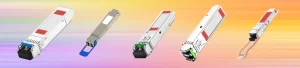










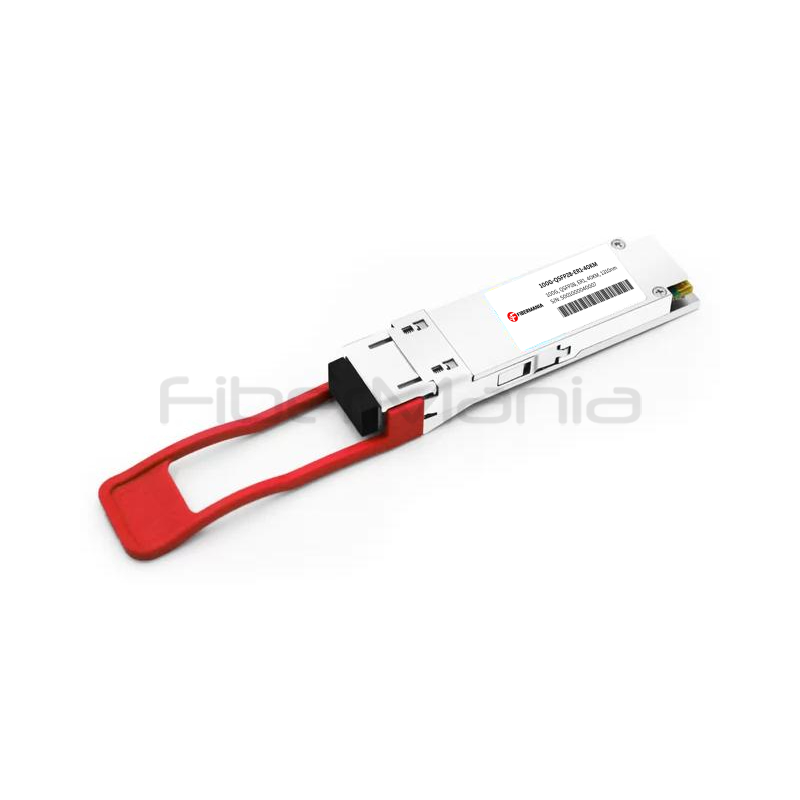
100G QSFP28 ER1 40km Single Lambda Optical Transceiver 1310nm LC SMF
Categories:
Product Highlights:
- 100Gbps transmission up to 40km
- Single 1310nm wavelength with 100G PAM4
- EML laser and APD receiver for extended reach
- CAUI-4 electrical interface
- QSFP28 form factor with Duplex LC
- Integrated DDM for optical link monitoring
Table of Contents
Description
The 100G QSFP28 ER1 Single Lambda Optical Transceiver is a long-reach 100Gbps Ethernet module designed for extended-distance transmission over standard single-mode fiber. Based on the 100G Lambda MSA 100G-ER1-40 architecture, it supports transmission distances of up to 40km using a single 1310nm wavelength, providing an efficient solution for long-distance 100G connectivity. The module uses PAM4 modulation to convert four 25.78Gb/s NRZ electrical lanes through a CAUI-4 interface into a single 100G PAM4 optical channel. An EML laser transmitter and APD receiver provide the optical performance required for extended-reach links, while the QSFP28 hot-pluggable form factor, Duplex LC interface, integrated DDM, and low-power operation enable convenient deployment and monitoring. It is suitable for data center interconnects, cloud networks, enterprise backbones, and other high-capacity 100G applications.
Specification
| Form Factor | QSFP28 |
|---|---|
| Data Rate | 100Gb/s |
| Ethernet Standard | 100GBASE-ER1-40 |
| MSA Compliance | 100G Lambda MSA |
| Fiber Type | Single-Mode Fiber (SMF) |
| Maximum Distance | Up to 40km |
| Wavelength | 1310nm |
| Optical Modulation | 100G PAM4 |
| Optical Interface | 1 × 100G PAM4 |
| Optical Connector | Duplex LC |
| Transmitter | EML Laser |
| Receiver | APD Receiver |
| Electrical Interface | CAUI-4 |
| Electrical Lane Configuration | 4 × 25.78Gb/s NRZ |
| Power Supply | Single +3.3V |
| Maximum Power Consumption | 5.5W |
| Management Interface | I2C / DDM |
| Operating Temperature | 0°C to +70°C |
Features
- 100Gbps Ethernet data rate
- Transmission distance up to 40km
- Single 1310nm optical wavelength
- 100G Lambda MSA 100G-ER1-40 architecture
- Single 100G PAM4 optical channel
- Four 25.78Gb/s NRZ electrical lanes
- CAUI-4 electrical interface
- EML laser transmitter
- APD receiver
- QSFP28 hot-pluggable form factor
- Duplex LC optical interface
- Integrated Digital Diagnostic Monitoring (DDM)
- Supports standard single-mode fiber
Applications
- 100G Data Center Interconnect (DCI)
- Cloud data center networks
- Enterprise backbone networks
- Long-distance 100G Ethernet connections
- Metro and regional optical networks
- High-capacity single-mode fiber infrastructure
- Extended-reach data center networking
FAQs
What is the maximum transmission distance?
The module supports transmission distances of up to 40km over standard single-mode fiber, depending on the optical link budget and network conditions.
What does Single Lambda mean?
Single Lambda means the 100Gbps optical signal is transmitted using a single 1310nm wavelength rather than multiple optical wavelengths, simplifying the optical architecture while supporting extended transmission distances.
What modulation technology does the module use?
The transceiver uses PAM4 modulation for the 100G optical channel, converting four 25.78Gb/s NRZ electrical lanes into a single high-speed optical signal.
What optical components are used?
The module uses an EML laser transmitter and APD receiver to provide the optical output power and receiver sensitivity required for long-distance 100G transmission.
What connector and fiber are required?
It uses a Duplex LC optical interface and is designed for standard single-mode fiber.
Quality Qulifications and Compliance
To get the detailed certification, please go to the Compliance.
Please Note: Our products comply with all internationally recognized and industry-standard specifications. For customized or special requirement products, we carry out testing and standards in accordance with the conformity criteria specified in the contract.
Related Products


Have Questions? Contact Our Product Experts or Sales Team Today! We Will Fedback You Soon.