Skip to content



























For decades, drone communication has relied heavily on radio frequency (RF) links. From early hobbyist FPV systems to modern industrial UAVs, wireless transmission has been the backbone of remote control and real-time video. Yet, as applications have grown more demanding—requiring ultra-low latency, high-definition video, and robust performance in complex environments—traditional wireless links have begun to show their limitations.
Against this backdrop, optical fiber UAV/FPV drones have re-emerged as a compelling alternative. While the concept may sound futuristic, its roots stretch back further than many realize.
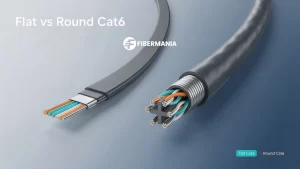
In this article, we will compare Slim Cat6 vs Regular Cat6 vs Armored Ethernet Cable, and help you understand which one is best for different network environments.

A Brief History of Fiber-Connected Flight
The idea of tethered or guided communication systems is not new. As early as the mid-20th century, military research explored wire-guided systems for secure and interference-resistant control. With the rapid advancement of fiber optic communication in the late 20th century—driven by global telecommunications infrastructure—engineers began to consider how lightweight optical fibers could be adapted for mobile platforms.
However, early attempts were constrained by material limitations. Optical fibers were fragile, bending caused significant signal loss, and deployment mechanisms were bulky. It wasn’t until the 2000s, with the maturation of bend-insensitive fibers and compact optical modules, that fiber-based drone communication became technically viable.
In recent years, improvements in fiber strength, coating technologies, and micro-spooling systems have accelerated adoption. What was once a niche concept has now entered both defense and civilian domains, especially in scenarios where reliability outweighs mobility.
How Optical Fiber UAVs Work
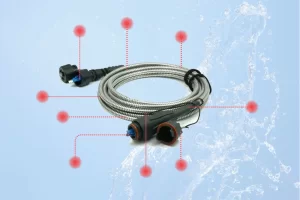
At its core, a fiber optic UAV replaces or supplements wireless communication with a physical optical link. Instead of transmitting signals through the air, data travels through an ultra-thin fiber cable connected between the drone and a ground station.
This approach leverages the principle of total internal reflection—light signals are guided through the fiber core with minimal loss and virtually no electromagnetic interference. The result is a communication channel that is stable, secure, and capable of extremely high bandwidth.
In practical implementations, two primary architectures have emerged. One is the tethered drone, which uses a composite cable combining optical fibers and power conductors, allowing for continuous operation and persistent surveillance. The other is the fiber-guided drone, which carries a spool of optical fiber and deploys it during flight, maintaining a high-speed data link without relying on RF signals.
Why Fiber? A Shift Driven by Limitations
The resurgence of fiber optic UAVs is largely a response to the growing challenges faced by wireless systems. In dense urban areas, industrial zones, or disaster environments, electromagnetic interference can severely degrade RF performance. Similarly, long-distance operations often encounter latency, bandwidth constraints, or signal dropouts.
Fiber optics fundamentally sidestep these issues. Because signals are confined within a physical medium, they are immune to interference and extremely difficult to intercept. Latency remains consistently low, and bandwidth can support multiple streams of high-definition video and sensor data simultaneously.
This makes fiber-based drones particularly attractive for applications where reliability is critical—such as infrastructure inspection, emergency response, and secure communications.
Civilian Adoption: From Concept to Practical Use
Although initially driven by specialized sectors, fiber optic UAVs are gradually finding their place in civilian applications. Infrastructure inspection is one of the most promising areas. Utility providers and network operators can deploy drones to monitor assets while maintaining a stable, real-time data link unaffected by environmental interference.
In disaster response scenarios, where communication networks may be compromised, fiber-connected drones can rapidly establish temporary links, supporting coordination and situational awareness. In agriculture and environmental monitoring, they enable uninterrupted transmission of high-resolution imagery across large areas.
These use cases highlight a broader trend: fiber optic UAVs are not replacing wireless drones, but rather complementing them in scenarios where performance reliability is non-negotiable.

Trade-offs That Shape the Technology
Despite their advantages, fiber optic drones are not without limitations. The most obvious constraint is physical: the fiber itself defines the operational range and introduces restrictions on maneuverability. Unlike wireless drones, which are free to roam, fiber-connected systems must account for cable deployment, tension, and potential entanglement.
Weight is another factor. Even lightweight fibers add mass when extended over kilometers, and the required spooling mechanisms further impact payload capacity. Operational complexity also increases, requiring careful planning and skilled handling.
These trade-offs explain why fiber optic UAVs remain a specialized solution rather than a universal replacement.
Looking Ahead: Trends and Future Directions
The future of optical fiber UAVs will likely be shaped by advancements in materials science and hybrid communication systems. Researchers are actively developing ultra-lightweight, high-strength fibers with improved environmental resilience. At the same time, biodegradable or recyclable materials are gaining attention as sustainability concerns grow.
Hybrid communication architectures are also emerging as a key trend. Future drones may dynamically switch between fiber optic links and wireless technologies such as 5G or free-space optical communication, combining the strengths of each. This would enable both mobility and reliability, depending on mission requirements.
Miniaturization will further accelerate adoption. As optical modules become smaller and more energy-efficient, integrating fiber communication into compact UAV platforms will become increasingly feasible.
Another important direction is automation. Intelligent cable management systems and AI-assisted flight control could reduce operational complexity, making fiber-based drones more accessible beyond highly specialized users.
Conclusion
Optical fiber UAV/FPV drones represent a fascinating intersection of traditional communication technology and modern aerial systems. Their development reflects a broader shift in the drone industry—one that prioritizes reliability, security, and performance alongside flexibility.
Rather than replacing wireless communication, fiber optics offer a powerful complementary solution, particularly in environments where conventional methods fall short. As materials, design, and hybrid systems continue to evolve, fiber optic drones are poised to play an increasingly important role in the future of unmanned aerial operations.