Skip to content









































As digital infrastructure continues to expand, security has become just as critical as bandwidth and latency. Today’s internet relies heavily on encryption systems such as RSA Encryption to protect sensitive data across networks. However, with the rapid development of quantum computing, this long-standing foundation is facing a potential future challenge.
While large-scale quantum computers are not yet capable of breaking modern encryption, the theoretical risk is well understood. Algorithms like Shor’s Algorithm demonstrate that sufficiently powerful quantum machines could efficiently break widely used cryptographic systems. This has prompted global efforts to prepare for what is often called the “post-quantum” era.
One of the most significant initiatives in this space is led by NIST, which is actively developing and standardizing Post-Quantum Cryptography (PQC). Unlike quantum computing itself, PQC focuses on designing new encryption algorithms that can resist attacks from both classical and quantum computers. These algorithms are expected to gradually replace current cryptographic standards in the coming years.
At first glance, this shift may seem purely software-related. However, its implications extend deep into physical network infrastructure—especially in fiber optic communication systems.
The Infrastructure Impact of Post-Quantum Cryptography
Post-quantum algorithms are generally more complex than current encryption methods. They often require:
- Larger key sizes
- Increased computational overhead
- Higher data transmission volumes
This means that as PQC is adopted, networks will likely experience increased data loads and stricter performance requirements. In practical terms, this translates into a growing demand for:
- Higher bandwidth capacity
- Lower latency transmission
- More efficient and scalable network architectures
Fiber optic networks, already the backbone of modern communications, will play an even more critical role in supporting these evolving requirements.
What This Means for Fiber Network Design
For data centers, telecom operators, and enterprise networks, the transition toward PQC is not just a security upgrade—it is also an infrastructure challenge.
Future-ready networks will need to:
- Support higher-density cabling to accommodate increased data flow
- Maintain ultra-low insertion loss for stable high-speed transmission
- Enable flexible scaling to adapt to evolving encryption standards
- Improve cable management to handle growing complexity
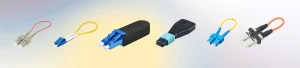
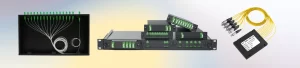
This is where high-performance fiber solutions become essential. Components such as MPO/MTP trunk cables, high-density patch panels, and modular fiber enclosures will be increasingly important in building scalable and efficient network environments.
Preparing Today for Tomorrow’s Security Needs
Although quantum threats are not yet immediate, the transition to post-quantum cryptography is already underway. Organizations that proactively evaluate their infrastructure today will be better positioned to adapt when new standards become mainstream.
Key steps include:
- Monitoring developments from NIST and related industry bodies
- Assessing current network capacity and scalability
- Investing in high-density, future-ready fiber infrastructure
- Working with suppliers that offer flexible customization and rapid deployment
FiberMania’s Perspective
At FiberMania, we see the evolution of network security as closely tied to the evolution of physical connectivity. As data volumes grow and network demands increase, the need for reliable, scalable, and customizable fiber solutions becomes even more critical.
With strong OEM and ODM capabilities, we support partners in building infrastructure that is not only optimized for today’s performance requirements, but also adaptable for future technological shifts—including the transition to post-quantum cryptography.
Conclusion
Quantum computing may still be in its early stages, but its long-term implications are already influencing how networks are designed and secured. Post-quantum cryptography represents a proactive step toward future-proofing digital security—and in doing so, it is driving new demands on the underlying infrastructure.
In this evolving landscape, fiber optic networks are not just carriers of data—they are enablers of the next generation of secure communication.