Skip to content


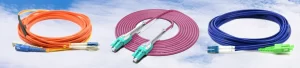




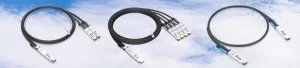





































As data center networks continue to evolve toward 400G, 800G, and beyond, fiber optic connectivity must support higher bandwidth, greater port density, and increasingly complex cabling architectures. Traditional MPO connectors have become a well-established solution for multi-fiber connectivity in enterprise networks, hyperscale data centers, and high-performance computing environments. However, as equipment becomes more compact and optical interconnect requirements increase, miniature multi-fiber connectors such as MMC are gaining attention as another option for high-density fiber applications.
Both MMC and MPO are designed to support multiple optical fibers through a single connector interface, reducing the number of individual connections required in complex cabling systems. However, they differ in physical dimensions, connector design, port density, and deployment considerations. Understanding these differences is essential when selecting a fiber connectivity solution for modern data centers, particularly in AI infrastructure and high-performance computing environments.
This article compares MMC and MPO connectors from a practical engineering perspective, helping network designers, system integrators, and data center operators determine which solution is better suited to their infrastructure requirements.
1. Understanding MMC and MPO Fiber Optic Connectors
MMC and MPO are both multi-fiber connector technologies developed to simplify high-density optical connectivity. Instead of connecting individual fibers one at a time, these connectors integrate multiple optical fibers into a single ferrule, enabling several optical channels to be connected simultaneously. This approach simplifies installation, reduces connector count, and supports scalable fiber distribution systems.
MPO (Multi-Fiber Push-On) is a widely adopted multi-fiber connector format used in structured data center cabling. It is commonly available in 8-fiber, 12-fiber, and 16-fiber configurations, with higher fiber-count assemblies also available through specialized designs. MPO connectors are frequently used in trunk cables, harness assemblies, cassette-based distribution systems, and parallel optical links. MTP® is a registered brand of a high-performance MPO connector developed by US Conec, featuring design refinements intended to improve mechanical performance, reliability, and optical consistency.
MMC (Miniature Multi-fiber Connector) belongs to the Very Small Form Factor (VSFF) connector category. It is designed to accommodate multiple fibers within a significantly smaller connector footprint than conventional MPO interfaces. This compact structure makes MMC particularly relevant to applications where panel space, equipment dimensions, and connection density are major design considerations. MMC connectors are available in multi-fiber configurations, including 12-fiber designs, depending on the product platform.
Although both technologies serve multi-fiber connectivity requirements, their physical interfaces and deployment ecosystems are different. MMC is primarily positioned for space-constrained, high-density optical interconnects, while MPO has a broader and more established deployment history across data center structured cabling systems.
2. MMC vs MPO: Key Technical Differences
The most noticeable difference between MMC and MPO is connector size. MMC adopts a smaller form factor, allowing more connector interfaces to be accommodated within a given panel or equipment space. This is particularly valuable in high-density switching systems, where a large number of optical connections must be organized within limited physical dimensions.
MPO, on the other hand, offers a mature and widely deployed connection platform with extensive compatibility across existing fiber infrastructure. Its larger connector footprint may require more panel space, but it also benefits from established installation practices, product availability, and a broad range of pre-terminated cabling options.
The following table summarizes their main differences.
| Comparison | MMC Connector | MPO Connector |
|---|---|---|
| Connector category | VSFF multi-fiber connector | Standard multi-fiber connector |
| Physical size | Smaller, compact footprint | Larger footprint |
| Port density | Higher potential port density within limited space | Lower relative density for comparable panel areas |
| Fiber configurations | Commonly available in 12-fiber designs; other configurations depend on platform | Commonly available in 8F, 12F, and 16F configurations, with other options |
| Typical applications | High-density equipment interconnects and compact optical systems | Data center backbone cabling, distribution, and parallel optical links |
| Cabling ecosystem | More specialized and platform-dependent | Broadly established product ecosystem |
| Installation considerations | Requires compatible interfaces and dedicated cabling components | Supported by widely adopted installation and testing practices |
| Infrastructure compatibility | Requires MMC-compatible equipment or conversion solutions | Widely supported by MPO-based infrastructure |
| Expansion considerations | Attractive for space-constrained, high-density designs | Suitable for scalable structured cabling architectures |
It is important to note that actual port density depends on connector dimensions, adapter design, panel layout, and equipment architecture. A smaller connector does not automatically guarantee a specific density improvement in every application. Similarly, optical performance depends on ferrule quality, fiber alignment, polishing, and manufacturing consistency rather than connector size alone.

3. Connector Size and Port Density: Where MMC Has an Advantage
Port density is becoming an increasingly important consideration in modern data center design. As switch capacity increases, network equipment must accommodate more optical connections without continuously increasing rack space or front-panel dimensions. This challenge is particularly relevant to AI clusters, where large numbers of high-speed optical links connect switches, servers, and distributed computing resources.
MMC addresses this requirement through its compact VSFF design. By reducing the connector footprint, it allows more fiber interfaces to be arranged within a limited panel area. This can help equipment manufacturers and system designers develop more compact optical connection layouts while maintaining access to multiple fiber channels through each connector.
MPO connectors provide a different balance between density and deployment flexibility. Although their physical dimensions are larger, MPO-based systems already support high-density connectivity through multi-fiber trunk cables, modular cassettes, and high-capacity patch panels. For many data centers, this established architecture offers sufficient port density without requiring a complete transition to a newer connector platform.
The practical difference is therefore not simply that MMC is smaller than MPO. It is whether the additional density offered by MMC provides a meaningful benefit within the intended equipment or cabling architecture. For compact switching platforms and highly integrated optical systems, MMC may offer clear advantages. For conventional data center backbone distribution and structured cabling, MPO remains a highly practical solution.
4. Optical Performance: Insertion Loss, Return Loss, and Reliability
Connector size is only one part of the selection process. Optical performance directly affects link budgets, transmission stability, and the overall reliability of high-speed fiber networks. Both MMC and MPO systems must maintain accurate fiber alignment and consistent endface quality to achieve reliable optical transmission.
Insertion loss (IL) measures the optical power lost when light passes through a connection. Lower insertion loss helps preserve the available optical power budget, particularly in high-speed links involving multiple connection points. Return loss (RL) measures the amount of optical power reflected toward the source, with higher return loss generally indicating better reflection performance. These parameters are influenced by connector design, polishing geometry, fiber alignment, cleanliness, and manufacturing tolerances.
| Performance Factor | MMC | MPO |
|---|---|---|
| Insertion loss | Depends on ferrule design, alignment, and product specifications | Depends on connector grade, alignment, and product specifications |
| Return loss | Depends on fiber type, endface geometry, and polishing | Depends on fiber type, endface geometry, and polishing |
| Endface design | Platform-specific; APC options are available | Commonly available in APC and PC configurations |
| Fiber alignment | Precision multi-fiber alignment | Precision multi-fiber alignment |
| Mechanical durability | Depends on connector construction and mating specifications | Supported by established mechanical designs and application practices |
| Testing requirements | Requires compatible inspection and testing interfaces | Supported by widely available MPO inspection and testing equipment |
Neither connector type should be assumed to have inherently lower insertion loss or better return loss simply because of its size. When comparing products, engineers should review the manufacturer’s specified maximum insertion loss, return loss, test conditions, and applicable standards.
For example, a high-quality MPO assembly may provide better optical performance than a lower-grade MMC assembly, and the reverse can also be true. For demanding applications such as 800G and 1.6T optical networks, connector performance should be evaluated as part of the complete link budget rather than as an isolated product specification.
Reliability also depends on proper handling and maintenance. Multi-fiber connector endfaces are sensitive to dust and contamination, which can affect several optical channels simultaneously. Appropriate inspection, cleaning, and testing procedures are therefore essential for both MMC and MPO installations.
5. Cable Management and Deployment Considerations
High-density fiber infrastructure involves more than connector dimensions. Cable diameter, routing flexibility, bend radius, cable organization, and accessibility all influence installation quality and long-term maintenance.
MMC-based assemblies are attractive for compact equipment layouts because their smaller connector interfaces can help reduce congestion around densely populated connection points. Depending on the cable construction, smaller-diameter assemblies may also provide more flexible routing and better utilization of limited space. These characteristics can be beneficial inside compact switching equipment and in applications where multiple optical connections must be organized close together.
MPO systems, meanwhile, offer a mature range of cable assembly options for structured data center cabling. Trunk cables can connect distribution frames, patch panels, and equipment zones, while harness cables provide a transition from multi-fiber interfaces to individual duplex connections. This modular approach simplifies large-scale deployment and makes it easier to organize backbone and equipment-level connections.
The choice of cable construction should always consider the actual installation environment. A smaller connector does not necessarily mean that the entire cable assembly has a smaller diameter or a tighter allowable bend radius. Cable specifications, fiber type, jacket material, and minimum bend radius must be evaluated independently.
| Cabling Consideration | MMC-Based Assemblies | MPO-Based Assemblies |
|---|---|---|
| Equipment space | Well suited to compact connection layouts | Requires more interface space |
| Cable routing | Suitable for space-constrained designs, depending on cable construction | Extensive options for structured routing |
| Trunk cabling | Available for compatible high-density systems | Widely used in backbone and distribution networks |
| Harness assemblies | Platform-dependent solutions | Established MPO-to-LC and other breakout configurations |
| Maintenance | Requires compatible inspection and replacement components | Benefits from a mature maintenance ecosystem |
| Infrastructure expansion | Best planned around compatible MMC interfaces | Can integrate into established MPO-based distribution systems |
For large-scale deployments, cable management should be planned alongside connector selection. Proper routing, labeling, polarity management, and accessibility are necessary to maintain reliable connections and simplify future network expansion.
6. Where Are MMC and MPO Used in Modern Data Centers?
MMC and MPO are not necessarily competing solutions in every application. Their different physical characteristics make them suitable for different layers of a data center connectivity architecture.
MMC for High-Density Optical Interconnects
MMC is particularly relevant to equipment and systems where connector size and interface density are critical. As AI computing platforms and high-performance switching systems integrate more optical connections into increasingly compact spaces, VSFF connectors can help address the physical limitations of conventional interfaces.
Potential applications include high-density optical equipment interfaces, compact fiber distribution systems, and specialized optical interconnect architectures. MMC may also be considered in emerging CPO-related connectivity designs where space-efficient fiber interfaces are required. However, actual deployment depends on the equipment manufacturer’s interface design and the specific optical engine architecture.
MPO for Structured Data Center Cabling
MPO has a much broader established role in data center fiber infrastructure. Its multi-fiber interface supports pre-terminated backbone cabling, high-density patch panels, modular distribution systems, and parallel optical transmission architectures.
Common applications include:
-
400G and 800G parallel optical connections, depending on the transceiver interface and fiber configuration.
-
MPO/MTP trunk cables connecting data center racks and distribution areas.
-
MPO-to-LC harness cables for connecting multi-fiber backbone systems to duplex equipment interfaces.
-
High-density fiber patch panels and modular cassette systems.
-
Structured cabling infrastructure in hyperscale and enterprise data centers.
For example, an MPO trunk cable can connect two high-density distribution panels, while an MPO-to-LC harness cable provides individual duplex connections for equipment that uses LC interfaces. This modular architecture makes MPO particularly useful when designing scalable and maintainable fiber distribution networks.
The two connector technologies can therefore serve different parts of a broader network. A data center may use MMC for specialized compact equipment interfaces while retaining MPO-based trunk and distribution infrastructure for its structured cabling system.

7. How to Choose Between MMC and MPO
Selecting the right connector requires a clear understanding of the equipment interface, network topology, optical requirements, and long-term deployment plans. Rather than choosing the newest or smallest connector available, engineers should evaluate how the connector integrates into the complete fiber infrastructure.
The following considerations can help guide the selection process.
| Selection Factor | Consider MMC When… | Consider MPO When… |
|---|---|---|
| Equipment interface | Equipment specifically supports MMC | Equipment and distribution systems support MPO |
| Space limitations | Connector footprint is a major constraint | Available panel space is sufficient |
| Port density | Higher interface density is required | Existing density meets network requirements |
| Cabling architecture | Compact or specialized optical interconnects are planned | Structured trunk and harness cabling is required |
| Existing infrastructure | A compatible MMC ecosystem is available | Existing MPO infrastructure can be reused |
| Maintenance | Compatible inspection and replacement tools are available | Established MPO maintenance resources are preferred |
| Future expansion | The equipment platform supports MMC expansion | Existing MPO architecture offers sufficient scalability |
For organizations building new AI data center infrastructure, it is worth evaluating MMC during the initial system design stage, particularly when working with equipment manufacturers developing high-density optical interfaces. However, for existing data centers with extensive MPO-based cabling, continuing to use MPO may provide better compatibility, lower migration complexity, and more predictable maintenance.
Before deployment, engineers should also confirm connector gender, fiber count, polarity, key orientation, polishing type, fiber grade, cable construction, and optical performance requirements. These details are critical because MMC and MPO are different connector platforms and cannot be directly mated without an appropriate compatible interface or transition solution.
8. The Future of High-Density Fiber Connectivity
The development of AI computing, cloud infrastructure, and high-performance networking is accelerating the demand for optical connectivity with higher bandwidth and greater physical density. As data rates progress from 400G to 800G and 1.6T, data center designers must consider not only transmission capacity but also connector footprint, cable routing, optical loss, and maintenance requirements.
MMC represents an important development in miniature multi-fiber connectivity, offering a compact interface for applications where space efficiency is a priority. MPO, meanwhile, continues to provide a mature and versatile foundation for structured fiber cabling, supported by a broad ecosystem of connectors, adapters, trunk cables, harness assemblies, and distribution components.
Rather than replacing one another, these technologies are likely to serve complementary roles as data center architectures become more diverse. The most effective fiber infrastructure will combine suitable connector technologies according to equipment compatibility, network topology, performance requirements, and future scalability.
Conclusion
MMC and MPO both play important roles in high-density fiber optic connectivity, but they address different design priorities. MMC offers a smaller connector footprint that can benefit compact optical interfaces and space-constrained equipment, while MPO provides a mature and widely adopted solution for structured data center cabling, backbone distribution, and multi-fiber optical links.
For data center operators and network designers, the right choice depends on the intended application rather than connector size alone. Evaluating port density, optical performance, equipment compatibility, cable management, and long-term maintenance will help ensure a reliable and scalable connectivity architecture.
FiberMania provides customized MPO/MTP fiber optic assemblies, including trunk cables, harness cables, and high-density fiber connectivity solutions for data center applications. With support for different fiber counts, connector configurations, cable constructions, and performance requirements, we help B2B customers develop fiber cabling solutions suited to their network infrastructure and deployment needs.