Skip to content








































As enterprise networks continue to evolve, structured cabling has become far more than a basic connectivity infrastructure. Today’s office buildings, educational campuses, hospitals, manufacturing facilities, and smart buildings rely on a single Ethernet network to support wireless access, IP surveillance, access control, VoIP communications, digital signage, building automation, and countless IoT devices.
At the same time, technologies such as Wi-Fi 6, Wi-Fi 6E, Wi-Fi 7, Multi-Gig Ethernet, and higher-power PoE are placing greater demands on copper cabling than ever before. While active network equipment can be upgraded every few years, the structured cabling system often remains in place for 10 to 20 years, making it one of the longest-lasting investments in any network infrastructure.
This raises an important question for network designers and installers: Should you choose Cat6 or Cat6a cabling?
Although both cable categories support Gigabit Ethernet and comply with structured cabling standards, they differ significantly in bandwidth, 10 Gigabit capability, interference resistance, installation characteristics, and future scalability.
This guide explains the differences between Cat6 and Cat6a, compares their performance in real enterprise environments, and helps you determine which cable category is the better fit for your next structured cabling project.
Why Structured Cabling Matters More Than Ever
Unlike residential networks, enterprise and campus networks must support a wide range of applications simultaneously while maintaining high reliability over many years. A well-designed structured cabling system serves as the foundation for virtually every connected service inside a building.
Modern enterprise networks typically carry:
- Wireless access points
- IP surveillance cameras
- VoIP phones
- Access control systems
- Conference room equipment
- Building automation
- Environmental monitoring
- Smart lighting systems
- Digital signage
- Industrial IoT devices
Many of these applications also depend on Power over Ethernet (PoE), allowing both data and electrical power to be delivered through the same cable.
As the number of connected devices continues to grow, network cabling must provide sufficient bandwidth, stable signal quality, and reliable power delivery without requiring frequent upgrades.
Replacing switches or wireless access points is relatively straightforward. Replacing horizontal cabling hidden behind ceilings, inside walls, or beneath raised floors is significantly more expensive and disruptive. Consequently, choosing the appropriate cable category during the initial installation can substantially reduce future upgrade costs.
Understanding Cat6 and Cat6a Ethernet Cabling
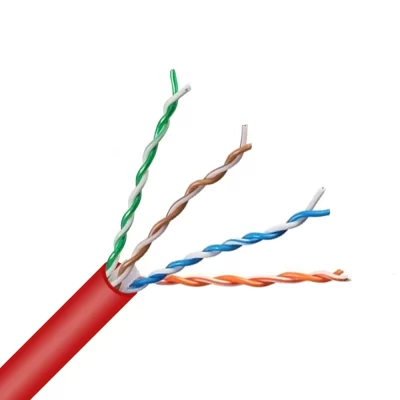
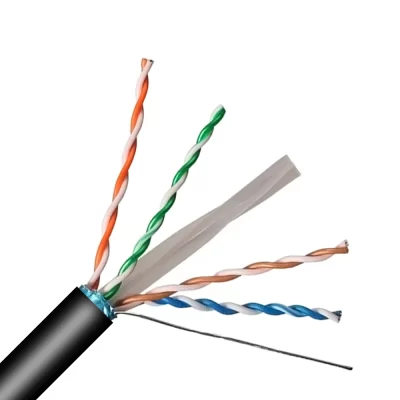
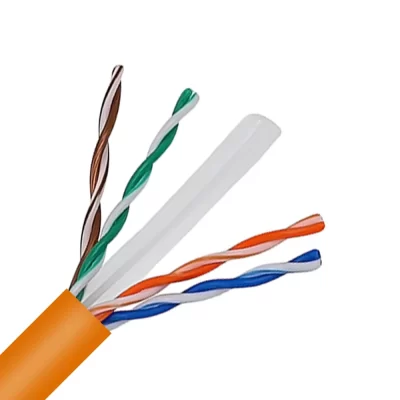
Category 6 (Cat6) and Category 6A (Augmented Category 6) are both standardized twisted-pair Ethernet cabling systems defined under ANSI/TIA-568 and ISO/IEC 11801.
Although they appear similar externally, Cat6a introduces several enhancements designed specifically for higher-speed enterprise networking.
Cat6 supports transmission frequencies up to 250 MHz and provides reliable Gigabit Ethernet connectivity over the standard 100-meter channel. It can also support 10GBASE-T, although the maximum distance is typically limited to approximately 37–55 meters depending on the installation environment.
Cat6a doubles the operating bandwidth to 500 MHz and is specifically designed to support 10 Gigabit Ethernet over the full 100-meter channel, even in dense enterprise installations where multiple cable bundles are installed together.
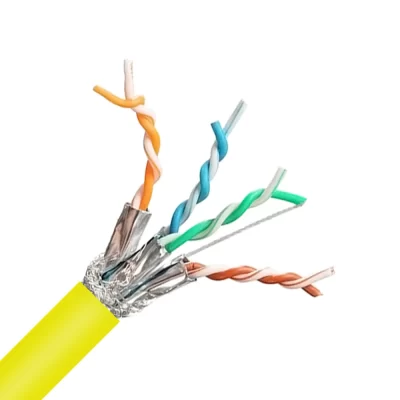
To achieve this improved performance, Cat6a generally features tighter twist ratios, improved insulation, and better protection against alien crosstalk and external electromagnetic interference.
Cat6 vs Cat6a: Technical Comparison
The following table summarizes the primary technical differences between Cat6 and Cat6a Ethernet cabling.
| Feature | Cat6 | Cat6a |
|---|---|---|
| Standard Bandwidth | 250 MHz | 500 MHz |
| Gigabit Ethernet | 100 m | 100 m |
| 10 Gigabit Ethernet | Typically 37–55 m | Full 100 m |
| Maximum Channel Length | 100 m | 100 m |
| Alien Crosstalk Resistance | Moderate | Excellent |
| EMI Immunity | Good | Better |
| PoE Support | PoE / PoE+ / PoE++ | PoE / PoE+ / PoE++ with greater operating margin |
| Typical Cable Diameter | Smaller | Larger |
| Installation Flexibility | Easier | Requires more pathway space |
| Initial Cost | Lower | Higher |
| Future Upgrade Capability | Good | Excellent |
While both cable categories can support modern Ethernet networks, Cat6a provides greater performance headroom for applications expected to evolve over the next decade.
Performance Comparison in Real Enterprise Networks
Laboratory specifications tell only part of the story. The real value of Cat6a becomes apparent in enterprise environments where hundreds or even thousands of network links operate simultaneously.
In high-density cable bundles, electromagnetic interference generated by neighboring cables—commonly referred to as alien crosstalk—can negatively affect signal integrity, particularly for 10 Gigabit Ethernet. Cat6a is specifically engineered to minimize this effect, making it better suited for large office buildings, universities, hospitals, and data-intensive environments.
Another important consideration is cable lifespan. Structured cabling often remains in service for considerably longer than switches, servers, or wireless access points. While today’s deployment may only require Gigabit Ethernet, future upgrades may introduce higher-speed switches without replacing the existing cable infrastructure. Installing Cat6a during initial construction can therefore reduce the likelihood of costly rewiring later.
Supporting Modern Wi-Fi Infrastructure
Wireless technology has advanced rapidly over the past decade. Wi-Fi 6, Wi-Fi 6E, and emerging Wi-Fi 7 access points are capable of delivering significantly higher aggregate throughput than previous generations.
Although wireless communication occurs over radio frequencies, every access point ultimately depends on a wired Ethernet connection to reach the core network. As wireless capacity increases, uplink bandwidth requirements also increase.
In smaller offices where access points operate primarily with Gigabit uplinks, Cat6 continues to perform well. However, larger enterprise deployments increasingly utilize Multi-Gig Ethernet or even 10 Gigabit uplinks for high-performance access points installed in auditoriums, conference centers, lecture halls, and high-density office spaces.
For organizations planning long-term wireless infrastructure upgrades, Cat6a offers greater flexibility for future access point generations.
Power over Ethernet Considerations
Power over Ethernet has transformed network deployment by allowing data and electrical power to share the same cable.
Today, PoE powers devices including:
- Wireless access points
- Security cameras
- Access control terminals
- IP telephones
- Building sensors
- Digital displays
- Video conferencing equipment
Both Cat6 and Cat6a support modern PoE standards, including PoE, PoE+, and PoE++. However, higher-power PoE installations generate additional heat inside cable bundles.
Because Cat6a generally uses larger conductors and improved cable construction, it often provides greater thermal margin in dense cable bundles carrying higher current loads. This can contribute to improved long-term reliability in environments with extensive PoE deployment.
Electromagnetic Interference and Alien Crosstalk
Interference is one of the primary challenges in enterprise copper cabling.
Electrical equipment, fluorescent lighting, HVAC systems, industrial machinery, and neighboring Ethernet cables can all introduce unwanted noise into data transmission.
Cat6 performs well in most office environments, but as cable density increases, alien crosstalk becomes more significant—particularly for sustained 10 Gigabit traffic.
Cat6a incorporates stricter performance requirements that significantly reduce alien crosstalk, resulting in more stable communication in high-density installations.
This becomes especially valuable in:
| Environment | Preferred Cable |
| Large office buildings | Cat6a |
| University campuses | Cat6a |
| Hospitals | Cat6a |
| Smart buildings | Cat6a |
| Manufacturing facilities | Cat6a |
| Small branch offices | Cat6 or Cat6a |
Installation Differences
Higher performance does come with certain installation trade-offs.
Compared with Cat6, Cat6a cables are generally thicker due to improved insulation and tighter construction. This affects pathway capacity, bend radius, and cable management.
| Installation Factor | Cat6 | Cat6a |
| Cable Diameter | Smaller | Larger |
| Flexibility | Higher | Moderate |
| Cable Tray Capacity | Higher | Lower |
| Bend Radius | Smaller | Larger |
| Installation Difficulty | Easier | Slightly More Complex |
Installers should consider conduit size, cable trays, patch panels, and cable managers when planning large Cat6a deployments.
Long-Term Cost Considerations
Many purchasing decisions focus primarily on initial cable cost. However, the total lifecycle cost of structured cabling extends well beyond installation.
Rewiring an occupied office building can involve ceiling removal, wall repairs, labor costs, business disruption, and equipment downtime. These expenses often exceed the original cable cost by a substantial margin.
Choosing Cat6a during new construction may require a higher initial investment, but it can significantly reduce future upgrade expenses by supporting higher-speed technologies without replacing the installed cable infrastructure.
Organizations planning for ten years or more of service frequently find that Cat6a provides a lower total cost of ownership despite its higher purchase price.
Typical Deployment Scenarios
Different network environments have different performance requirements.
The following recommendations provide a practical starting point for selecting the appropriate cable category.
| Deployment Scenario | Recommended Cable |
| Small office with Gigabit LAN | Cat6 |
| Budget-sensitive office renovation | Cat6 |
| Temporary office deployment | Cat6 |
| Classroom networks | Cat6 |
| Corporate headquarters | Cat6a |
| University campus | Cat6a |
| Hospital network | Cat6a |
| Smart building infrastructure | Cat6a |
| High-density Wi-Fi deployment | Cat6a |
| Extensive PoE devices | Cat6a |
| Long-term new construction | Cat6a |
When Cat6 Is Still the Right Choice
Despite the growing popularity of Cat6a, Cat6 remains an excellent solution for many projects.
Organizations with limited budgets, relatively short cable runs, and well-defined Gigabit networking requirements may achieve excellent performance using Cat6.
Cat6 is also attractive for renovation projects where conduit space is limited or where existing cable pathways cannot easily accommodate larger cable diameters.
For branch offices, retail stores, small schools, and general office environments without immediate plans for 10 Gigabit networking, Cat6 continues to offer an effective balance between performance and cost.
Why Cat6a Is Becoming the Preferred Choice
For new enterprise construction, Cat6a has increasingly become the preferred structured cabling solution.
Several industry trends contribute to this shift:
- Growing adoption of 10 Gigabit Ethernet
- Higher-performance wireless infrastructure
- Increased deployment of PoE-powered devices
- Greater cable density in modern buildings
- Longer expected infrastructure lifespan
- Increasing demand for future-proof network investments
Rather than designing solely for today’s bandwidth requirements, many organizations now design their structured cabling to accommodate technologies expected throughout the building’s operational life.
How to Choose Between Cat6 and Cat6a
Selecting the right cable category ultimately depends on balancing current requirements, future growth, installation conditions, and project budget.
Choose Cat6 if your project primarily requires Gigabit Ethernet, cable runs are relatively short, installation space is limited, and future upgrades are unlikely. It remains a reliable and cost-effective option for many office environments, educational facilities, and renovation projects.
Choose Cat6a if you are building a new enterprise network, expect to deploy 10 Gigabit Ethernet, plan for Wi-Fi 6E or Wi-Fi 7 infrastructure, rely heavily on high-power PoE devices, or want to minimize future rewiring costs. Its higher bandwidth, improved interference resistance, and stronger long-term scalability make it the preferred choice for organizations investing in network infrastructure with a service life of ten years or more.
Rather than viewing Cat6 and Cat6a as competing technologies, it is more accurate to consider them solutions optimized for different deployment goals. The best choice depends not only on today’s network requirements but also on how your infrastructure is expected to evolve over the coming years.
Conclusion
Structured cabling forms the foundation of every modern enterprise network. While switches, wireless access points, and servers may be replaced several times throughout a building’s lifetime, the cabling infrastructure often remains unchanged for decades.
Cat6 continues to deliver dependable performance for Gigabit networks and budget-conscious deployments. For many smaller offices and renovation projects, it remains a practical and economical solution.
However, as organizations increasingly adopt higher-speed wireless networks, larger numbers of PoE-powered devices, and future 10 Gigabit connectivity, Cat6a provides greater bandwidth, stronger interference resistance, and more room for future expansion. Although the initial investment is higher, its ability to support evolving network technologies can significantly reduce long-term upgrade costs.
When planning a new enterprise or campus network, selecting the appropriate cable category is not simply a decision about today’s performance—it is an investment in the reliability, scalability, and longevity of your entire network infrastructure.
FAQ
1. Is Cat6 still a good choice for new enterprise network installations?
Yes. Cat6 remains a practical choice for many enterprise projects that primarily require Gigabit Ethernet and have no immediate plans for 10 Gigabit upgrades. It is particularly suitable for small offices, branch locations, and budget-conscious renovations. However, for new buildings expected to operate for 10 years or more, Cat6a often provides better long-term value by supporting future bandwidth growth and reducing the likelihood of rewiring.
2. Why is Cat6a recommended for Wi-Fi 6, Wi-Fi 6E, and Wi-Fi 7 deployments?
Modern wireless access points deliver significantly higher throughput than previous generations and increasingly rely on Multi-Gig or 10 Gigabit Ethernet uplinks. Cat6a is designed to support 10GBASE-T over the full 100-meter channel while offering improved resistance to interference, making it a more suitable choice for high-performance wireless infrastructure and future network upgrades.
3. Does Cat6a provide better performance for Power over Ethernet (PoE)?
Both Cat6 and Cat6a support modern PoE standards, including PoE, PoE+, and PoE++. However, Cat6a is generally preferred in high-power PoE deployments because its larger conductor size and enhanced cable construction help manage heat more effectively, particularly in dense cable bundles with many powered devices.
4. What are the biggest installation differences between Cat6 and Cat6a?
The primary difference is cable size. Cat6a cables are typically thicker and less flexible than Cat6 due to additional insulation and improved crosstalk control. As a result, installers should consider conduit capacity, cable tray space, bend radius, and cable management during project planning, especially in high-density enterprise installations.
5. Is upgrading from Cat6 to Cat6a worth the additional investment?
The answer depends on your network’s expected lifespan and future requirements. If your organization anticipates deploying 10 Gigabit Ethernet, high-density Wi-Fi, or a growing number of PoE-powered devices, the higher upfront cost of Cat6a can help avoid expensive cabling replacements later. For projects with stable Gigabit requirements and limited expansion plans, Cat6 remains a cost-effective solution.
6. How should I choose between Cat6 and Cat6a for a new structured cabling project?
Start by evaluating both your current needs and your future network roadmap. If the project requires only Gigabit connectivity and has budget or installation constraints, Cat6 is often sufficient. If long-term scalability, 10 Gigabit support, advanced wireless infrastructure, or extensive PoE deployment is part of the plan, Cat6a is generally the better investment, providing greater performance headroom and helping extend the service life of the cabling infrastructure.