Skip to content




































In modern optical communication and precision photonics systems, maintaining signal stability is critical. While standard fiber optic patch cables are widely used for data transmission in telecommunications and data centers, certain applications require much higher control over the light’s polarization state. This is where PM patch cables (Polarization Maintaining patch cables) play an important role.
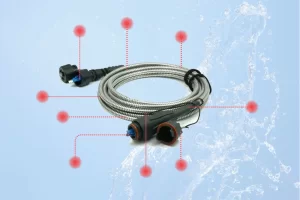
A PM patch cable is a specialized type of fiber optic jumper designed to preserve the polarization state of light as it travels through the fiber. Unlike conventional single-mode fiber cables, PM fibers are engineered with internal structures that maintain the orientation of the light wave, ensuring consistent and predictable optical performance. These cables are essential in applications where polarization stability directly affects system accuracy and performance.
This article explores what PM patch cables are, how they work, their common applications, and how they differ from standard fiber optic patch cords.
What Is a PM Patch Cable?
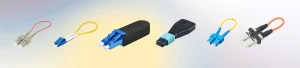
A PM Patch Cable (Polarization Maintaining Patch Cable) is a fiber optic jumper that uses polarization maintaining fiber (PM fiber) to keep the polarization of the transmitted light unchanged during transmission.
In standard optical fibers, environmental factors such as bending, temperature changes, and mechanical stress can cause the polarization state of light to rotate or drift. For most communication networks, this does not significantly affect performance. However, in highly sensitive optical systems, such variations can cause measurement errors or signal instability.
PM fibers solve this problem by introducing internal birefringence, typically through special structures such as stress rods embedded in the fiber. These structures force light to propagate along two well-defined polarization axes, ensuring the polarization state remains stable along the entire length of the fiber.
As a result, PM patch cables are capable of delivering highly stable and repeatable optical signals, which is crucial for advanced photonics systems.
Key Features of PM Patch Cables
PM patch cables are designed with several specialized characteristics that distinguish them from standard fiber optic jumpers:
Polarization preservation
The primary function of a PM patch cable is to maintain the polarization orientation of the optical signal throughout transmission.
High stability and precision
PM fibers minimize polarization drift caused by external stress, bending, or temperature fluctuations.
Low insertion loss
High-quality connectors and precise fiber alignment ensure efficient signal transmission with minimal optical loss.
Specialized connector options
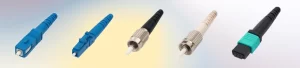
Common connectors for PM patch cables include FC/APC, FC/UPC, LC/UPC, and other precision optical connectors designed for high accuracy.
Strict axis alignment
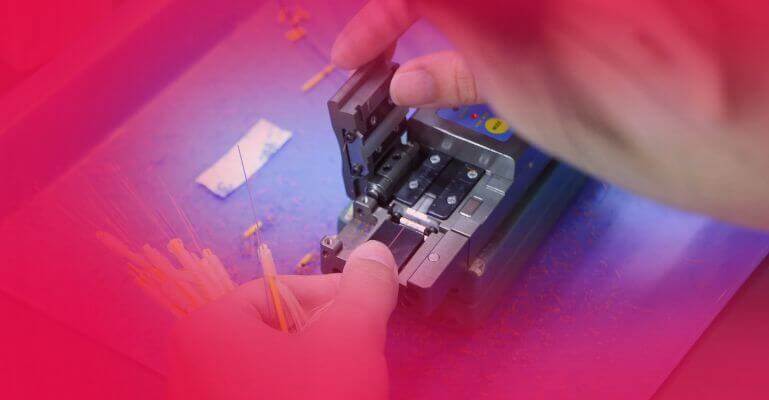
PM connectors must be aligned with the fiber’s polarization axis to ensure proper operation, which requires precise manufacturing and assembly.
Typical Applications of PM Patch Cables
PM patch cables are widely used in fields where polarization control is critical for system performance. These applications extend beyond traditional telecommunications and into advanced scientific and industrial environments.
Fiber optic sensing systems
Many fiber optic sensors rely on stable polarization states to accurately detect physical changes such as temperature, pressure, or strain.
Interferometric systems
Optical interferometers used in precision measurement and research require polarization stability to maintain measurement accuracy.
Laser systems
PM fibers are often used to connect lasers to optical components while preserving beam polarization.
Quantum communication and research
Quantum optics experiments and quantum key distribution systems rely heavily on polarization control.
Optical instrumentation
Laboratory optical equipment, spectroscopy systems, and photonics testing platforms frequently require PM fiber connections.

PM Patch Cable vs Standard Fiber Patch Cable
Although PM patch cables and standard fiber patch cables may appear similar externally, their internal design and applications are very different.
| Feature | PM Patch Cable | Standard Fiber Patch Cable |
|---|---|---|
| Fiber Type | Polarization Maintaining Fiber | Single-mode or multimode fiber |
| Polarization Control | Maintains polarization state | No polarization control |
| Core Structure | Specialized stress elements | Standard fiber core |
| Typical Applications | Laser systems, sensors, photonics | Data centers, LAN, telecom |
| Manufacturing Precision | Very high | Standard |
| Cost | Higher | Lower |
Standard fiber optic patch cables are designed primarily for efficient data transmission, while PM patch cables are designed for precise optical signal control.
When Do You Need a PM Patch Cable?
A PM patch cable is necessary when the polarization state of light directly affects system performance. If polarization fluctuations can cause signal distortion, measurement errors, or system instability, PM fibers become essential.
For example, in laser interferometry or fiber optic gyroscopes, even small polarization changes can significantly affect measurement results. In such cases, PM patch cables provide the stability required for reliable operation.
However, for typical networking environments such as Ethernet, telecom infrastructure, or data centers, standard single-mode or multimode patch cables are usually sufficient.
Conclusion
PM patch cables play a crucial role in advanced optical systems where polarization stability is essential. By maintaining the polarization state of light throughout transmission, these specialized cables enable highly accurate and reliable optical performance in scientific, industrial, and high-precision photonics applications.
Although they are not required for most conventional networking environments, PM patch cables are indispensable in areas such as fiber optic sensing, laser systems, interferometry, and quantum optics. Understanding their structure, function, and application helps engineers and system designers select the right optical components for demanding optical systems.